Matteo di Giovanni
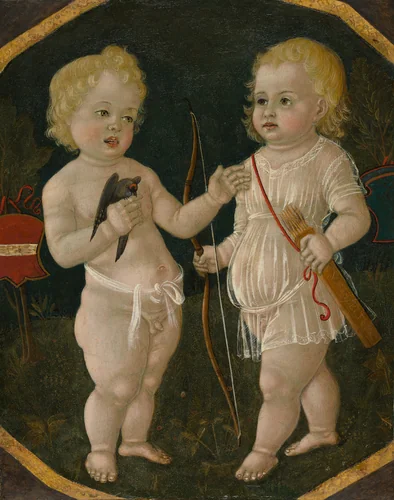
Matteo di Giovanni (active 1451-1490) holds a pivotal position in the Italian Renaissance, defining the aesthetic trajectory of the late 15th-century Sienese School. A leading master in Siena during the Quattrocento, he successfully navigated the demands of conservative, devotional patronage while subtly integrating the stylistic innovations arriving from Florence and Umbria.
Di Giovanni's career was characterized by prolific output centered on altarpieces and smaller, intimate panel paintings intended for private prayer. His works are immediately recognizable for their dramatic linearity, vibrant, almost enamel-like colors, and an affinity for luxurious detail, often retaining the gold-ground tradition that characterized Siena’s artistic heritage. This blend ensured his continued popularity: he managed the sophisticated trick of making progressive art look exquisitely traditional, providing exactly what his devout patrons desired.
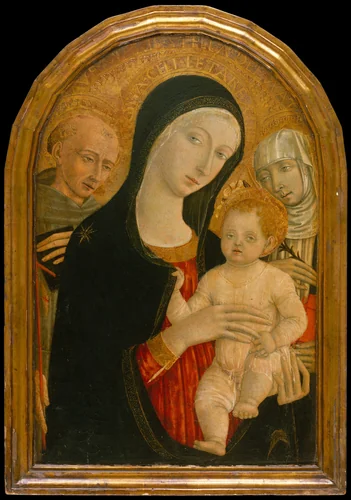
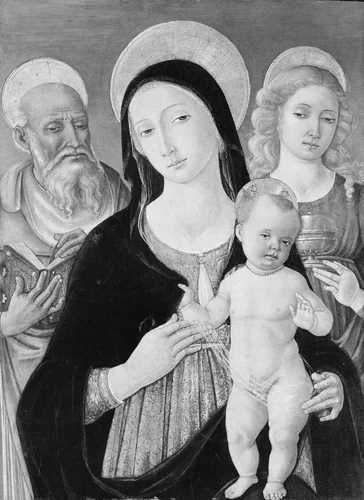
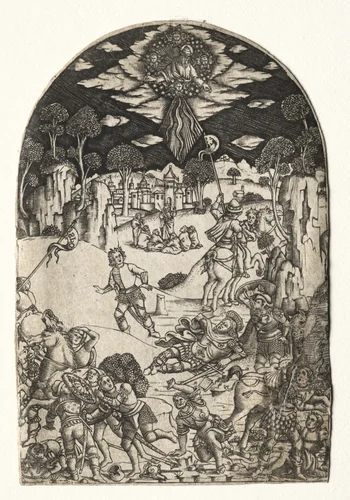
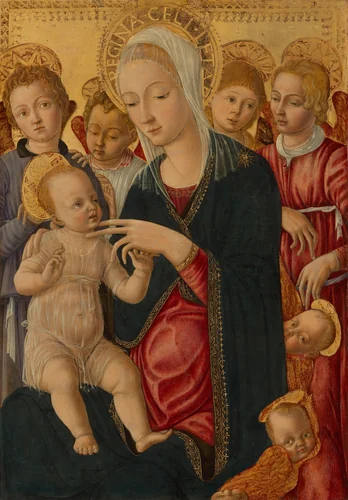
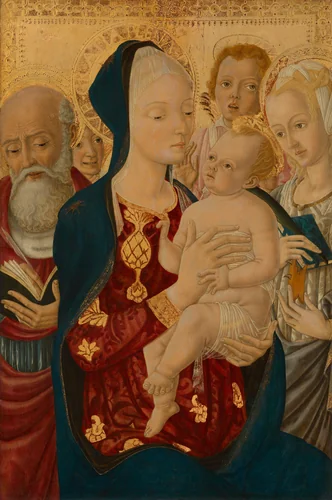
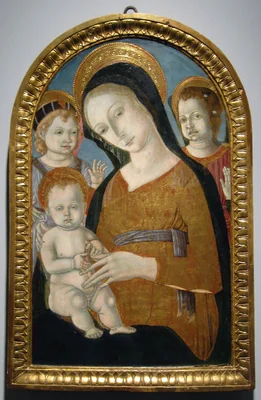
His devotional compositions, such as Madonna and Child with Saints Jerome and Mary Magdalen and the elaborate Madonna and Child with Angels and Cherubim, demonstrate a mastery of psychological engagement between figures. However, he was equally adept at narrative intensity, evidenced by the energetic composition and spatial complexity of The Conversion of Saint Paul, a piece which shows him wrestling confidently with Renaissance perspective.
The sustained influence and quality of his work are reflected in their prominent placement across global institutions; many significant Matteo di Giovanni paintings are now housed in major collections, including the Metropolitan Museum of Art and the National Gallery of Art. The accessibility of his work, now often available as downloadable artwork, confirms his stature as a defining figure of the late Sienese period, an artist who maintained the school’s characteristic grace while ushering it into a new century of visual representation. His legacy endures, allowing enthusiasts to appreciate these masterworks as high-quality prints centuries after their creation.
Source: Wikipedia · CC BY-SA 4.0