Master of the Triptych of Louis XII
The Master of the Triptych of Louis XII is the conventional name assigned to an unidentified artist or workshop documented as active during the fifteenth century (1400-1500). This designation is a critical tool for art historians, grouping works that share a distinct and consistent stylistic approach when the creator’s true identity remains unknown. The known body of work attributed to the Master of the Triptych of Louis XII paintings emphasizes religious narrative and devotional imagery, confirming their involvement in creating high-quality, complex altarpieces.
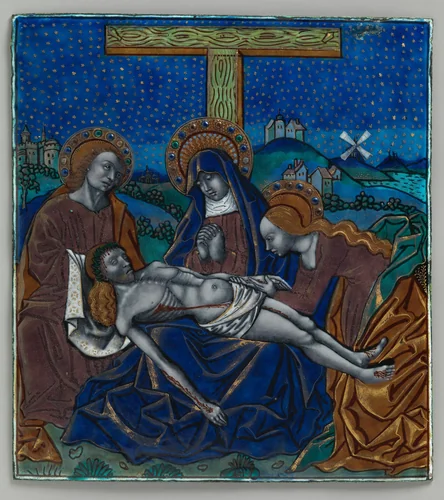
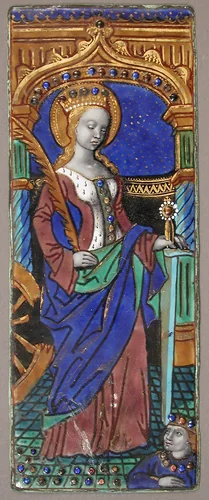
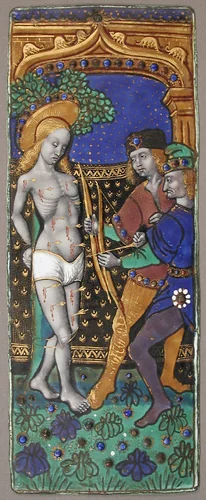
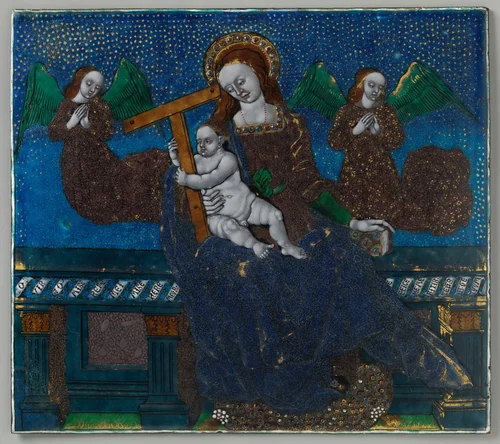
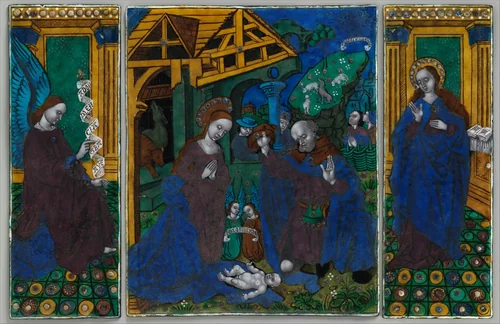
Six works attributed to this Master are represented in museum collections, establishing the artist’s legacy. The Metropolitan Museum of Art holds several key examples of this output, including panels designed for triptychs. These panels feature iconic Christian figures, such as Triptych Panel with Pietá, Triptych Panel with Saint Catherine, and Triptych Panel with Saint Sebastian. The collection also preserves the Plaque with the Virgin and Child and a tripartite piece titled Three plaques from a triptych with the Adoration of the Shepherds, Flanked by the Angel Gabriel and the Virgin Annunciate.
The meticulous detail and formal arrangement evident in these works place the Master of the Triptych of Louis XII among significant painters of the period. Today, these historical works are widely available to scholars and the public. As these paintings are centuries old, they are typically considered to be in the public domain, facilitating research and the creation of high-quality prints derived from the original works.