Master of the Die
The Master of the Die, an Italian engraver and printmaker active between the mid-fifteenth and early sixteenth centuries (c. 1452-1525), occupies a vital, if enigmatic, position in the history of Renaissance graphic arts. Though his birth and death years remain unknown, the artist’s reputation is securely founded upon a finite and compelling corpus of approximately fifteen known prints.
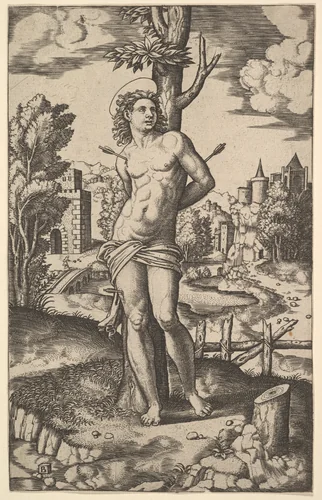
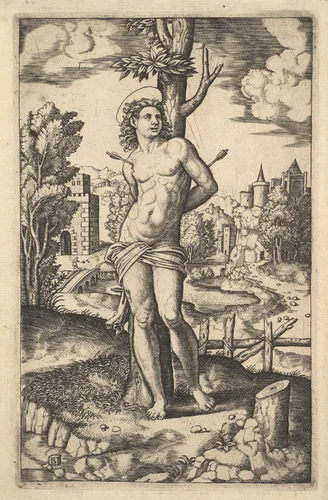
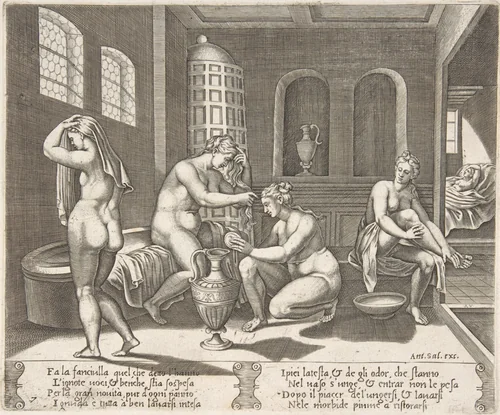
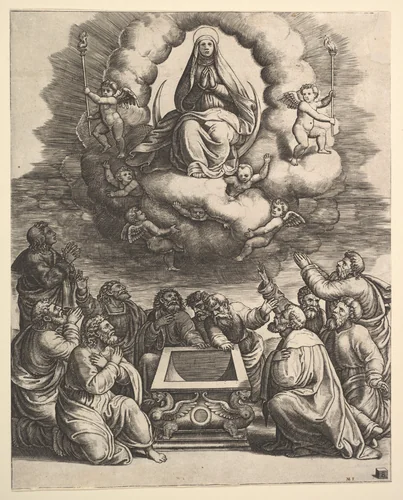
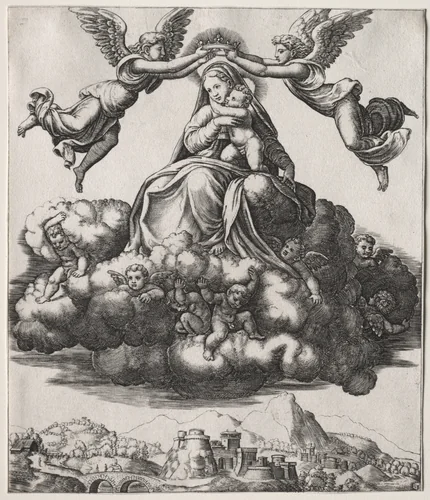
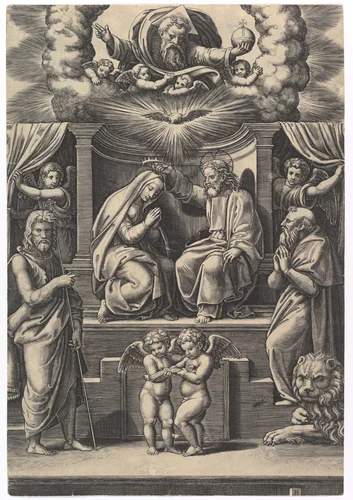
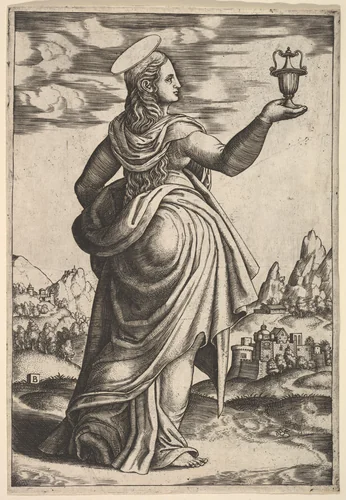
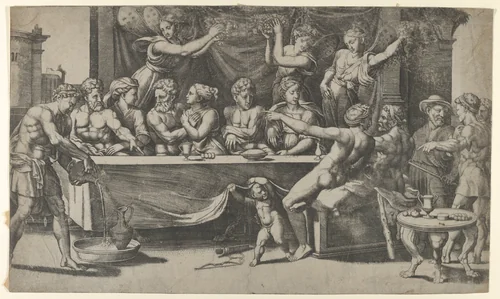
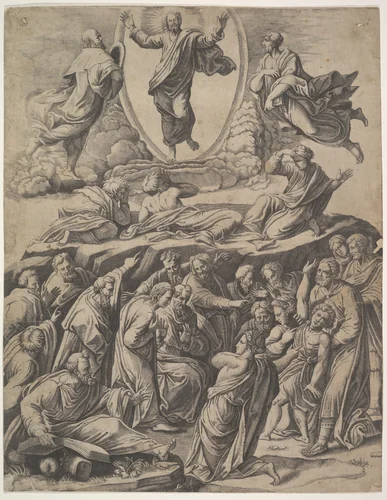
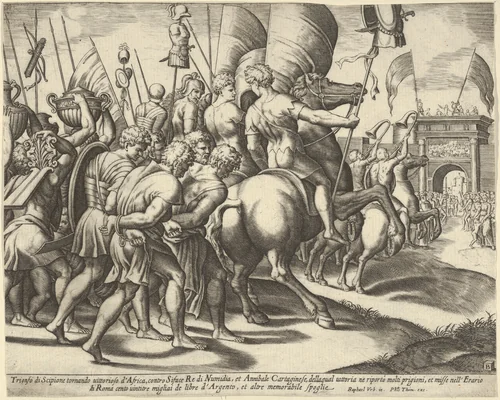
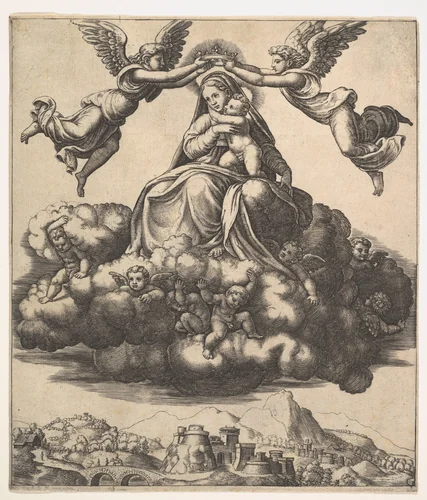
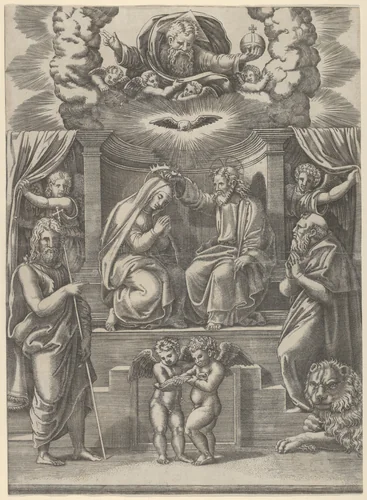
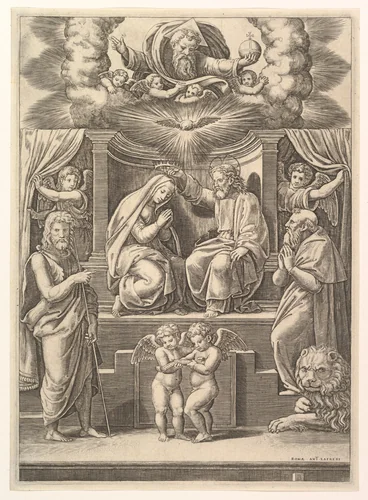
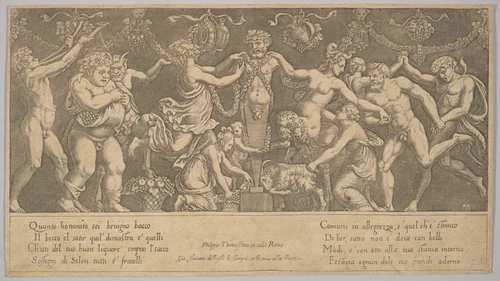
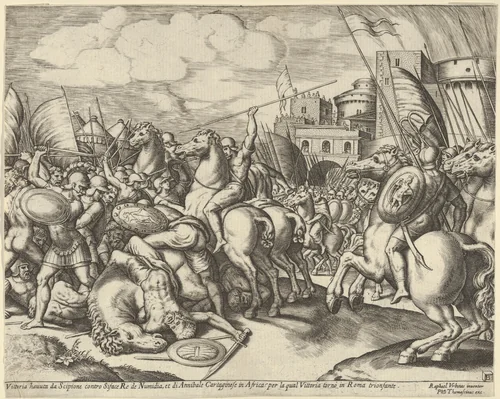
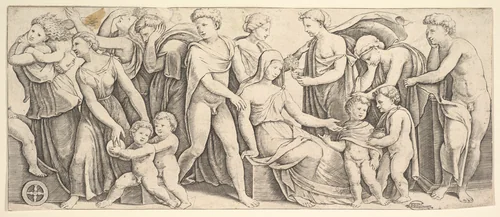
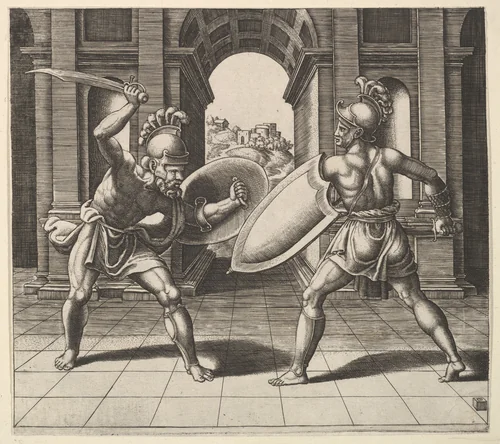
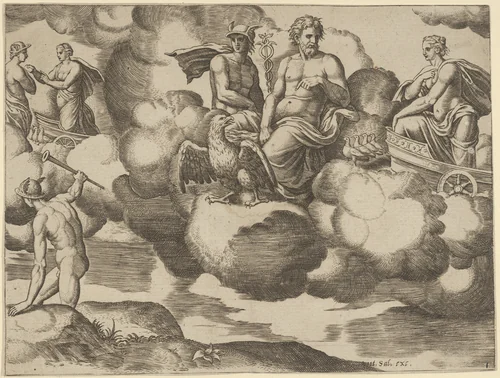
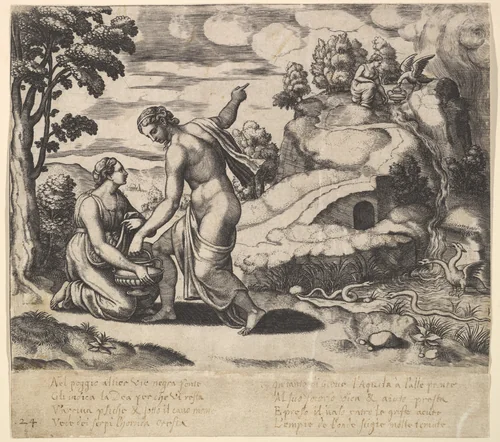
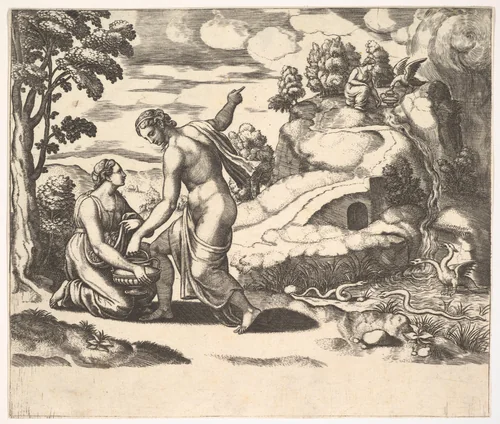
This body of work demonstrates exceptional technical precision and a wide-ranging thematic curiosity, crucial for disseminating the iconography and styles of the nascent High Renaissance across Europe. The Master of the Die mastered the demanding medium of line engraving, producing images that range from intricate religious scenes, such as The Delivery of the Keys to Peter and the solitary devotion of Saint Roch, to sweeping classical narratives. His sophisticated treatment of light and shadow is evident in grand historical pieces like The Triumph of Scipio and The Victory of Scipio over Syphax, which successfully translate monumental narrative painting into the intimacy of the printed sheet.
The artist’s characteristic designation derives from the small, distinctive geometric patterns found frequently within his works, sometimes interpreted as a sign of provenance or a subtle mark used in calculating perspective. This anonymous yet precise identity lends a fascinating character to his output. While contemporaries are known for their personal biographies, the Master of the Die is defined purely by his ability to capture and reproduce complex visual storytelling, a crucial innovation for the period. He was one of the key figures responsible for making high-quality prints accessible to wider audiences, effectively democratizing Renaissance aesthetics.
Today, the enduring artistic merit of his work ensures its preservation in major institutions, including the Art Institute of Chicago, the Metropolitan Museum of Art, and the National Gallery of Art. The historic importance of these engravings is further magnified by their modern availability; much of his oeuvre now resides within the public domain, offering downloadable artwork for close study, confirming his legacy as a technical pioneer whose detailed artistry continues to resonate across five centuries.
Source: Wikipedia · CC BY-SA 4.0