Master MZ
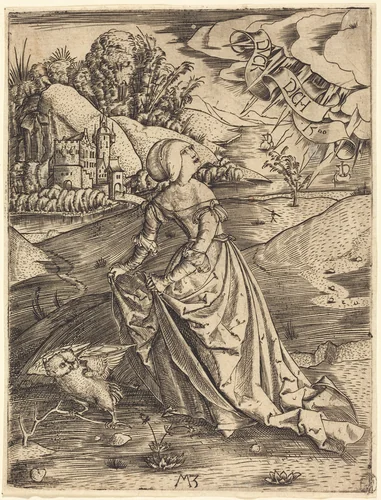
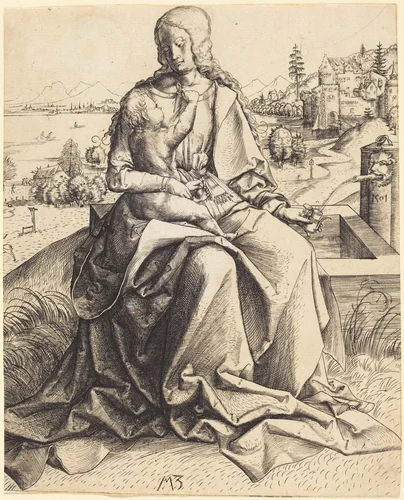
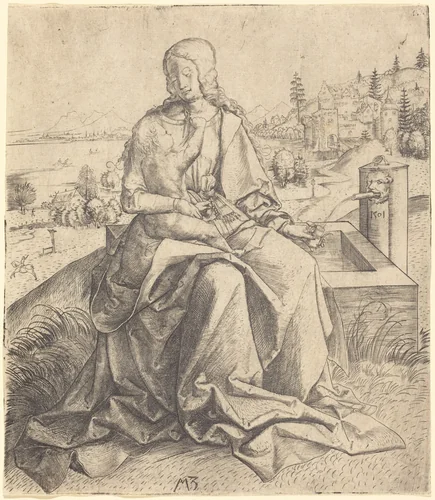
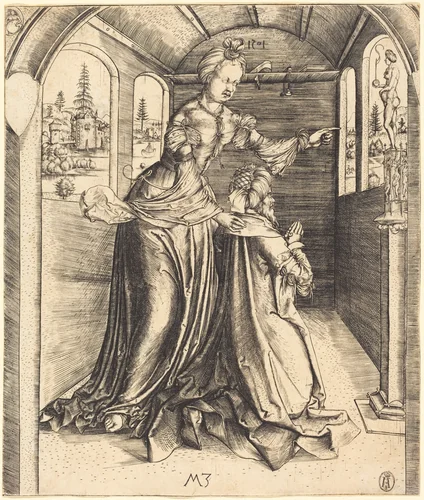
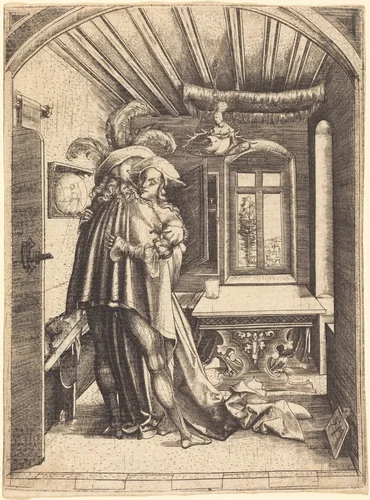
Master MZ is a significant, though still partially shrouded, figure in the history of early German printmaking, active in south Germany at the critical juncture of the fifteenth and sixteenth centuries. His influence is concentrated within a remarkably narrow window, roughly 1495 to 1503, defined by 22 known engravings, six of which bear the distinct dates of 1500, 1501, or 1503, all signed with the distinctive monogram "MZ."
Based primarily in Munich, Bavaria, Master MZ operated in a vibrant cultural sphere. Historical sources suggest a probable connection to the sophisticated patronage of Albert IV, Duke of Bavaria, confirming that his high-quality prints were produced within a courtly context. While the artist’s prolific contemporary, Albrecht Dürer, was transforming the medium elsewhere, Master MZ focused on densely detailed compositions, demonstrating a mastery of the burin necessary to capture dramatic narrative and complex figural groups.
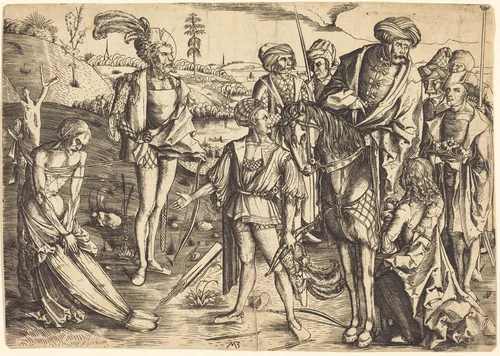
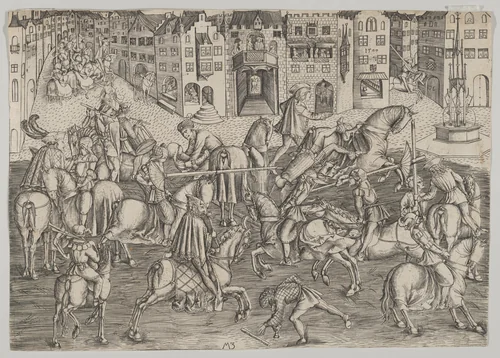
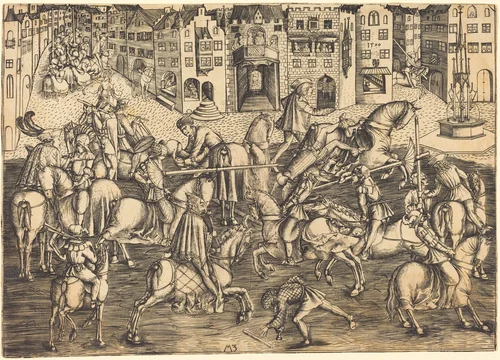
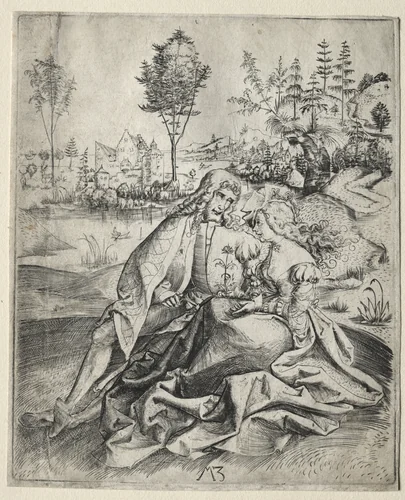
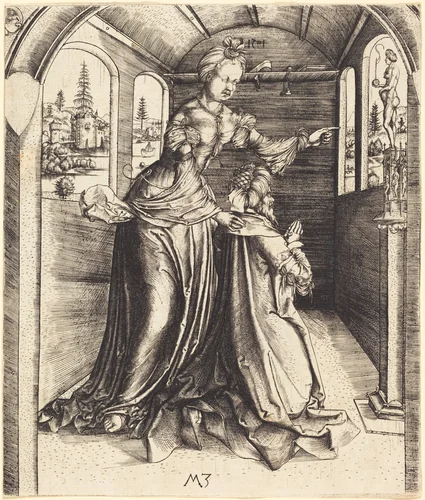
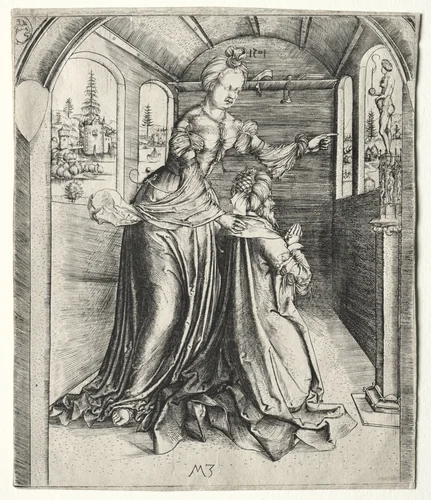
The subjects of his surviving works reflect a deep engagement with the period's diverse interests, including historical chronicles, religious devotion, and classical literature. Highlights include the powerful courtly spectacle of The Great Tournament, the intense piety captured in The Martyrdom of Saint Catherine, and the moralizing satire of Aristotle and Philis. The print known as The King's Sons Shooting Their Father's Corpse exemplifies his ability to render high drama within tightly controlled compositions.
The actual identity of Master MZ remains one of the more enduring, and charmingly frustrating, open questions in Renaissance scholarship. While complex arguments have been mounted to identify him with figures such as the goldsmith Matthäus Zaisinger, or the painter Master MS, the "MZ" monogram remains the ultimate definition of the oeuvre. Despite this anonymity, his works achieved rapid recognition, securing places in prestigious collections such as the Metropolitan Museum of Art and the National Gallery of Art. Due to their age, these rare pieces are now frequently categorized as public domain, increasing access to his important contributions to the printmaking tradition as downloadable artwork for research and enjoyment.