Master ES
Master E. S. stands as a foundational figure in the history of European graphic arts, particularly within the German Late Gothic period. Though his identity remains permanently undisclosed, known only by the initials appearing on eighteen of his surviving works, the impact of his artistry is undeniable. Operating actively circa 1445, he was a highly prolific engraver, goldsmith, and printmaker, credited as the first major German practitioner of old master prints. His compositions established the technical and aesthetic standards for the nascent medium, and his extant works, held today in prestigious institutions such as the Metropolitan Museum of Art, continue to define 15th-century engraving.
The title 'Master,' applied by art historians, denotes that he operated as an independent creative force, separate from traditional workshop apprenticeships. Critically, Master E. S. is perhaps the earliest European printmaker known to have routinely affixed his initials, E. S., to his output. This pioneering practice of marking the individual authorship of printed material was a fundamental shift, affirming the print as a legitimate, signed work of art rather than mere reproductive craft. This signature was essential, as his detailed compositions became immediate touchstones for later artists; he was arguably the most widely copied printmaker of his time. The subsequent existence of numerous high-quality prints derived from his designs speaks volumes about his pervasive influence across the Germanic territories.
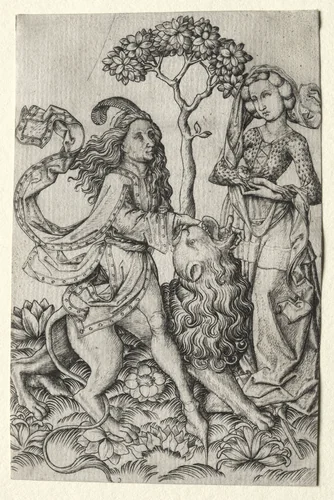
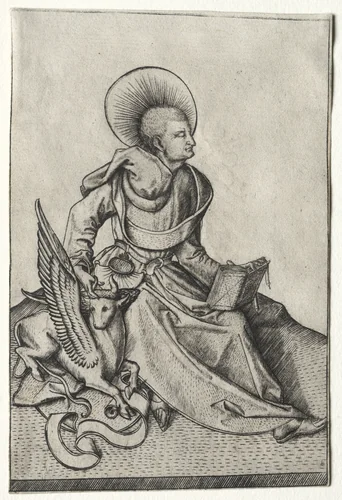
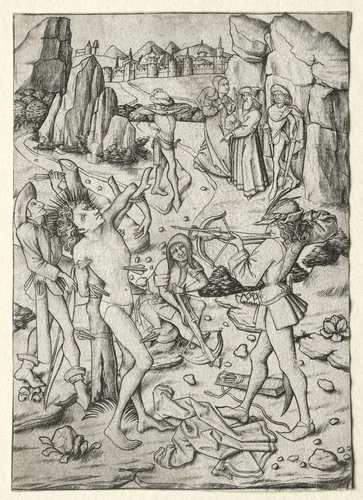
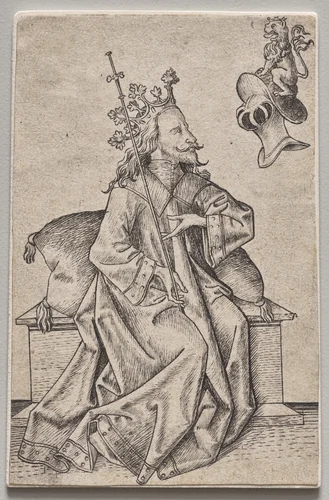
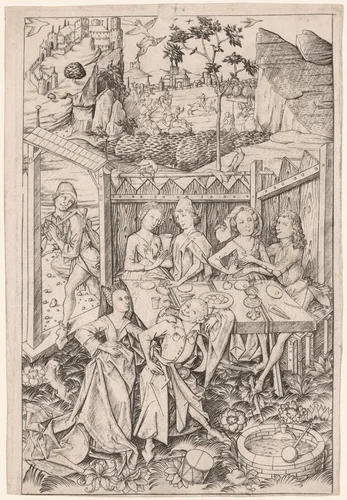
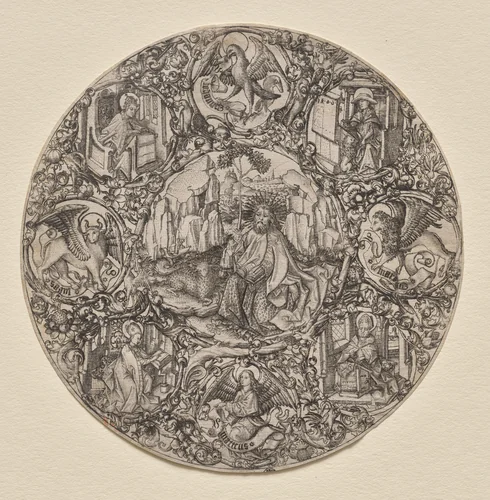
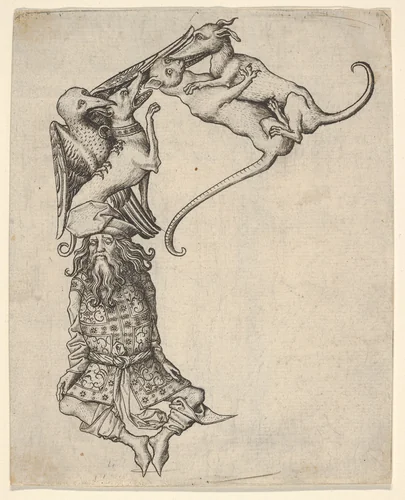
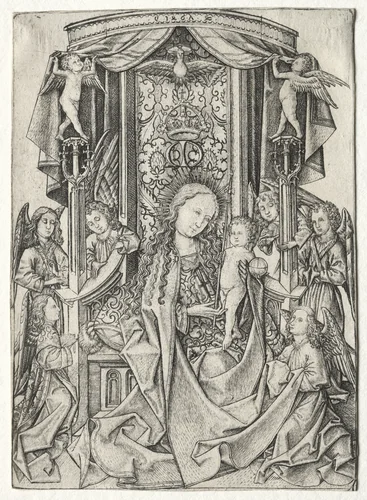
The Master's surviving production, estimated at fifteen distinct plates, reveals a fascinating combination of secular, religious, and ornamental subjects. His technical skill allowed him to bring sophisticated visual language even to ephemeral subjects, evidenced by the intricate border of Leaf-ornament with a Heron or the fanciful depiction in Ornament with a Wild Man. Narrative mastery is demonstrated in works such as Samson and Delilah, while the inclusion of subjects derived from games, like the Playing Card, with Wild Woman and Unicorn, offers a glimpse into the diverse consumption of Master ES prints. It is tempting to imagine the sheer delight and surprise his compositions must have generated among 15th-century collectors, who, unlike modern viewers accessing royalty-free downloadable artwork, would have encountered these intricately detailed sheets as rare and cutting-edge novelties.
Source: Wikipedia · CC BY-SA 4.0