Massimo Stanzione
Massimo Stanzione stands as one of the most significant masters of the 17th-century Neapolitan Baroque, a painter whose career, spanning roughly 1615 to 1635, was instrumental in shaping the artistic culture of Southern Italy. His work defined the era, often in direct competition with his Spanish contemporary and professional rival, Jusepe de Ribera.
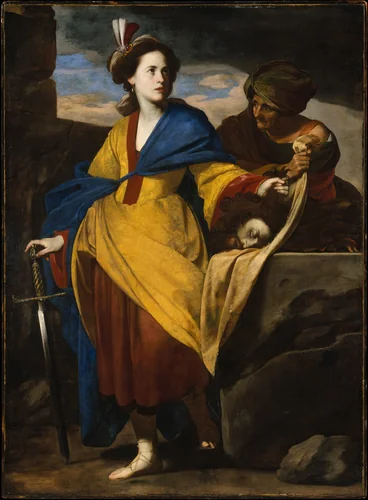
A highly versatile technician, Stanzione excelled in both oil painting and monumental fresco cycles, though he is best known for his large-scale religious altarpieces that addressed biblical scenes. His characteristic style expertly fused the intense drama and chiaroscuro associated with the Neapolitan tradition with a sophisticated approach to color and an idealized naturalism. This created compositions that were emotionally resonant yet formally refined. Beyond devotional subjects, he was also an accomplished painter of portraits and mythological themes, demonstrated by celebrated works such as Judith with the Head of Holofernes.
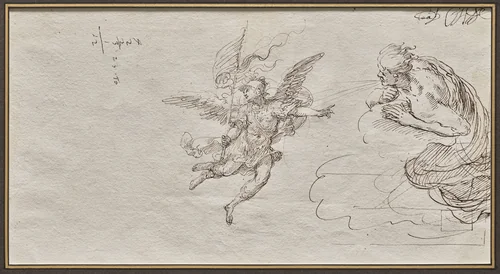
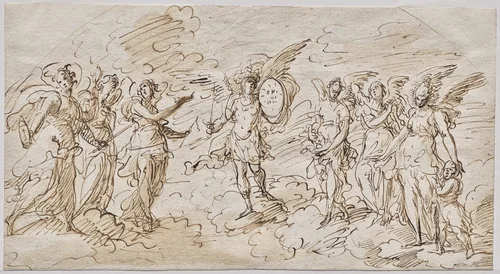
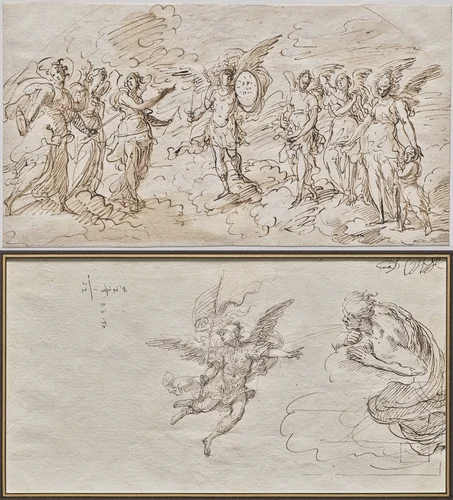
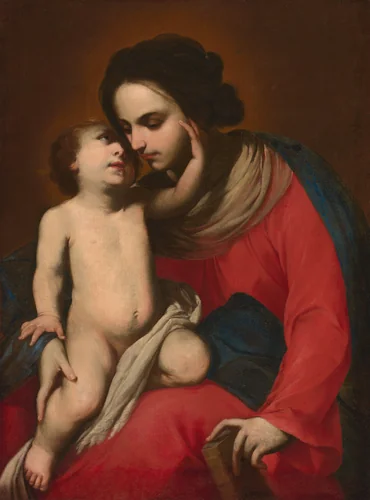
Stanzione’s enduring influence on subsequent generations of local artists, including Francesco Solimena, secured his place in the canon. His rich palette and elegant depiction of the human form were widely studied and emulated. Today, important examples of his output, including Madonna and Child and preparatory drawings like Studies of an Archangel and a Wind God (verso) and The Seven Archangels (recto), are preserved in prestigious international institutions such as the Metropolitan Museum of Art and the National Gallery of Art.
The artist enjoyed considerable stature during his lifetime, receiving significant honors and patronage from Rome. Pope Gregory XV conferred upon him the title of Knight of the Golden Spur in 1621. He later received additional titles from Pope Urban VIII, including the Knighthood of St. John around 1624 and the Order of Christ in 1627. Stanzione visibly relished these distinctions, frequently signing his finished compositions as "EQUES MAXIMUS" (The Greatest Knight), a personalized testament to his celebrated rank. Many important Massimo Stanzione paintings and drawings are now widely accessible, with high-quality prints and downloadable artwork often available for scholarly research.
Source: Wikipedia · CC BY-SA 4.0