Mary Nimmo Moran
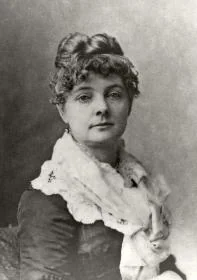
Mary Nimmo Moran (1842-1899) stands as one of the pioneering figures in American landscape printmaking, celebrated for her technical mastery of the etching medium during its fin-de-siècle revival. She was among the earliest American artists to seriously explore etching as a primary expressive mode, contributing significantly to the medium’s establishment in the United States. Moran’s work challenged the prevailing assumption that rigorous artistic pursuit was inherently incompatible with domestic life, leading contemporary critics to note that she proved professional success attainable even while maintaining marriage and family. By 1880, she was widely recognized as a leading landscape etcher.
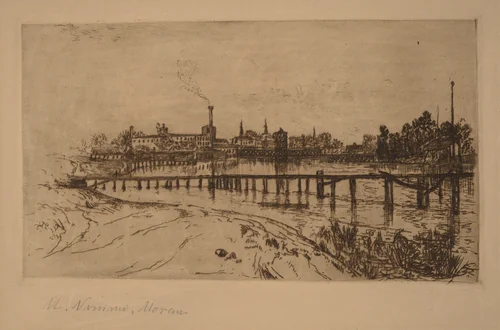
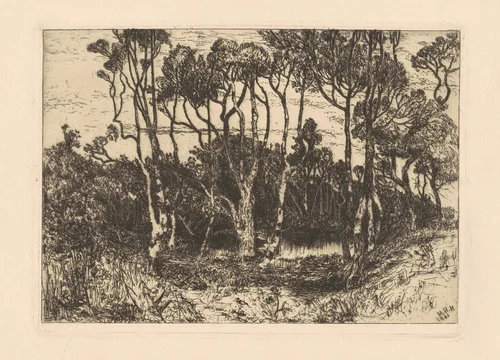
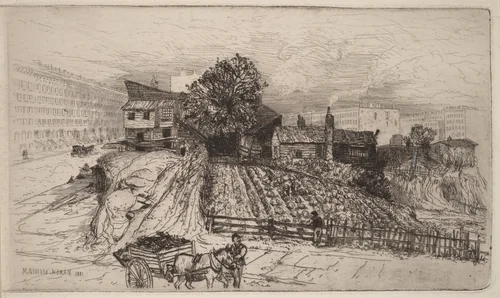
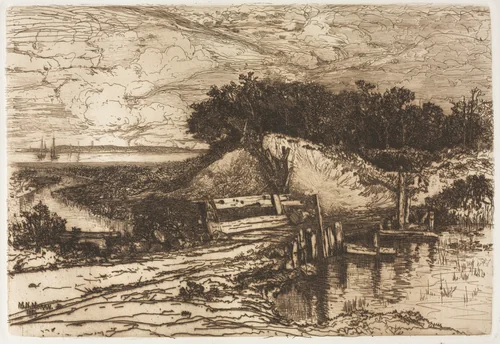
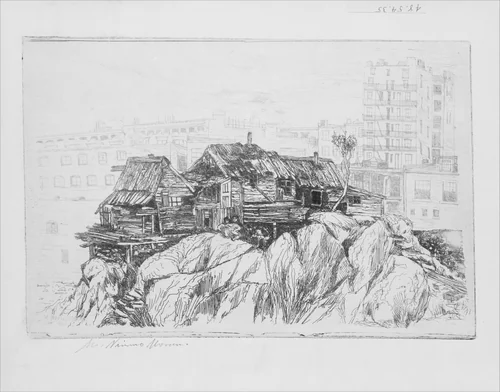
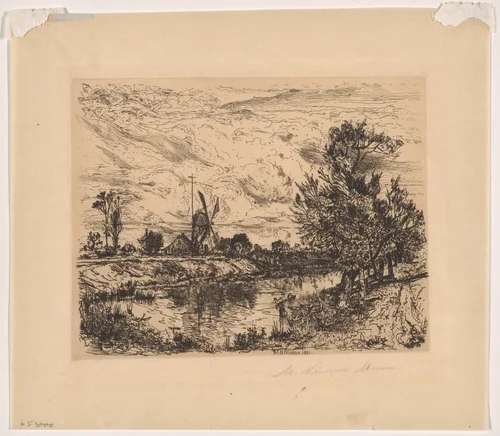
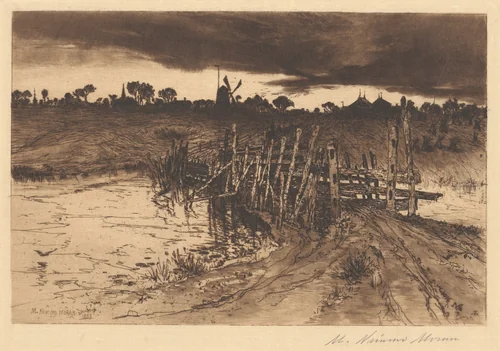
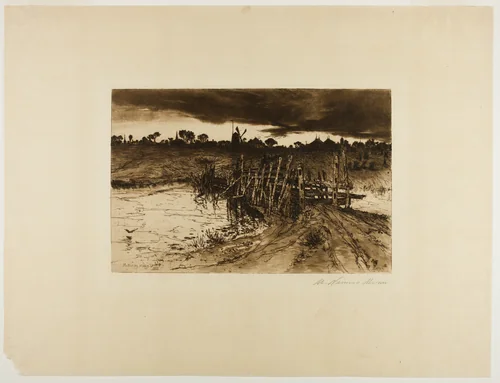
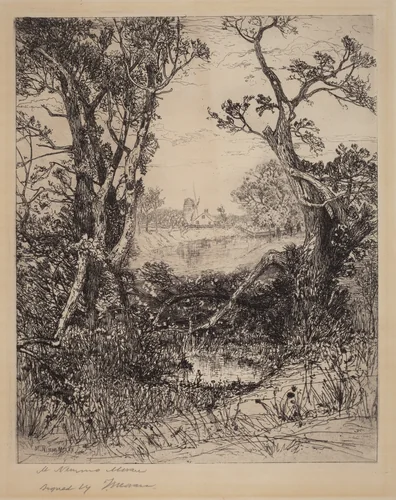
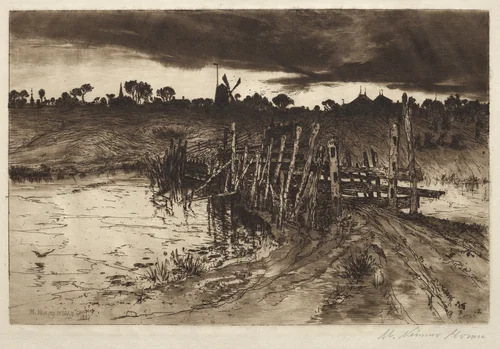
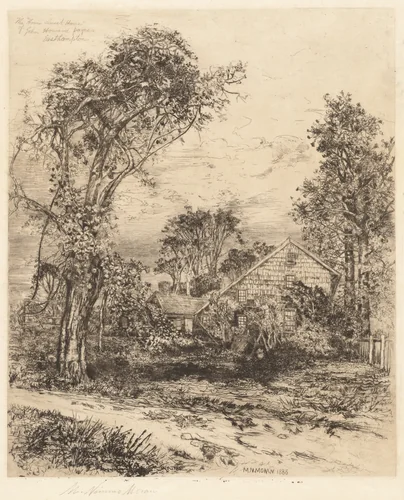
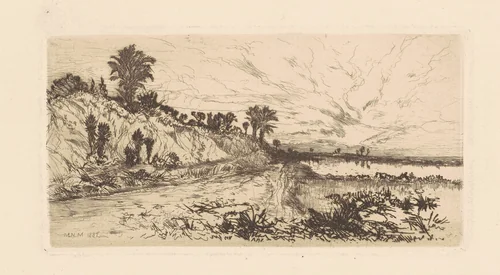
Moran worked prolifically, completing roughly 70 significant landscape etchings throughout her active career between 1879 and 1887. These compositions demonstrated a remarkable breadth of subject matter, ranging from localized Northeastern views, such as Newark, N.J., from the Passaic and the New York urban vignette A City Farm—New York, to expansive panoramas captured during her travels in England, Scotland, New Jersey, Florida, and Pennsylvania. This dedication to capturing diverse environments, often evoking profound stillness in works like Solitude, distinguished her output.
This dedication earned her swift and high distinction abroad. In 1881, she achieved a landmark historical first: she was the first woman and one of only eight Americans elected as a fellow to London's esteemed Royal Society of Painter-Etchers. This induction cemented her international standing and validated the high artistic merit of her Mary Nimmo Moran prints.
Moran’s evocative handling of light and shadow secured her status as a crucial transitional figure between traditional landscape aesthetics and the burgeoning popularity of the American painter-etching movement. Her legacy is preserved in several key public collections, including the Metropolitan Museum of Art, the National Gallery of Art, and the Art Institute of Chicago, providing enduring evidence of her technical sophistication. Today, scholars and collectors can study her compositions closely; many of her works now reside in the public domain and are available as high-quality prints for scholarly examination.
Source: Wikipedia · CC BY-SA 4.0