Martinus Rørbye
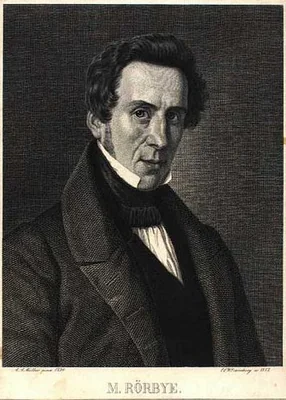
Martinus Christian Wesseltoft Rørbye (1803-1848) stands as a foundational contributor to the Golden Age of Danish painting. Active primarily between 1823 and 1839, his oeuvre is defined by a sophisticated synthesis of meticulous genre observation and expansive, yet intimately rendered, landscape painting. He was a central figure in the Copenhagen tradition, instrumental in defining the visual aesthetics of early 19th-century Danish art.
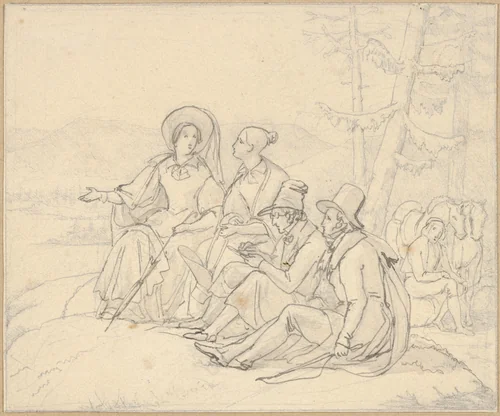
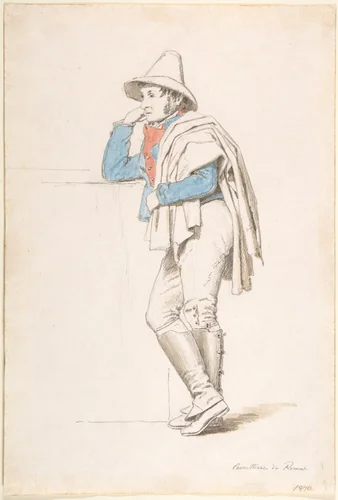
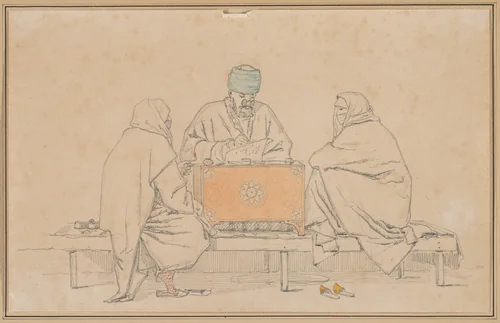
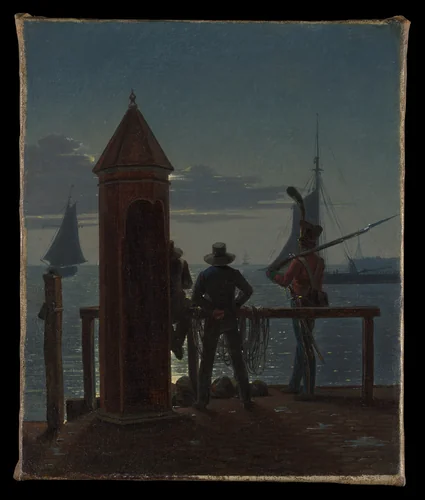
Rørbye’s output is characterized by precise realism, whether he was capturing the intimate interactions of daily life or documenting the distinct character of his travel subjects. His commitment to observational accuracy is demonstrated in genre works such as Men and Women Enjoying a View, and in focused studies like the finely detailed Study of a Roman Coachman. This documentation of place and person elevates his studies beyond simple artistic exercises into essential historical records. We know of nine drawings and one painting from this active period, with the majority demonstrating this duality of subject matter.
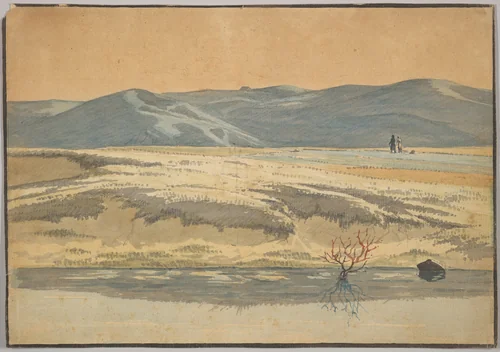
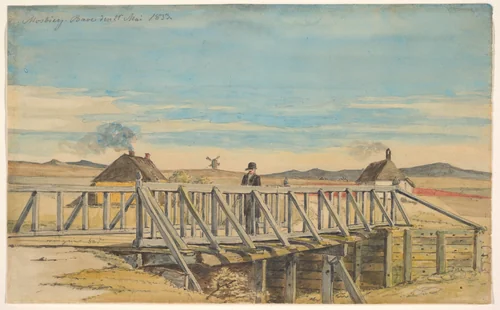
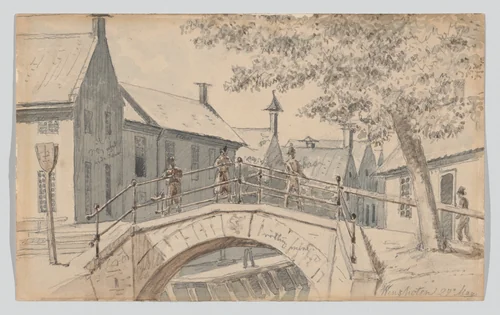
His approach to landscape was firmly rooted in the Danish tradition of plein air observation. Works such as Landscape near Bangsbo, North Jutland, With Two Figures and Landscape with a Bridge Near Mosbjerg showcase his mastery of light, atmosphere, and topography, focusing on the specific regional features of his homeland. This attention to localized geography provides rich contextual information, making his Martinus Rørbye paintings valuable for both artistic and cultural study. His travels often led him abroad, resulting in detailed views like A Bridge over a Canal in Winschoten.
It is perhaps the slightly obsessive precision in his work, the insistence on capturing every detail of a coachman’s uniform or the specific stonework of a regional bridge, that makes his contributions so enduring. His works are held in major international collections, including the Metropolitan Museum of Art, ensuring that his unique vision remains central to the study of 19th-century painting. Today, access to this material is broader than ever, with many of these important images available as high-quality prints and downloadable artwork through public domain initiatives.
Source: Wikipedia · CC BY-SA 4.0