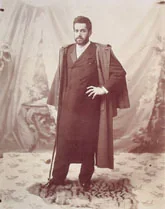
Mariano Fortuny y Madrazo
Mariano Fortuny y Madrazo (1871-1949) was one of the early 20th century’s definitive polymaths, bridging the worlds of high art, chemistry, invention, and fashion design. Born into an artistic dynasty, he was the son of the renowned Spanish painter Mariano Fortuny y Marsal. This rich inheritance, coupled with an engineer's precision, allowed him to approach textiles and illumination not merely as commercial crafts, but as serious applied art forms rooted in classical aesthetics.
While initially trained as a painter, Fortuny shifted his creative focus around the turn of the century to the chemistry and mechanics of fabric. He established his influential design house in Venice in 1906, maintaining operations and producing designs until 1946, spanning the effective period of 1900-1950. His most enduring contributions involved proprietary printing and dyeing processes, enabling the subtle, iridescent coloration and texture that became his signature. His processes were complex, utilizing powdered pigments and specialized machinery he invented himself to achieve effects that mimicked the luxurious, tactile qualities of Renaissance silks and brocades.
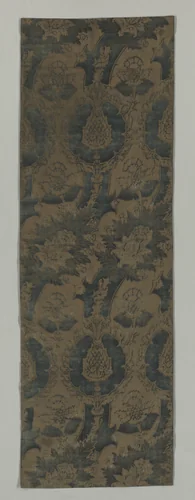
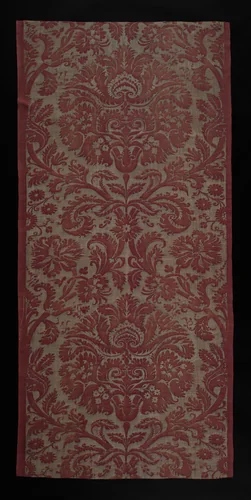
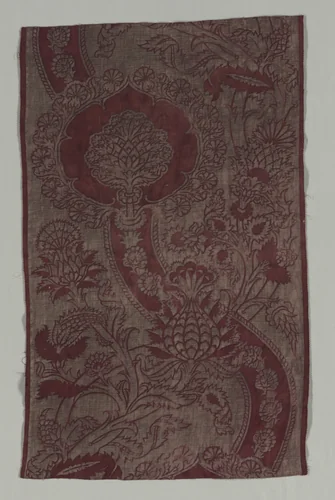
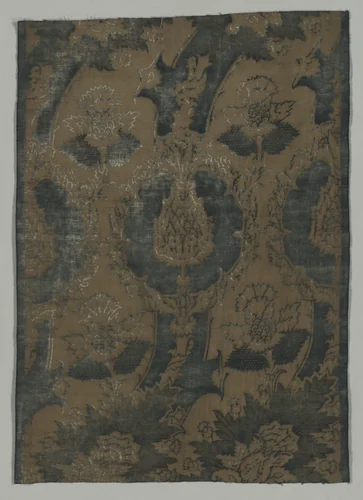
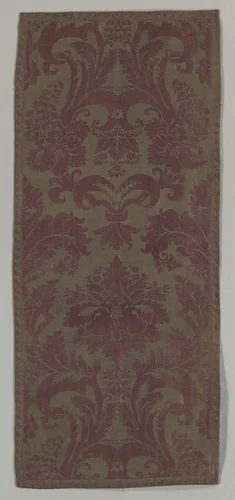
This dedication to historical fidelity is evident in the five exemplary Reproduction of a Florentine Velvet textiles, held in collections such as the Cleveland Museum of Art. These pieces demonstrate his ability to translate classical designs into modern, wearable fabrics. Fortuny’s methodology was unique; he did not just design the garment, he designed the entire industrialized process, including the machinery used to treat the fabric and the chemical formulas for the dyes.
His scientific rigor extended far beyond textiles, resulting in patents for sophisticated photographic processes, innovative stage lighting systems, and advancements in color filtration, cementing his status as a comprehensive inventor. Unlike many contemporary commercial designers, Fortuny maintained strict quality control over production, ensuring that every resulting artifact achieved a museum-quality standard. His clothing, though technically complex to create, possessed an unexpected and timeless simplicity; one could wear a Fortuny garment today and it would appear utterly contemporary, a rarity for artifacts produced during that period. For those interested in studying his specialized surface treatments and patterns, many detailed images of Mariano Fortuny y Madrazo prints are now entering the public domain. His legacy persists through the enduring elegance of his fabrics and his foundational role in treating fashion technology as a form of fine art.
Source: Wikipedia · CC BY-SA 4.0