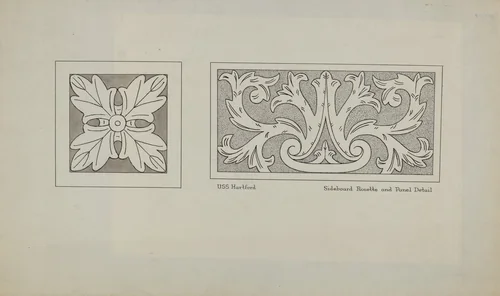
Margaret Gordon
Margaret Gordon holds a distinct and essential position within the history of American visual documentation, primarily recognized for her detailed contributions to the Index of American Design (IAD). Active in 1939, Gordon was among the multitude of skilled artists mobilized by the Federal Art Project during the New Deal era, tasked with creating a comprehensive national archive of decorative arts and utilitarian objects that defined the early American domestic sphere. Her renderings serve as vital ethnographic records, upholding the rigorous standards required by this massive governmental initiative.
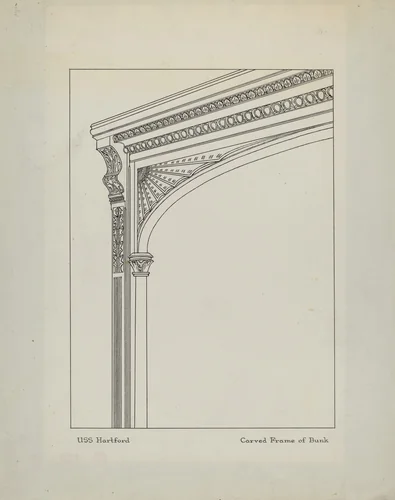
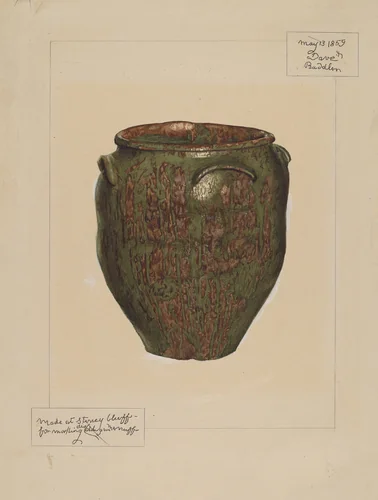
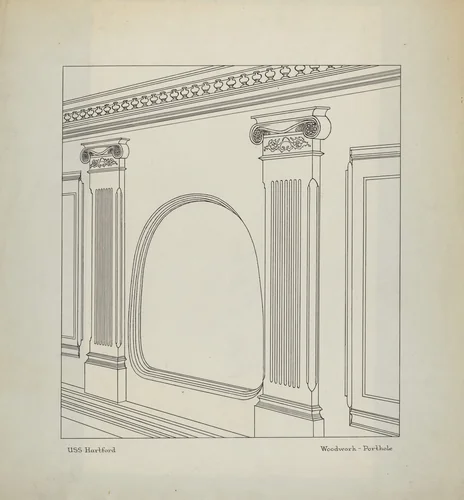
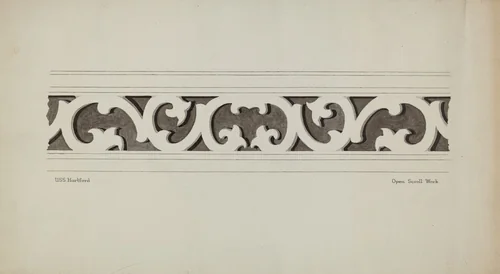
Gordon’s expertise lay in translating the three-dimensional complexity of antique woodwork and domestic hardware into precise, two-dimensional studies. Her portfolio demonstrates a consistent focus on material fidelity and construction detail. Pieces such as Carved Frame of Bunk and Porthole and Woodwork Detail meticulously catalog the texture, wear, and joinery of naval and sleeping accommodations, transforming simple architectural components into subjects of fine art illustration. Similarly, her documentation of fundamental kitchenware, such as the drawing Jar: For Salt, Meat, or Lard, elevates utilitarian forms through careful shading and a measured analysis of their industrial craftsmanship.
It is worth noting that while several contemporaries shared the name Margaret Gordon, spanning fields from acting to state legislature, the legacy of this specific artist is preserved entirely within her draftsman’s ability to find compelling beauty in the historically mundane.
Today, the entirety of the IAD collection, including the five known drawings by Gordon, resides in the permanent collection of the National Gallery of Art. The project’s original intent was to create an accessible national visual resource, and that accessibility has expanded exponentially in the digital age. The museum-quality studies produced by artists like Gordon ensure that these unique records of American craft are widely available. Because these high-quality prints and illustrations are now largely considered public domain assets, researchers, designers, and collectors worldwide can easily appreciate the skill involved in generating these detailed historical documents, extending the reach of Margaret Gordon prints far beyond their initial archival purpose.