Marcus Gheeraerts the Elder
Marcus Gheeraerts the Elder (c. 1530-1585), known also as Marc Gerard and Marcus Garret, was an immensely versatile Flemish painter, draughtsman, and pioneering print designer whose career bridged the artistic centers of the Low Countries and Elizabethan England. Practicing across a formidable range of genres, he executed portraits, religious subjects, landscapes, and architectural themes, alongside specialized commissions for heraldic designs and tomb decorations. His technical proficiency as an etcher and his capacity for detailed composition positioned him as a crucial figure in the development of Renaissance graphic art.
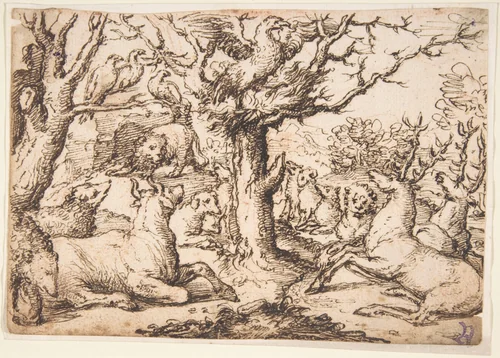
Gheeraerts’s lasting contribution rests significantly in his innovations in print illustration, which were characterized by an unusual commitment to empirical observation. Unlike many contemporaries, he developed a practice of drawing animals ad vivum (from life) for his copperplates, infusing his compositions with an unprecedented naturalistic detail. This method was instrumental in transforming European book illustration and is most famously demonstrated in his illustrations for a Dutch edition of Aesop's Fables, featuring works such as An Eagle Preaching to the Animals. His attention to veracity extended to topographical work, notably in his creation of a comprehensive print depicting a map of his native town, Bruges.
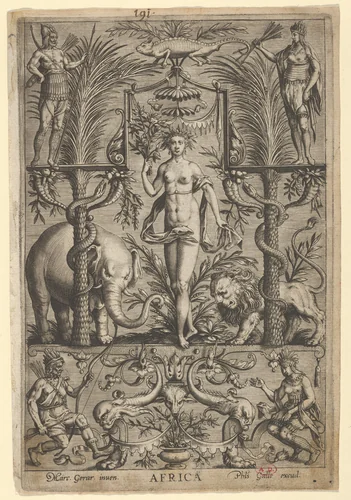
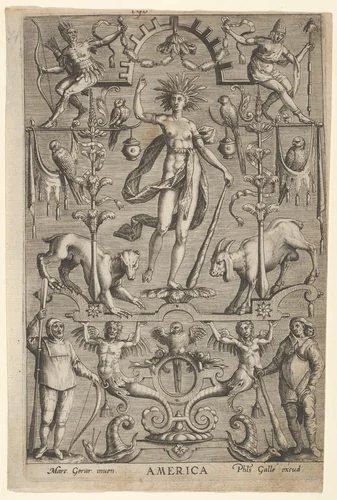
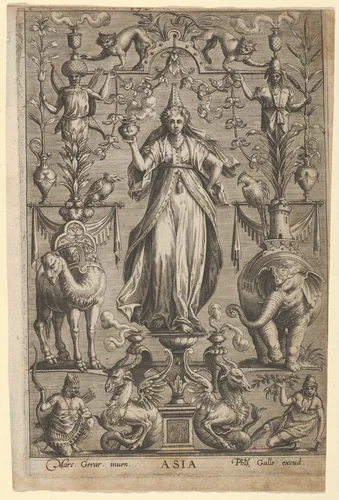
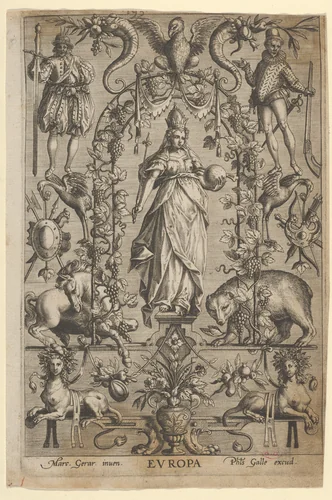
His graphic output also encompassed broad allegorical themes that cemented his reputation as a designer capable of intellectual depth. This is evident in the remarkable series The Four Continents, which explored global themes through personification in prints such as Allegory of America and Allegory of Asia. These high-quality prints reveal an artist equally comfortable interpreting local topography and continental philosophy.
Gheeraerts’s influence was sustained through his extensive body of work and his familial legacy; his son, Marcus Gheeraerts the Younger, became one of the most prominent court painters in England. It is a telling detail, however, that while the son received greater contemporary renown, the elder’s foundational work in detailed graphic design fundamentally shaped the trajectory of illustration. Today, much of the Marcus Gheeraerts the Elder prints and graphic output resides within the public domain, securing his place not merely as a transitional figure, but as an innovator whose downloadable artwork remains highly valued for its historical and artistic insight.
Source: Wikipedia · CC BY-SA 4.0