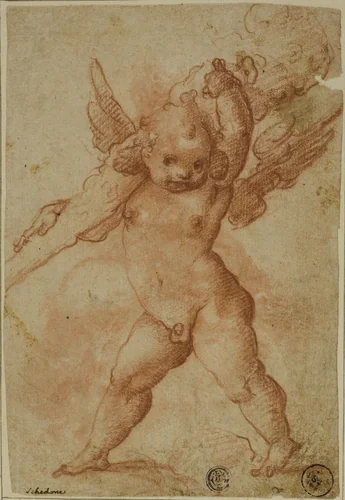
Marco Marchetti
Marco Marchetti (c. 1528-1588), often known as Marco da Faenza, was a highly adaptable Italian painter and draftsman who operated at the confluence of the late-Renaissance and Mannerist traditions. Active primarily between 1546 and 1575, his career was distinguished by significant commissions in his native Faenza and critical collaborative projects in Florence. His early renown is tied intrinsically to his work alongside Giorgio Vasari, the era’s foremost artistic impresario and historian. Marchetti contributed significantly to the expansive cycle of frescoes in Florence’s Palazzo Vecchio, where he assisted in depicting the Life of Hercules, a visually complex project designed to affirm the power and classical lineage of the reigning Medici dynasty.
While the Florentine frescoes established his reputation within Vasari’s powerful circle, Marchetti continued to secure independent commissions that demonstrate his proficiency in large-scale altarpieces. For the church of the confraternity of Santa Maria dell'Angelo in Faenza, he completed the expressive Adoration by the shepherds (1567), now housed in the city's pinacoteca. Later, he executed the dramatic Martyrdom of St. Catherine of Alexandria (1580) for the church of Sant'Antonio, a work that fully embraced the heightened emotion and stylized forms characteristic of mature Mannerism.
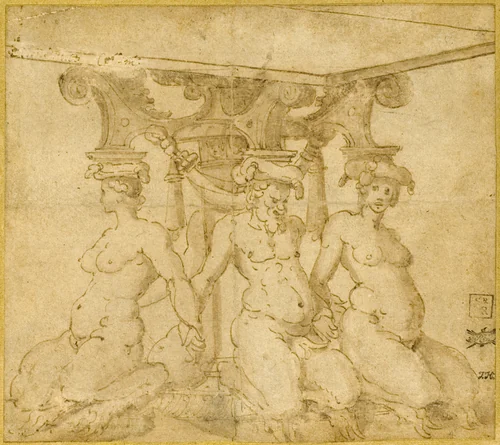
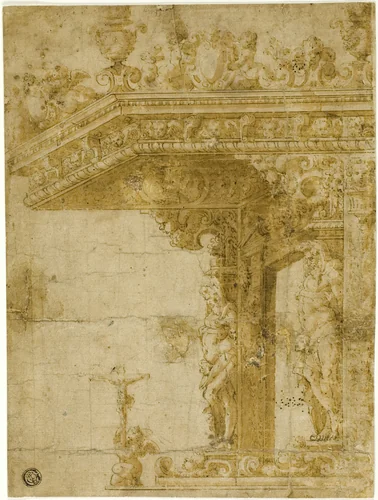
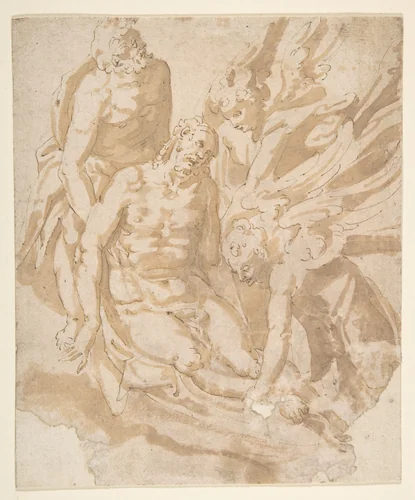
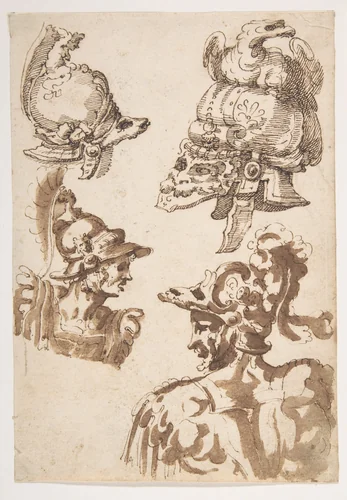
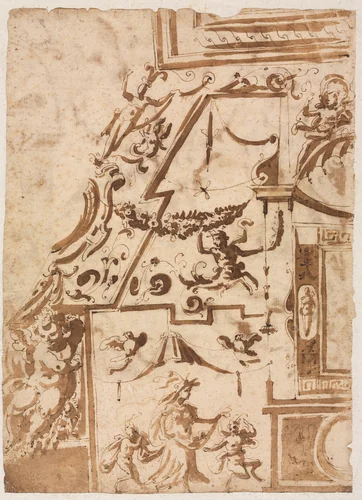
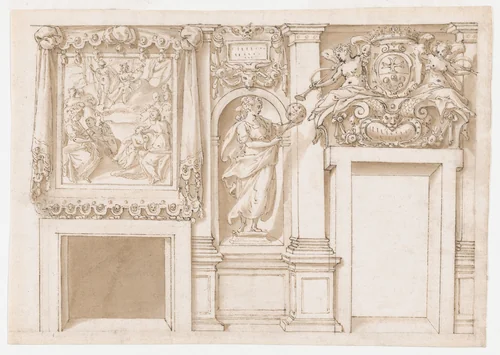
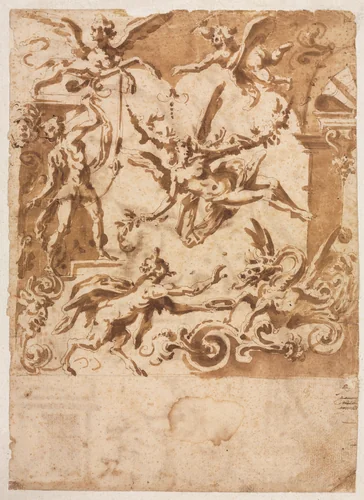
It is through his substantial surviving body of preparatory and ornamental drawings, however, that Marchetti’s ingenuity as a designer is perhaps best appreciated today. Major institutions, including the Metropolitan Museum of Art, the Art Institute of Chicago, and the Cleveland Museum of Art, hold examples that reveal a fascinating specialization in the intricate, the architectural, and the sometimes bizarre. His surviving designs range from monumental pieces, such as the Design for Tomb with Canopy, to practical studies of militaristic hardware, including the Studies of Two Helmets and of Two Soldiers Wearing Helmets. Particularly striking are his ornamental explorations, which include detailed studies for architectural bases featuring kneeling satyresses and the inventive Grotesque with a Leaping Centaur (verso). These museum-quality works are increasingly accessible; researchers and enthusiasts seeking Marco Marchetti prints often rely on these collections for high-quality images.
Marchetti’s versatility extended across religious narrative, mythological cycles, and the decorative arts, positioning him as a highly competent, yet occasionally underrated, contributor to the Tuscan and Emilian schools. While the spotlight often lands on the towering figures with whom he collaborated, Marchetti’s quiet mastery of composition and ornament ensured his work stood firm on its own merits, confirming that sometimes the most sophisticated artistic accomplishments are found in the details of the design.