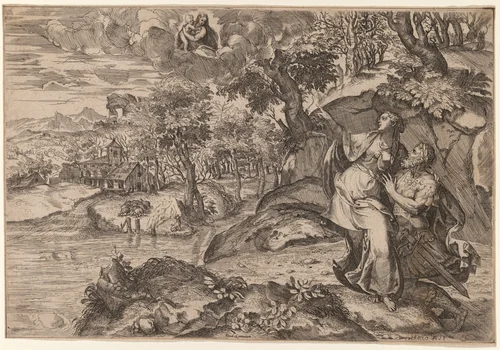
Marco Angolo del Moro
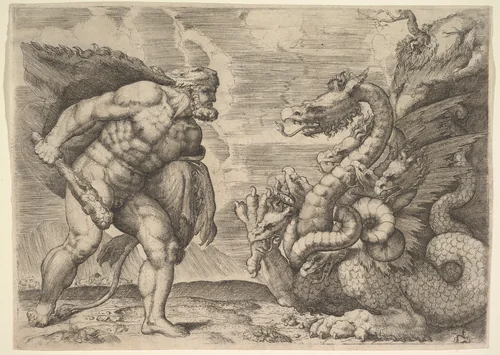
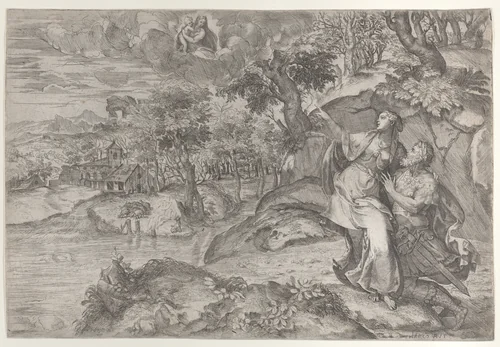
Marco Angolo del Moro stands as a significant reproductive artist and designer operating within the dynamic cultural environment of sixteenth-century Venice and Verona. Active during the latter half of the century, roughly spanning 1530 to 1570, he belonged to a family dynasty of artists, serving as the son, pupil, and assistant to his father, Battista del Moro. This foundational training exposed Marco Angolo to the demands of large-scale decorative projects, including assisting his father on wall decorations executed at Murano. However, his enduring reputation rests less on fresco work and more on his considerable success practicing the technically demanding art of engraving.
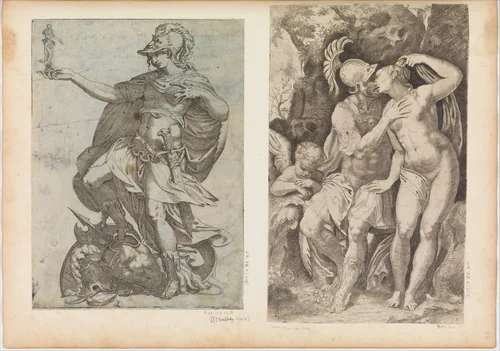
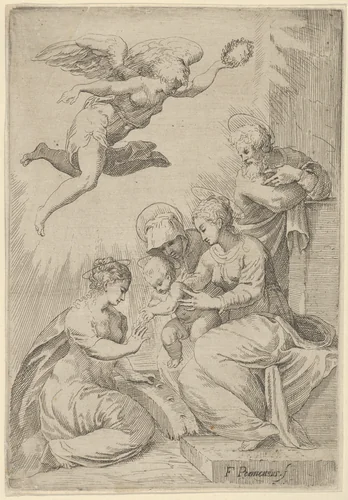
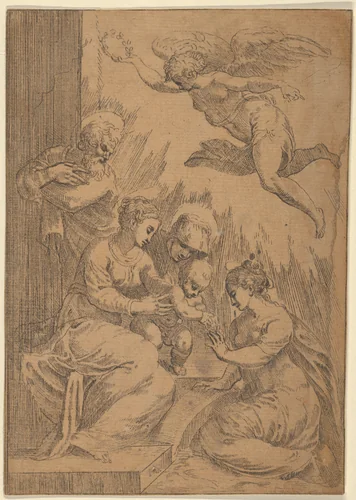
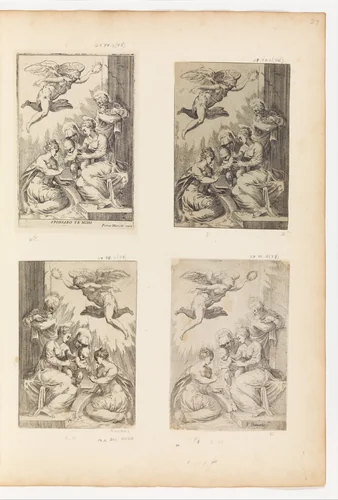
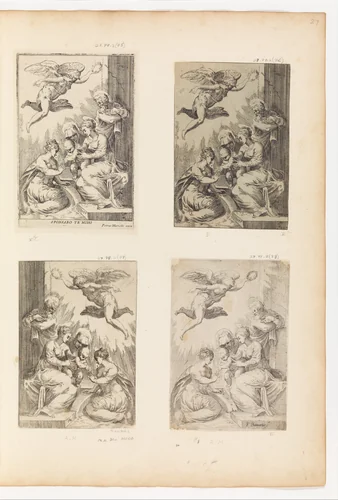
Del Moro’s known output today consists primarily of a robust body of prints, along with a solitary surviving preparatory drawing, reflecting his dual capacity for executing narrative drama and specialized ornamentation. His prints often tackled complex spiritual themes, evidenced by the multiple versions he produced of The Mystic Marriage of St. Catherine. The evident commercial imperative driving such repetition underscores the strong, sustained market for Marco Angolo del Moro prints among contemporary patrons seeking accessible devotional imagery. His repertoire also included mythological studies, such as the focused rendering of Mars and Venus.
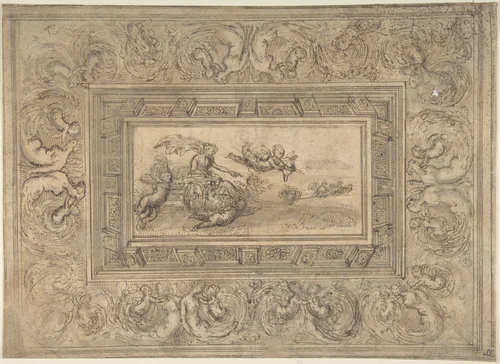
The artist’s capacity for architectural invention is best demonstrated by the sophisticated surviving sheet Design for a Ceiling with a Woman (Aurora?) in a Chariot and Putti (Recto), coupled with a study for an ornamental frieze on the verso. This drawing confirms his involvement in the comprehensive design process for domestic and civic interiors. Through the medium of high-quality prints, Del Moro ensured his decorative motifs and figure styles were widely circulated, bridging the gap between grand Venetian painting and private collecting across Europe. Today, his work is held in major institutional collections, including the Metropolitan Museum of Art and the Cleveland Museum of Art. Many examples are now available as royalty-free downloadable artwork, ensuring the continued accessibility of his sixteenth-century designs within the public domain.
Source: Wikipedia · CC BY-SA 4.0