Mansur
Mansur, often identified as Ustad Mansur (Master Mansur), stands as the most celebrated master of natural history painting within the Mughal court tradition. Active primarily during the reigns of Emperors Akbar and Jahangir (1590-1624), he fundamentally elevated the status of zoological illustration from simple documentation to high art. Emperor Jahangir, a demanding patron and enthusiastic amateur ornithologist, recognized Mansur's unparalleled observational skill, bestowing upon him the honorary title Nadir-ul-Asr (Wonder of the Age). His legacy is defined by the absolute fidelity and minute detail evident in his depictions of the natural world, setting a benchmark for museum-quality realism that lasted centuries.
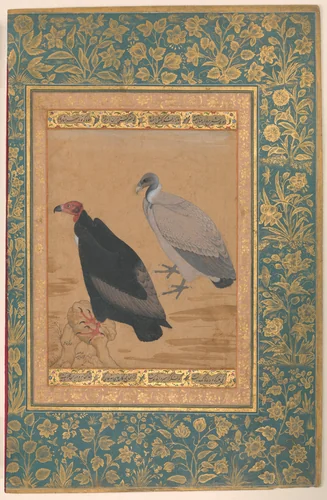
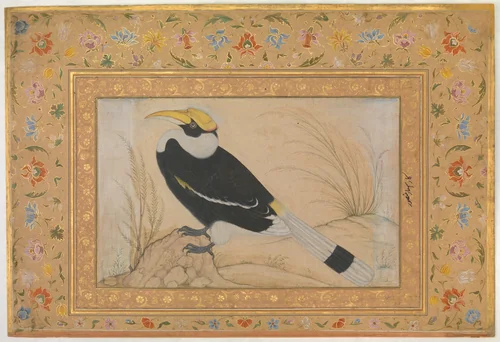
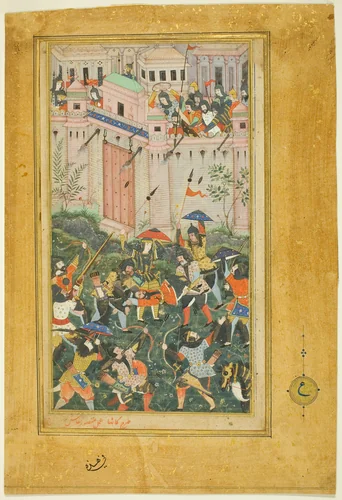
Mansur’s career demonstrates both stylistic range and intense specialization. Early in his activity, he contributed to historical manuscripts such as the detailed narrative illustration Kichik Beg Wounded during Babur's Attack on Qalat, from a copy of the Baburnama. However, it is his standalone folios, commissioned primarily for the Shah Jahan Album, that cemented his reputation as the foremost animalier. Works like the arresting Great Hornbill and the vibrant Red-Headed Vulture and Long-Billed Vulture showcase an almost clinical precision, rendering texture, plumage, and anatomy with startling accuracy against plain or subtly modulated backgrounds. These Mansur paintings function not merely as records, but as penetrating portraits of individual subjects in their immediate environment.
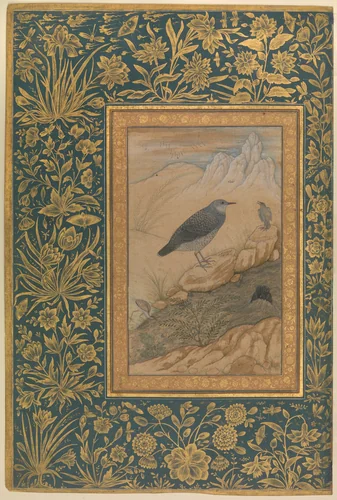
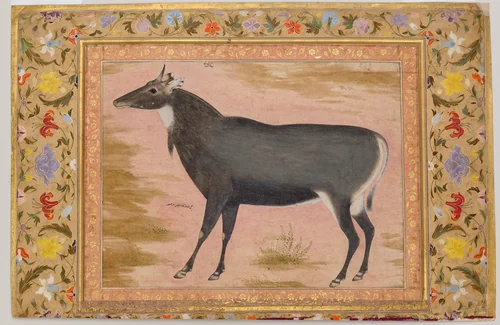
His celebrated study of the Nilgai (Blue Bull) exemplifies this mastery. The large antelope is rendered with such depth that one perceives the underlying skeletal structure and muscle tension, while the fur is executed with microscopic strokes that capture light and shadow. Perhaps the highest compliment paid to Mansur’s technical prowess is the historical fact that his studies often served as the primary scientific record for Mughal scholars cataloging newly discovered or imported species. It is a quiet testament to his observational rigor that many of these depictions, like the dynamic Diving Dipper and Other Birds, survive today in major institutions like the Metropolitan Museum of Art and the Art Institute of Chicago.
Though his primary historical records were luxurious, one-of-a-kind manuscripts reserved for the imperial library, the brilliance of Mansur’s work is now widely accessible. Today, enthusiasts can find high-quality prints and downloadable artwork derived from these imperial commissions, allowing his masterful studies to be appreciated globally, far beyond the confines of the imperial Mughal kitabkhana.
Source: Wikipedia · CC BY-SA 4.0