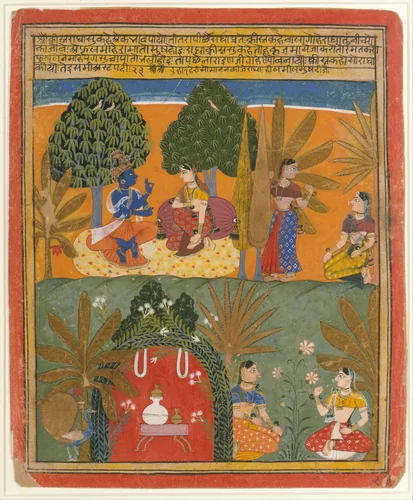
Manohar
Manohar represents one of the most significant, though chronologically complex, signatures in the history of Mughal court painting. While records assign an implausibly vast active period to the name, spanning from 1475 to 1655, it is commonly accepted that ‘Manohar’ denotes a celebrated lineage, likely a father and son, whose high-quality contributions dominated the imperial ateliers during the reigns of Jahangir and Shah Jahan. This exceptional generational continuity ensured the artistic brand remained synonymous with refined draftsmanship and technical excellence across the height of Mughal patronage.
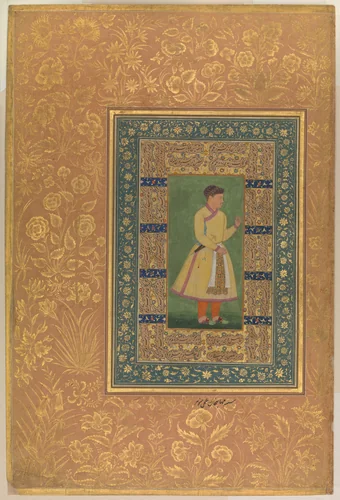
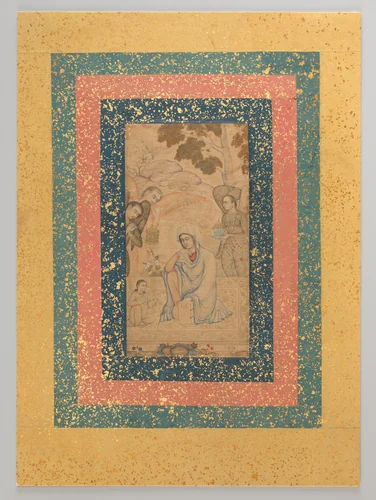
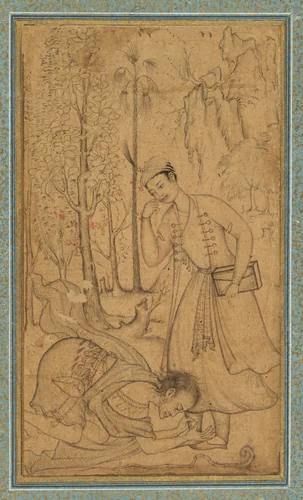
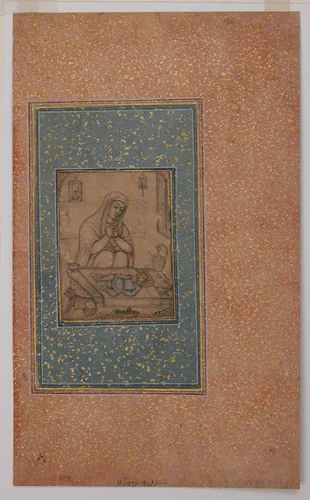
The essential core of Manohar’s recognized oeuvre comprises three individual paintings and contributions to six pivotal manuscripts. His work excelled particularly in formal portraiture, distinguished by its meticulous realism and subtle psychological observation. Rather than merely documenting subjects, Manohar rendered the specific character and political weight of his sitters, creating enduring images of imperial power and hierarchy.
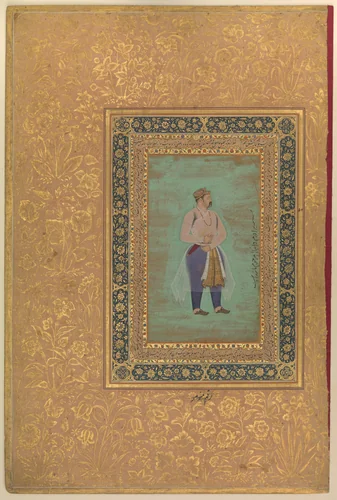
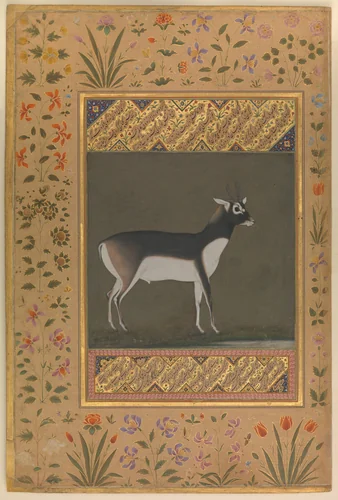
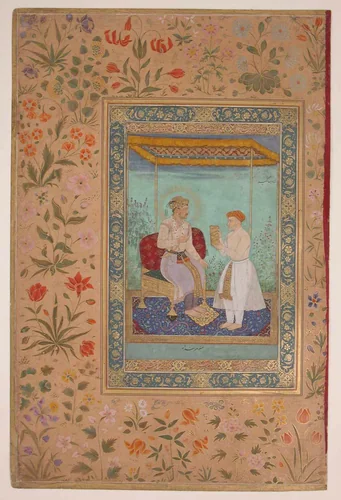
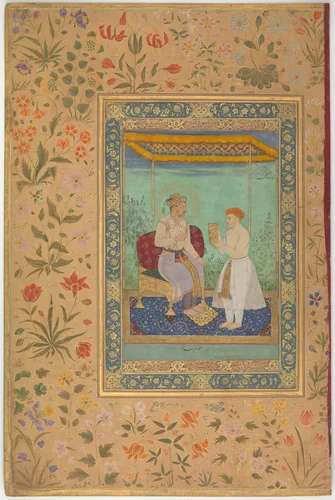
This mastery is evident in the remarkable folios extracted from the celebrated Shah Jahan Album. These include detailed studies such as Black Buck and the politically resonant group portrait, Jahangir and His Vizier, I’timad al-Daula. Also notable is the penetrating recto: Portrait of Prince Danyal, capturing the young prince with an understated nobility characteristic of Manohar’s maturity. A slightly more humorous note, perhaps, is the artist’s knack for conveying the sternness of the ruling class, vividly realized in the focused intensity of Portrait of Zamana Beg, Mahabat Khan.
Manohar’s works are now indispensable holdings in major collections worldwide, including the Metropolitan Museum of Art and the Cleveland Museum of Art, affirming his status within the canon of Indian art. Once reserved exclusively for the private viewing of emperors, many of these iconic Manohar paintings are now available as downloadable artwork through public domain initiatives, providing unprecedented access to these museum-quality masterpieces.