Manchu China
The Qing dynasty (1644–1912), officially the Great Qing, stands as the last and most territorially extensive imperial dynasty in Chinese history. Led by the Manchu people, who originated from the Later Jin dynasty, the Qing seized the Ming capital of Beijing in 1644, initiating a period of unprecedented expansion that ultimately assembled the foundational territory of modern China. At its height, the empire stretched from the Sea of Japan to the Pamir Mountains, encompassing the vast majority of East Asia and managing a population that reached over 426 million by the early twentieth century.
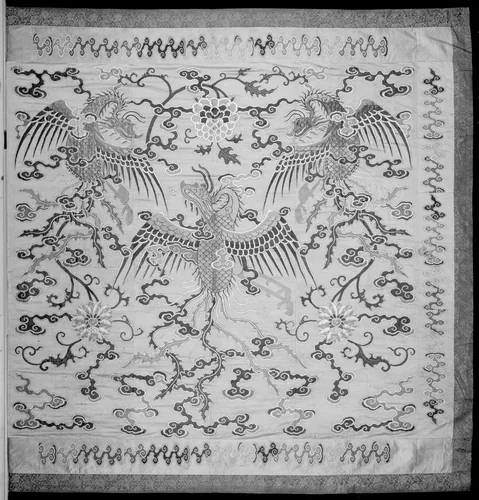
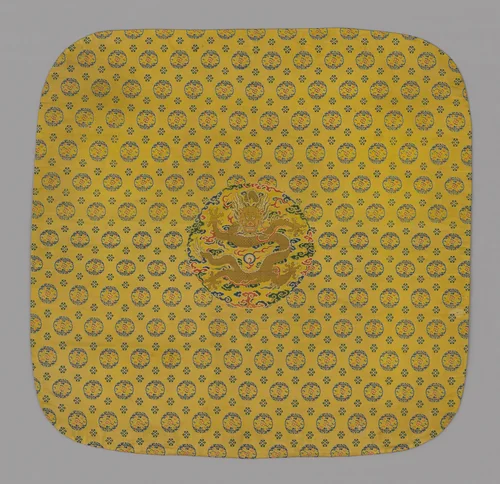
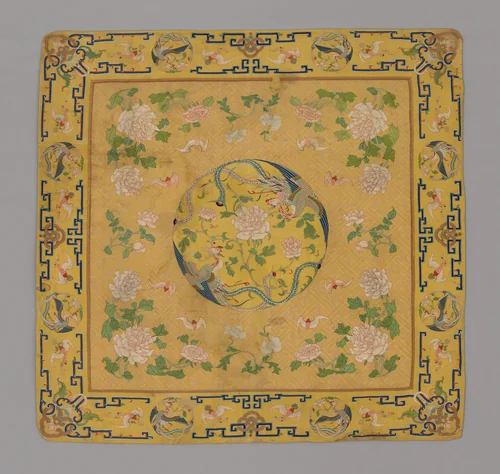
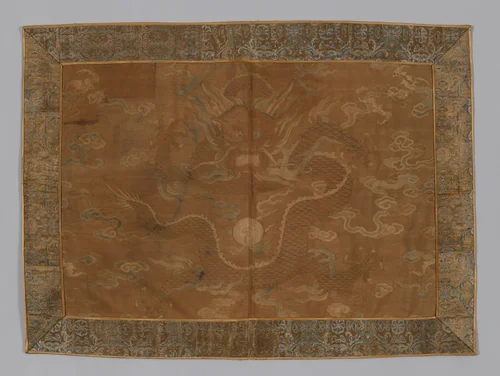
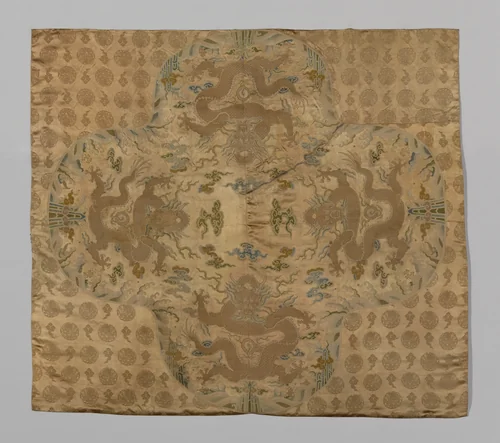
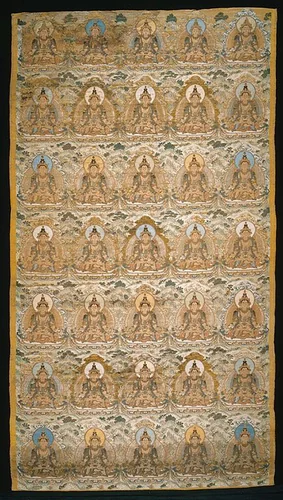
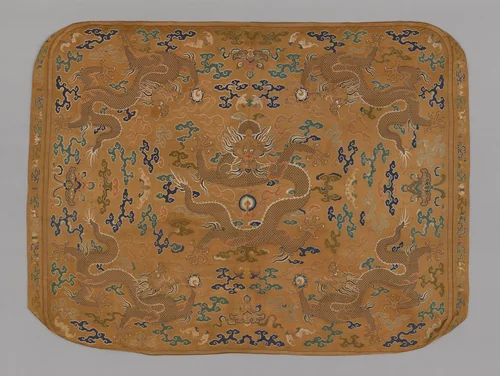
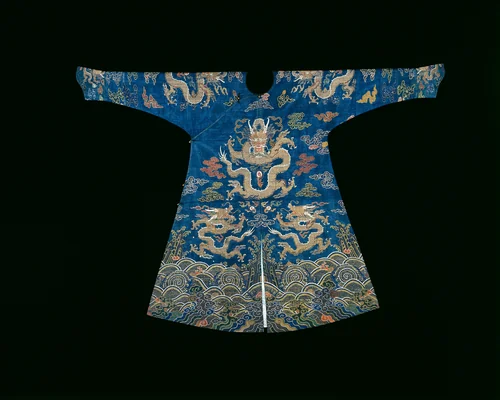
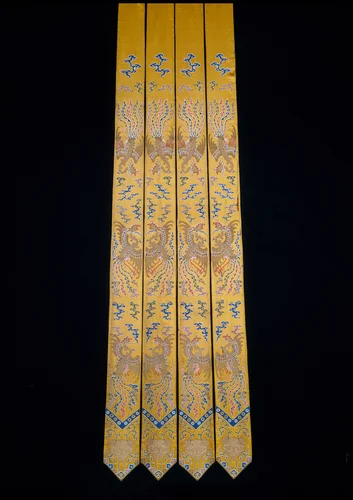
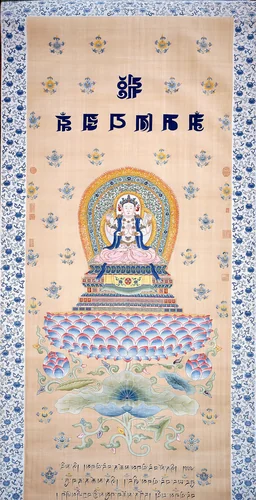
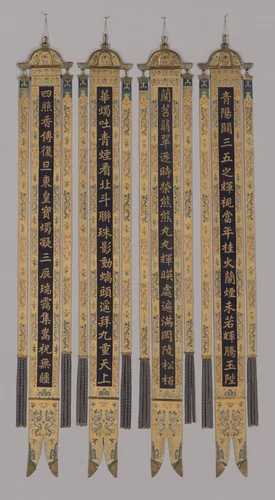
This transformative era, particularly the years between 1650 and 1720, was critical for establishing the court’s distinctive aesthetic and technical prowess. While the dynasty fostered monumental production across all media, the textile arts flourished, demonstrating a high degree of technical sophistication and strict adherence to codified symbolic language. Works such as the intricate Bed Curtain or the highly formal Cushion Cover were produced by imperial workshops, employing luxurious materials and advanced silk embroidery or k’ossu tapestry weaving techniques that rigorously signaled the wearer’s rank and status within the massive governmental hierarchy.
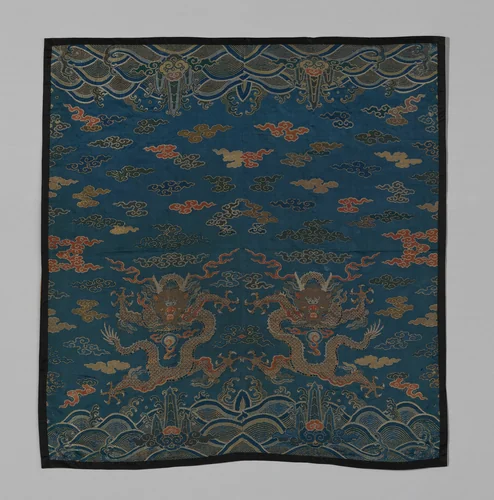
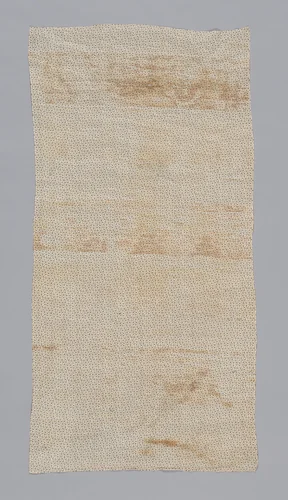
The sheer logistical scale of the empire, which by the 1790s was the fourth-largest in world history, necessitated an industrial yet meticulously controlled production of luxury goods for court use. This dedication to massive, high-quality output ensured that thousands of objects survived the collapse of the imperial structure. Students and enthusiasts researching East Asian arts often encounter museum-quality examples from this period, demonstrating the evolution of imperial iconography from Ming precedents. Furthermore, many early Qing designs, including fragments like the Panel (Former Fragment of Man’s Coat), are increasingly accessible through public domain archives, allowing researchers worldwide to study these textiles as downloadable artwork or high-quality prints. The Qing legacy is defined by this comprehensive integration of material culture and governmental structures, providing an enduring window into the magnificent complexity of the dynasty that lasted until the final imperial abdication in 1912.
Source: Wikipedia · CC BY-SA 4.0