Mabel Dwight
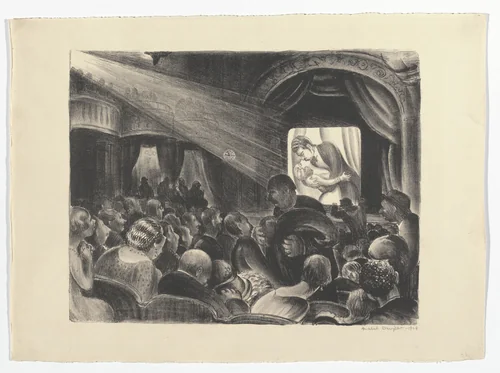
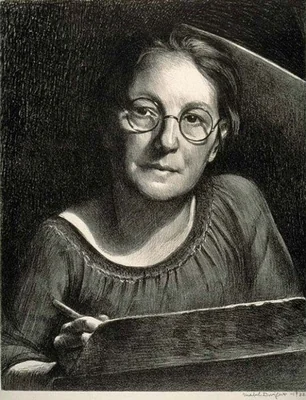
Mabel Dwight (1875-1955) stands among the most critically recognized American printmakers of the early twentieth century. Working almost exclusively in lithography, she specialized in capturing the mundane dramas of metropolitan and domestic life. Her primary period of activity, spanning the late 1920s through the early 1940s, saw her achieve remarkable critical acclaim and widespread popularity, establishing her as a vital and astute interpreter of the American scene.
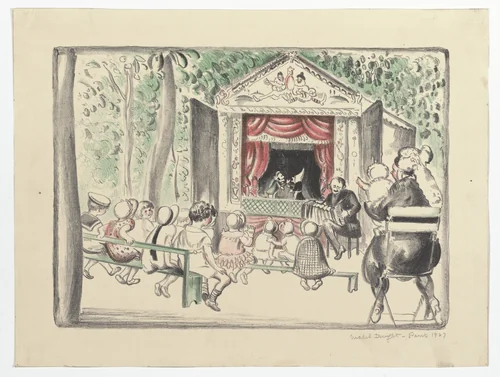
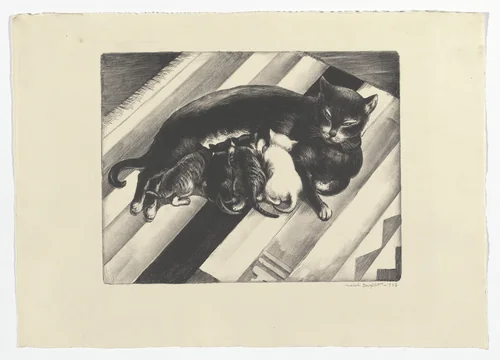
Dwight was distinguished by a unique perspective that fused meticulous observation with a deep vein of humanistic commentary. The renowned scholar and dealer Carl Zigrosser, a keen observer of her technique and intent, noted that her work was "imbued with pity and compassion, a sense of irony, and the understanding that comes of deep experience." Unlike some contemporaries who sought heroic or sensational subjects, Dwight found her profoundest material in quieter, often anonymous settings: the tension of a public confrontation, as seen in The Clinch, the detached humor of spectatorship in Guignolette, or the subtle dynamics of home life in The Family. She approached realism with an understated, often witty, tolerance for human foible.
Her success was both immediate and sustained. By 1936, Prints magazine formally recognized her status by naming her among the best living printmakers, while contemporary critics hailed her as one of the foremost lithographers operating in the United States. This acclaim is particularly notable considering Dwight only fully dedicated herself to printmaking in her fifties, bringing to the medium an outsider’s fresh and unromanticized gaze after many years spent living abroad.
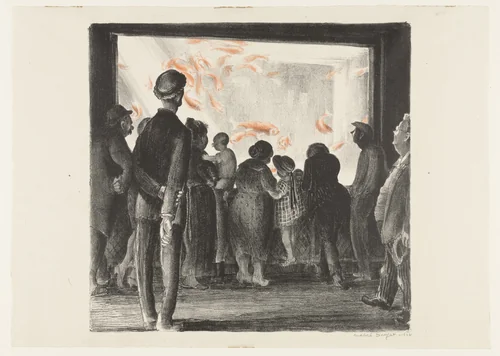
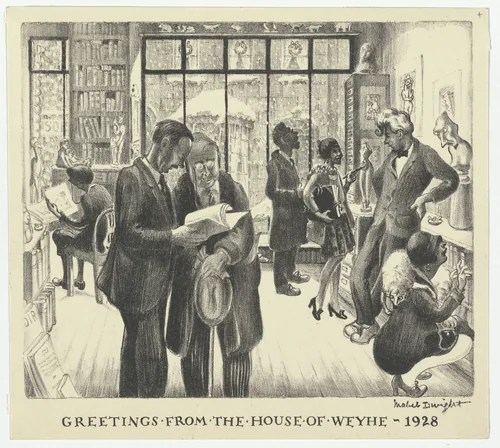
The technical proficiency evident in Mabel Dwight prints, coupled with her nuanced subject matter, ensures their continued historical importance. Today, key examples, including the satiric group study Greetings from the House of Weyhe and the delicate study Fish, reside in major institutions such as the Museum of Modern Art. The enduring interest in her work has led to the frequent production of high-quality prints, allowing these museum-quality visual records of 1930s social interactions to remain widely accessible and studied.
Source: Wikipedia · CC BY-SA 4.0