Maarten de Vos
Maarten de Vos (or Maerten de Vos the Elder) was one of the foremost Flemish history painters of the late sixteenth century, whose rise to prominence coincided with a period of severe artistic and political upheaval in the Spanish Netherlands. Active from 1532 to 1585, De Vos played a vital role in reconstructing the visual culture of Antwerp following the Iconoclastic fury of the Beeldenstorm, which severely disrupted the careers of contemporaries like Frans Floris.
Working alongside the brothers Ambrosius Francken I and Frans Francken I, De Vos essentially filled the immediate void in demand for large-scale history paintings, allegories, and sophisticated portraits. His ability to meet this civic necessity secured his reputation as a definitive master of the post-Iconoclasm era. He possessed a sharp technical facility, adapting the Italianate stylistic trends of the preceding generation while maintaining a distinct Northern European rigor in his composition and psychological detail.
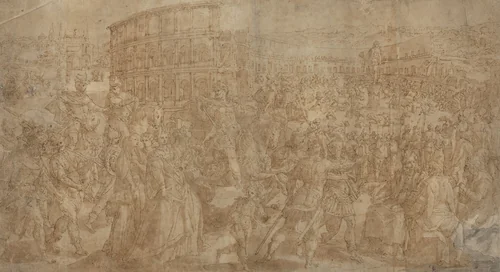
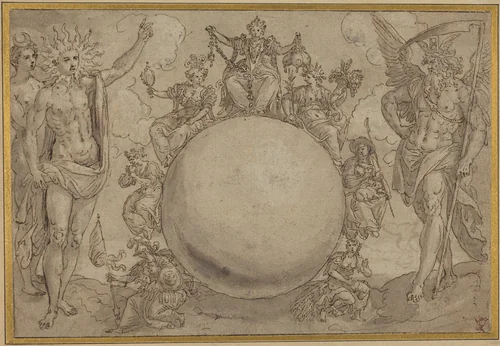
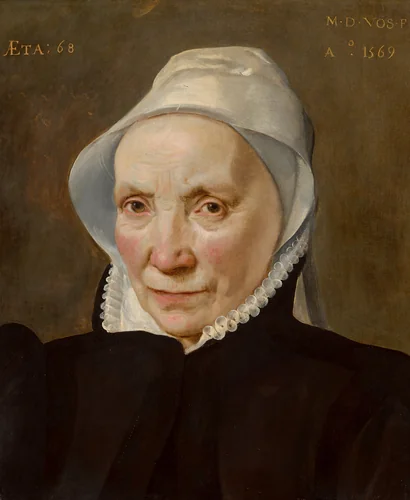
De Vos specialized in ambitious narrative works that often served a didactic function. His compositions frequently involved dense groupings of figures designed to illustrate classical virtues or historical moments. Examples range from the monumental drama of A Roman Triumph to complex allegories employing mythological figures, such as Apollo, Diana, and Time with the Cyclic Vicissitudes of Human Life. His skill extended equally into portraiture, demonstrated by the precise rendering and psychological acuity of works like Portrait of a Woman Aged Sixty-Eight.
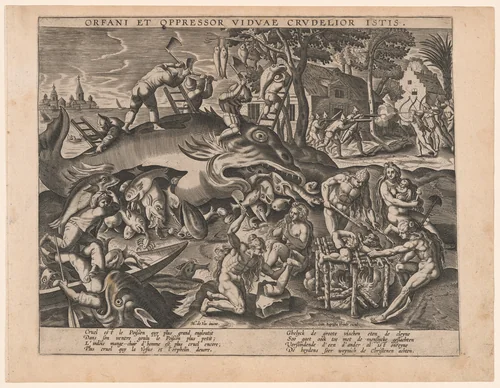
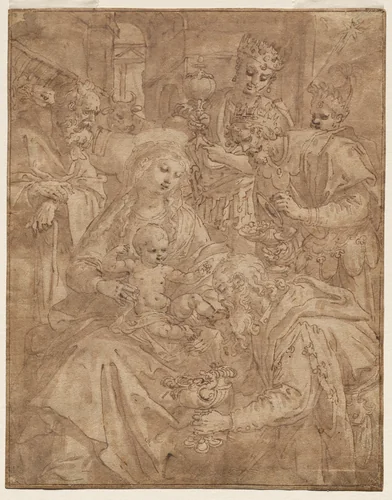
The artist’s capacity to move fluidly across media is evidenced by the substantial output of Maarten de Vos prints and highly finished preparatory drawings alongside his paintings. His influence extended widely via copper plate, making his compositions familiar across Europe. The detailed, allegorical print The Big Fish Eat the Small, for instance, showcases his sharp observational humor and command of narrative satire.
His enduring importance is reflected in the institutional support for his oeuvre. Major collections, including the Art Institute of Chicago, the National Gallery of Art, and the Cleveland Museum of Art, preserve key examples of his work. Reflecting his sustained significance to art history, much of the artist's graphic work is now in the public domain, ensuring that museum-quality, high-quality prints and downloadable artwork remain available for scholarly examination worldwide.