Luke Sullivan
Luke Sullivan (active circa 1750-1761) was a highly respected Irish-born printmaker and engraver crucial to the visual culture of mid-eighteenth century Britain. His technical precision and expertise in reproducing complex compositions ensured that his works entered major institutional holdings, including the Metropolitan Museum of Art and the Cleveland Museum of Art, underscoring his contribution to the era’s artistic output.
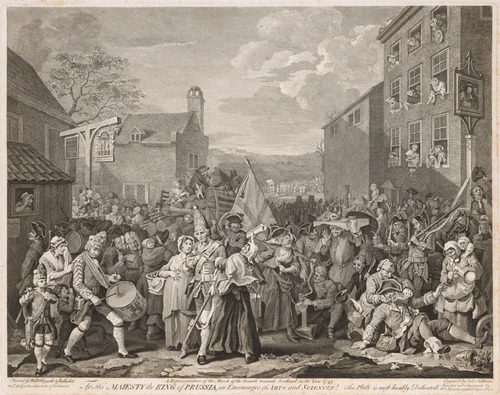
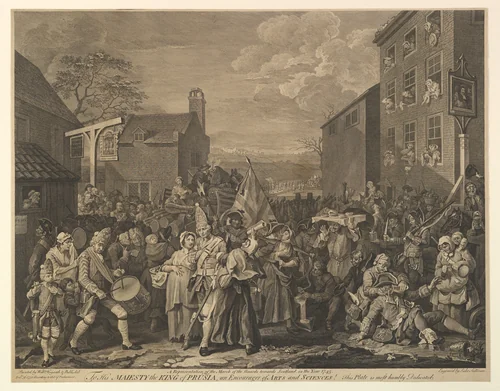
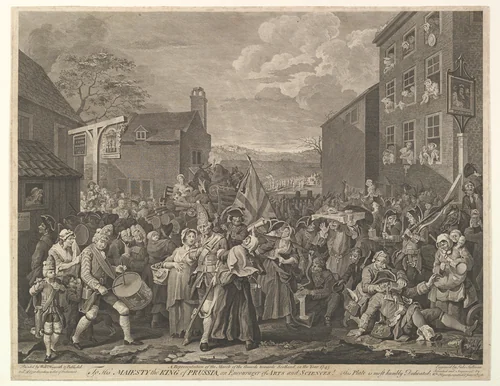
Sullivan is perhaps most famous for his collaboration with William Hogarth, serving as the master artist's primary engraver for one of the most celebrated and chaotic military satires in English art. This monumental effort resulted in the definitive engraved edition of Hogarth’s work, known variously as March to Finchley in the Year 1746 (After Hogarth) and The March to Finchley (A Representation of the March of the Guards towards Scotland in the Year 1745). The task of translating Hogarth's crowded, detail-laden oil painting, which captured the disorder and high drama of soldiers preparing for deployment, into a high-quality print demanded exceptional control over the burin and profound interpretive skill regarding tone and line.
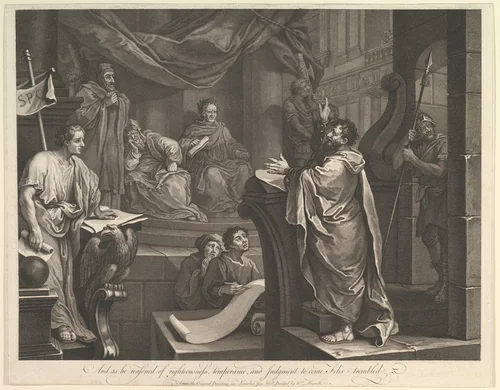
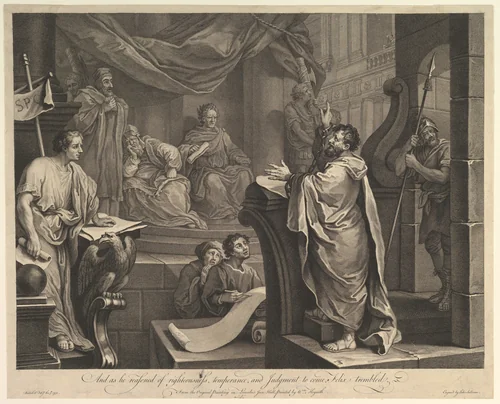
Beyond the challenges posed by grand-scale satire, Sullivan demonstrated significant technical versatility across a diverse range of subjects. His contributions included the detailed reproduction of serious historical and religious scenes, exemplified by two known print versions of Paul Before Felix.
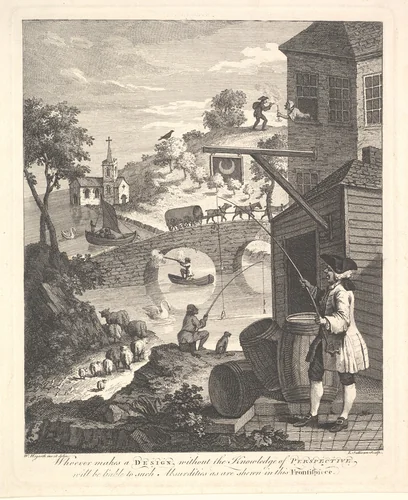
A lesser-known, yet fascinating, aspect of his output reveals his subtle personality and capacity for wit. He engraved the frontispiece for Joshua Kirby’s instructional volume on perspective. This print, titled Satire on False Perspective: Frontispiece to "Kirby's Perspective", is a delightful visual jest. It intentionally illustrates a scene where all rules of vanishing points are ignored, resulting in humorous optical impossibilities, providing a lighthearted example of the errors the textbook aimed to correct.
Sullivan’s focused career as a specialist in reproductive techniques guaranteed that these vital eighteenth-century compositions became widely accessible to the public. Because many of his museum-quality works now reside in the public domain through institutional collections, researchers and audiences can easily locate downloadable artwork, confirming his status not only as a master craftsman, but as a critical mediator between the great painters of his time and the burgeoning market for high-quality prints.