Luigi Vanvitelli
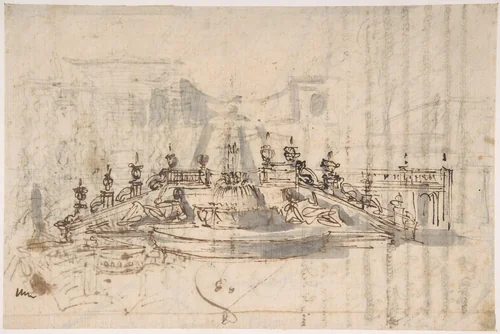
Luigi Vanvitelli (active c. 1700) holds the distinction of being the most prominent Italian architect of the eighteenth century, an essential figure whose work provided the academic foundation for modern Italian building practice. While trained also as a painter, his enduring significance rests upon his extensive, measured, and highly influential architectural designs. The survival of drawings, such as those held in collections including the Metropolitan Museum of Art, attests to his professional stature and meticulous preparation.
Vanvitelli’s aesthetic is defined by its synthesis of grandeur and restraint. He practiced a sober classicizing academic Late Baroque style that deliberately tempered the movement's more theatrical tendencies. This rational and disciplined approach distinguished his output and allowed his architecture to form a critical hinge in European design history, enabling an easy, elegant transition towards the emerging tenets of Neoclassicism. He prioritized structural clarity and ordered composition, elements clearly visible even in his preliminary sketches.
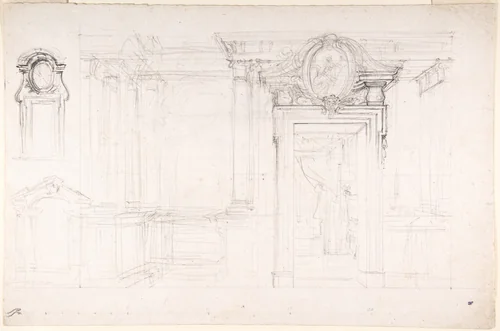
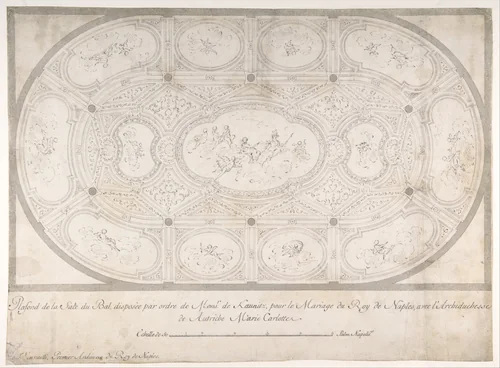
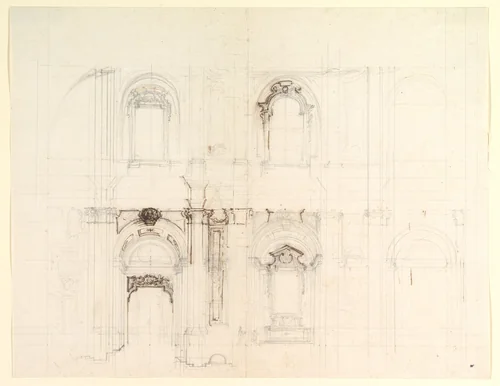
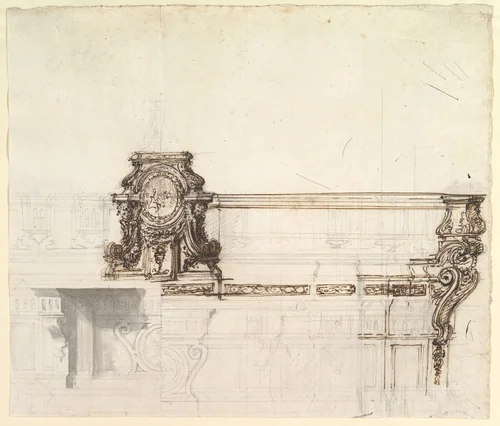
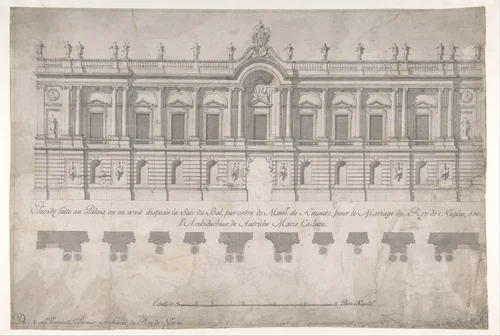
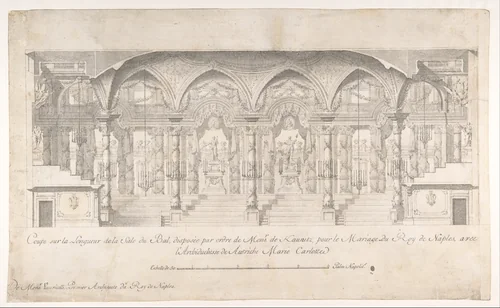
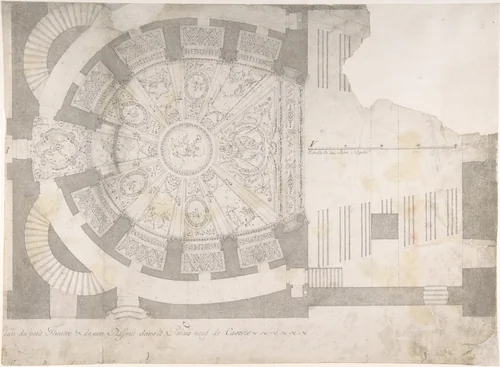
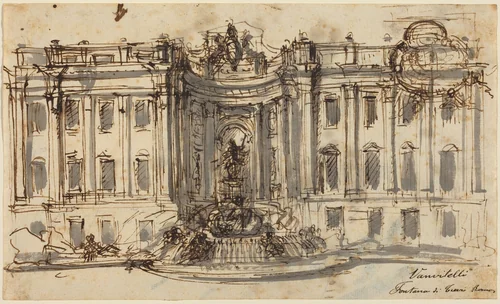
The surviving corpus of Vanvitelli’s work, comprising numerous high-quality prints and original drawings, offers insight into the breadth of his commissions. Works like Architectural Sketch for the design of a Wall with Doorway, with two smaller sketches for the design of windows or doorways (recto) reveal his methodical process for detailing components at both micro and macro scales. Other designs articulate highly specific and ambitious spatial visions, such as the meticulously rendered Ceiling of Ballroom decorated for the Marriage of the King of Naples to the Archduchess of Austria, a descriptive title that nevertheless suggests one of the period’s most enviable courtly commissions.
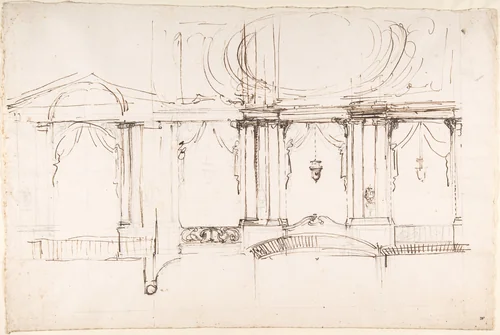
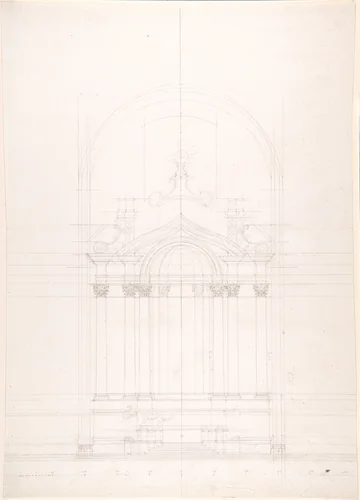
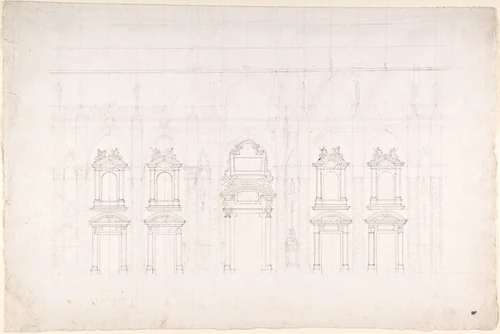
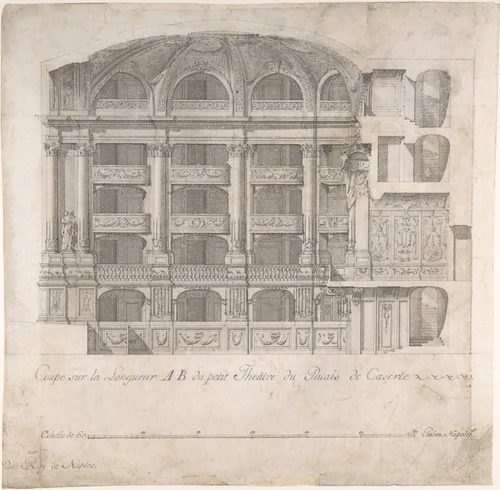
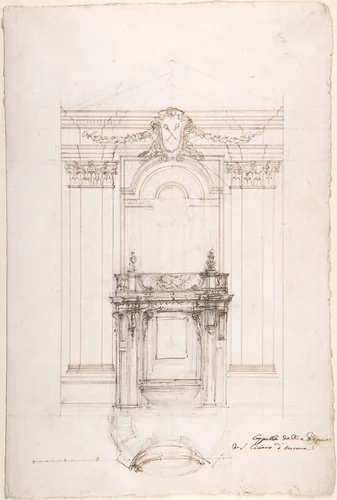
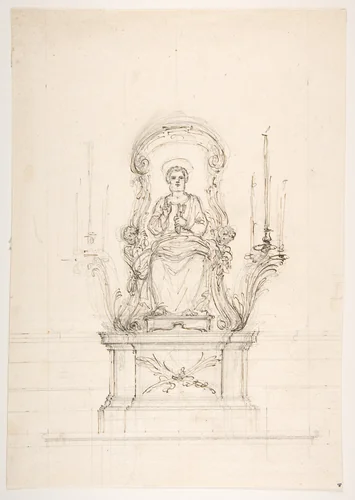
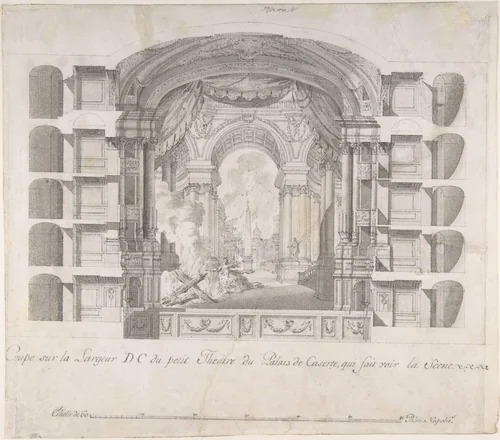
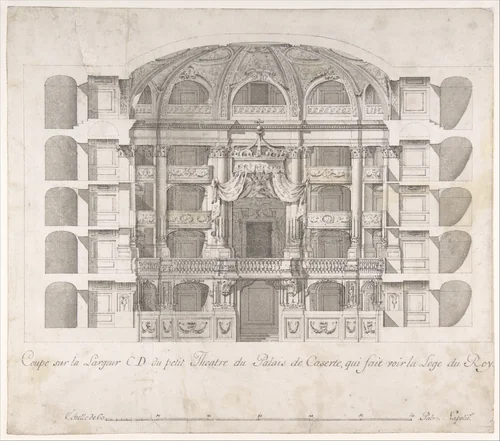
His drawings, including focused plans like Design for an Altar and expansive spatial studies such as Design for a Theater Interior, remain vital documents for scholars studying eighteenth-century architectural theory. Many works related to his legacy, including detailed studies and Luigi Vanvitelli prints, are increasingly available through the public domain, ensuring these museum-quality records of transition and innovation continue to reach researchers worldwide. Vanvitelli’s enduring legacy is thus one defined by precise execution and a calculated, authoritative approach that steered Italian architecture from the final bloom of Baroque toward the measured certainty of Neoclassicism.
Source: Wikipedia · CC BY-SA 4.0