Luigi Garzi
Luigi Garzi (1638-1721) was an accomplished Italian painter whose lengthy and prolific career firmly situated him within the Roman high Baroque tradition. Active primarily from the mid-1660s until 1708, Garzi’s sophisticated classicizing approach was crucial in defining the stylistic sensibility that bridged the transition between the monumental scale of Pietro da Cortona and the subsequent flourishing of the early 18th century.
Garzi’s aesthetic was deeply rooted in the formal clarity and idealized figuration established earlier in the century, displaying the strong, acknowledged influence of the Bolognese master Guido Reni. This lineage instilled in Garzi’s work a preference for controlled composition, luminous color palettes, and expressive, yet measured, drama. While celebrated during his lifetime for large-scale commissions, including altarpieces and extensive fresco cycles for Roman churches, the surviving body of preparatory works confirms his technical mastery of disegno.
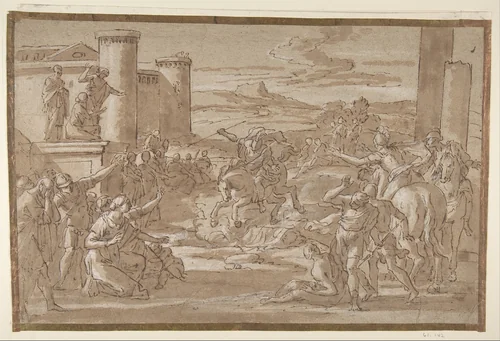
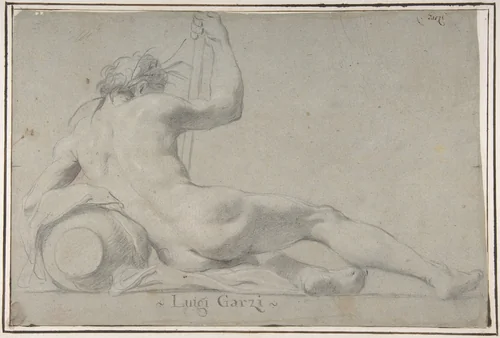
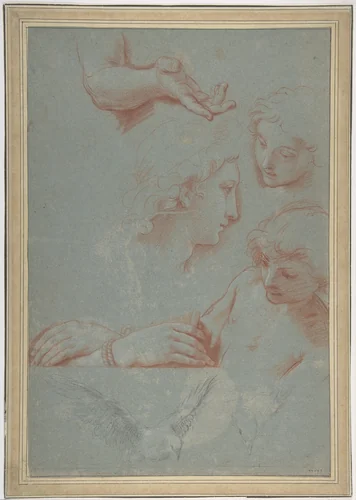
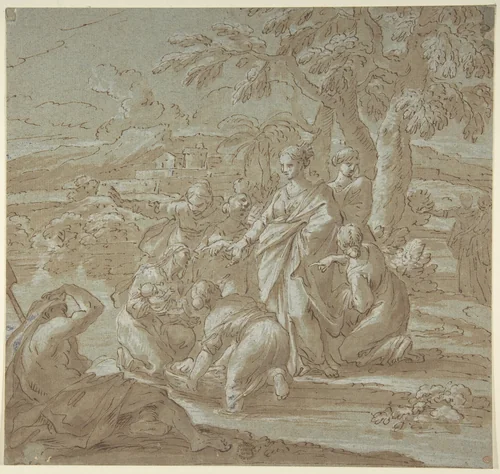
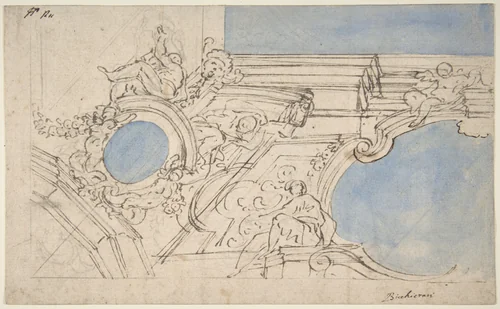
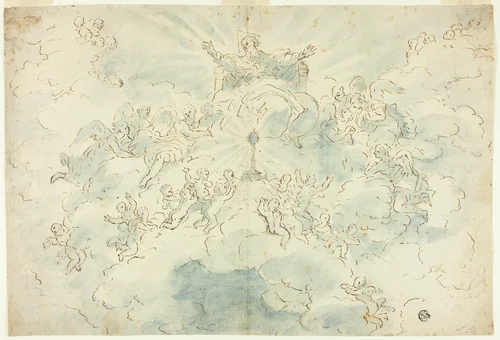
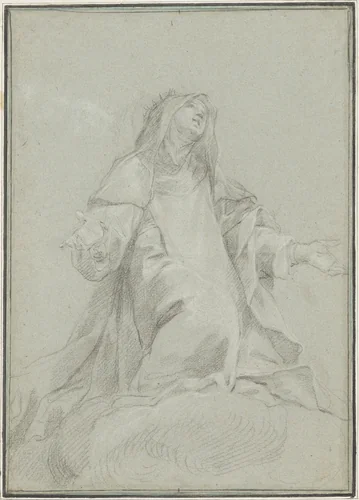
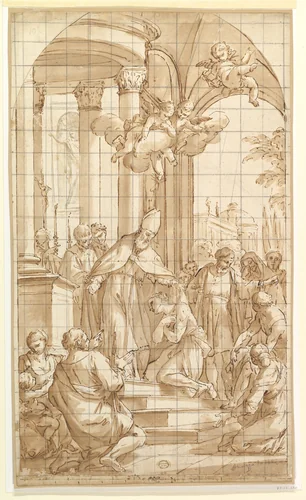
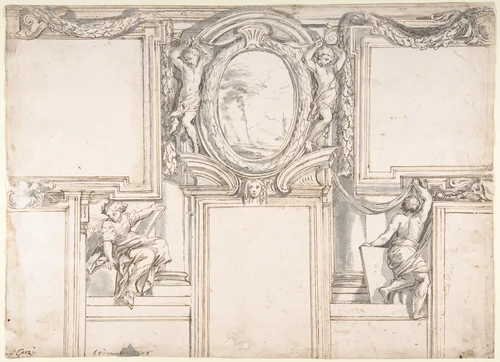
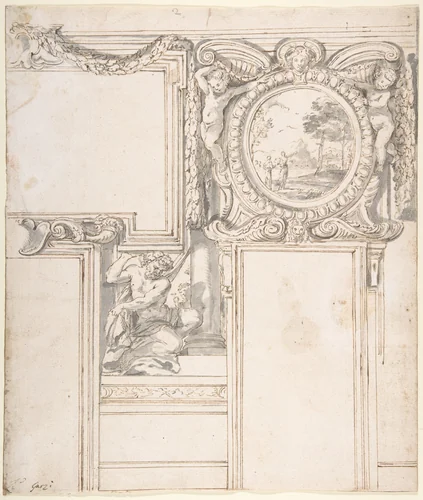
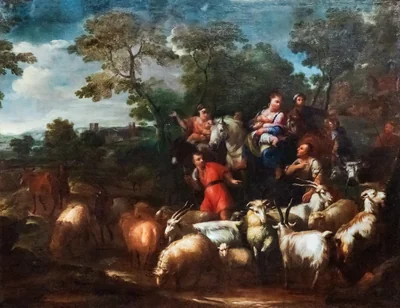
The depth and variety of his draftsmanship are preserved in major international repositories, including the National Gallery of Art, the Metropolitan Museum of Art, and the Art Institute of Chicago. Garzi’s capacity to manage complex spatial relationships is especially evident in architectural studies such as A Foreshortened View of a Ceiling Corner Decorated with Statues, Putti and Garlands. His focus on classical mythology and historical narrative is highlighted in compositions like Marcus Curtius Leaping into the Chasm (recto) and The Finding of Moses. An especially revealing piece, the Sheet of Studies: Heads, Hands, and Doves, offers a momentary glimpse into the immediate working process of the artist, prioritizing rapid observation and technical practice over a polished finish.
Though sometimes overlooked in surveys prioritizing earlier Baroque figures, Garzi's significant contributions ensured his place as a leading exponent of the late Roman school. His continued popularity among collectors and institutions ensures that his legacy remains robust. Today, researchers, students, and enthusiasts can access high-quality prints of many Luigi Garzi paintings and studies, making his oeuvre widely available for scholarship and appreciation, particularly through collections that champion downloadable artwork in the public domain.
Source: Wikipedia · CC BY-SA 4.0