Ludwig Mies van der Rohe
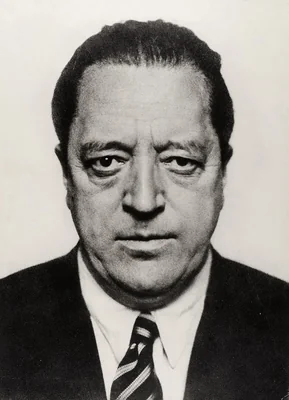
Ludwig Mies van der Rohe stands among the most influential pioneers of modern architecture, a figure whose foundational theoretical work shaped the 20th century built environment. Referred to simply as Mies, he maintained a crucial dual identity as both a German and later an American architect, academic, and interior designer. His profound impact was achieved through a rigorous commitment to structural clarity, earning him a position alongside Le Corbusier and Walter Gropius as a defining voice of the era.
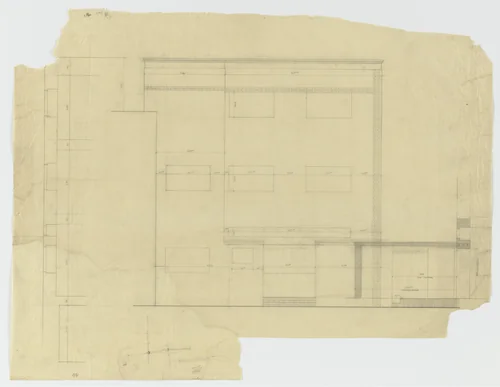
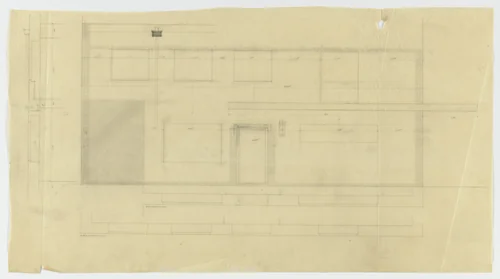
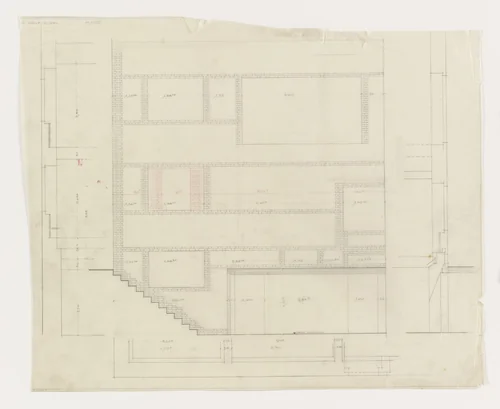
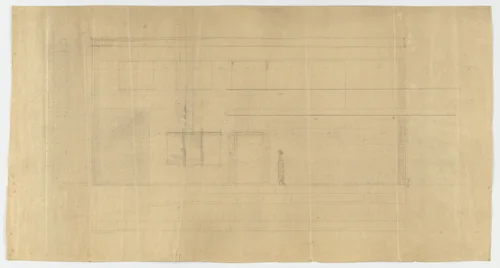
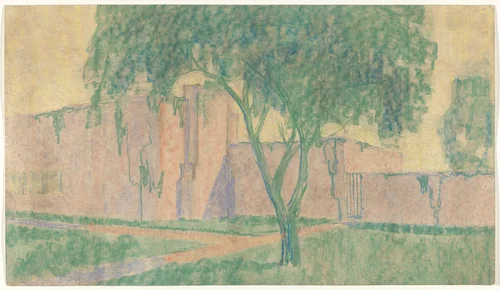
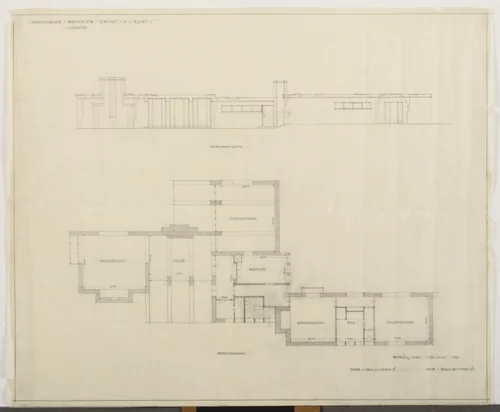
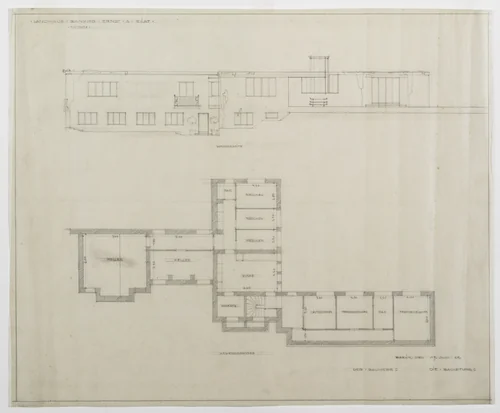
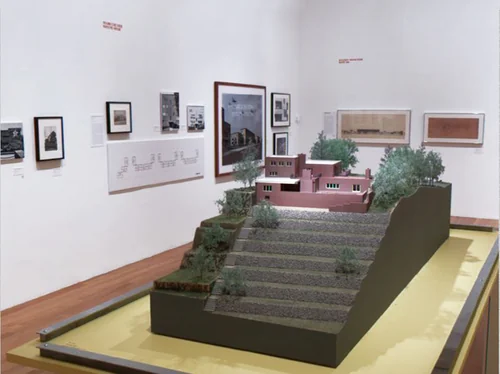
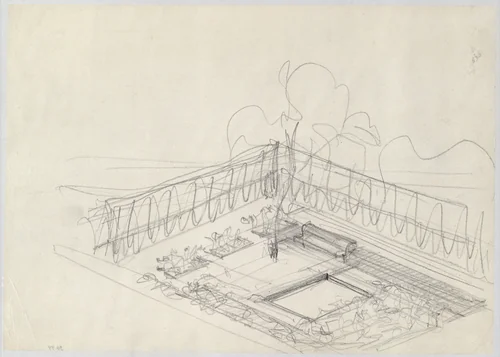
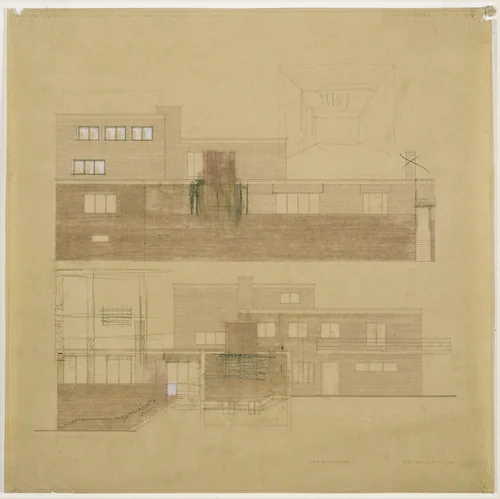
The initial phase of his practice, spanning the years 1910 to 1922, is documented through meticulous archival material revealing an intense focus on residential and public monumentality. This early period captures his intellectual transition toward modernism. Works such as the plans for the Werner House in Berlin-Zehlendorf, detailed through four precise elevations and corresponding plans, demonstrate an early mastery of integrated spatial organization. Equally illustrative of his ambition are the large-scale conceptual renderings for the Bismarck Monument Project in Bingen, where he explored complex courtyard perspectives and classical public design themes, demonstrating a sophisticated command of traditional forms before his radical modernist shift. Even his smaller-scale visualizations, such as the landscape model for the Eichstaedt House, betray a commitment to integrating architecture seamlessly with the terrain.
Mies’s lasting contribution rests on his pursuit of ultimate simplicity and structural honesty, famously distilled into his enduring design philosophies. This rigorous standard demanded the reduction of ornamentation to reveal the intrinsic beauty of structural elements and functional space. His uncompromising approach carried over into his academic career, where he profoundly influenced generations of architects, establishing the principles of rational modernism as canonical.
It is perhaps a subtle observation of his character that, despite his reputation for designing cold, rational structures of steel and glass, he maintained an enduring affection for traditional brickwork, employing it extensively even in some of his most radical modern projects. His conceptual sketches and early studies remain invaluable resources, often housed in international institutions like the Museum of Modern Art. These collections ensure that his foundational works, including early architectural plans and detailed studies, are preserved; many are today considered part of the public domain, making high-quality prints and downloadable artwork widely accessible for scholarly analysis and appreciation.
Source: Wikipedia · CC BY-SA 4.0
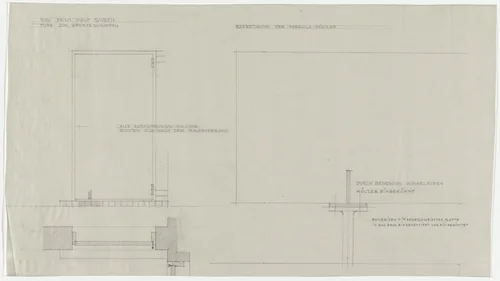
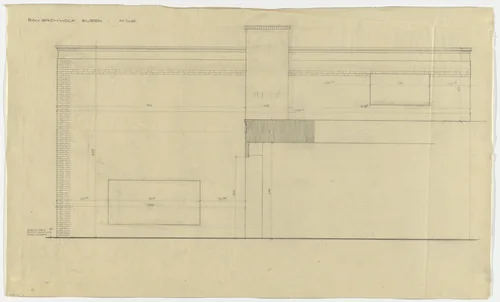
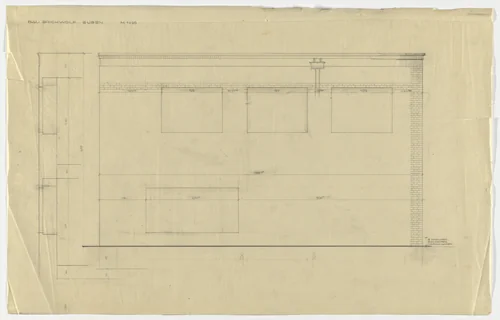
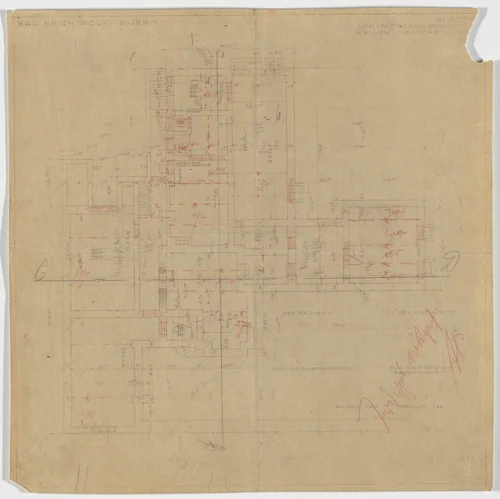
![Wolf House, Gubin, Poland (Basement plan [final version]) by Ludwig Mies van der Rohe, mies van der rohe archive, 1925](https://img.artbee.org/340970f5-9f46-4838-9b1a-1947bddb670e/small.webp)
![Wolf House, Gubin, Poland (Basement plan [final version]) by Ludwig Mies van der Rohe, mies van der rohe archive, 1925](https://img.artbee.org/28223324-79dc-4b0e-98d2-dfb8de3b830f/small.webp)
![Wolf House, Gubin, Poland (Basement plan [final version]) by Ludwig Mies van der Rohe, mies van der rohe archive, 1925](https://img.artbee.org/ddc356f3-3bfa-4fbe-bbb8-b1531bf80886/small.webp)
![Wolf House, Gubin, Poland (Basement plan [final version]) by Ludwig Mies van der Rohe, mies van der rohe archive, 1925](https://img.artbee.org/d7cc9f59-0bc9-4a42-b3fa-ab6fc39a5006/small.webp)
![Wolf House, Gubin, Poland (Basement plan [final version]) by Ludwig Mies van der Rohe, mies van der rohe archive, 1925](https://img.artbee.org/b25ce5c7-0cea-4648-adac-f6c37d407719/small.webp)
![Wolf House, Gubin, Poland (Elevation and plan: ground floor [north side]) by Ludwig Mies van der Rohe, mies van der rohe archive, 1925](https://img.artbee.org/b3e834ff-fc71-431d-8022-5abe6e6a6906/small.webp)