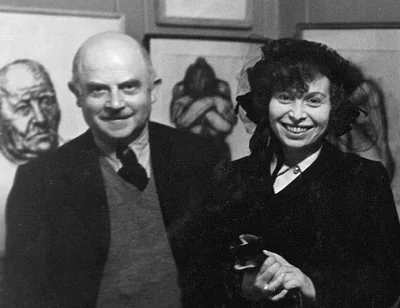
Ludwig Meidner
Ludwig Meidner (1884-1966) was a German Expressionist painter and printmaker whose work captures the intense, brittle anxiety of the European avant-garde during the lead-up to the First World War. Born in Bernstadt, Silesia, Meidner achieved early prominence not merely for his technical ability, but for his profoundly subjective vision, establishing him as a crucial documentarian of modern psychic distress.
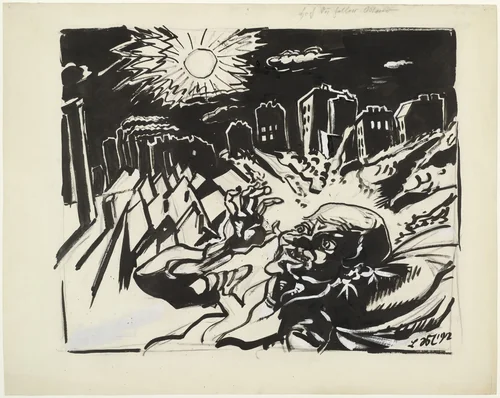
While Meidner worked prolifically across painting, drawing, and printmaking, his reputation is anchored by two major themes: frenetic portraiture and the famed “apocalyptic” series. Created between 1912 and 1914, these apocalyptic works distinguished Meidner from his contemporaries. Instead of reacting to conflict, he seemed to prophesy it, presenting cataclysmic, stylized visions of urban collapse and pending societal transformation. These powerful, dynamic compositions established a new level of psychological urgency in pre-war German art.
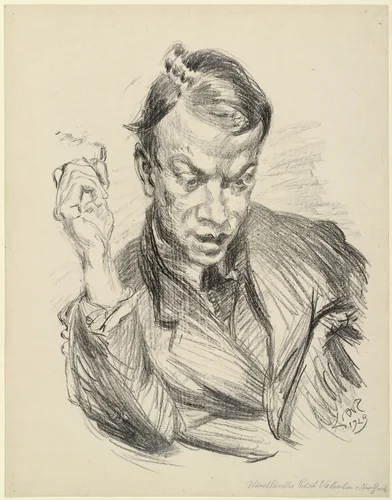
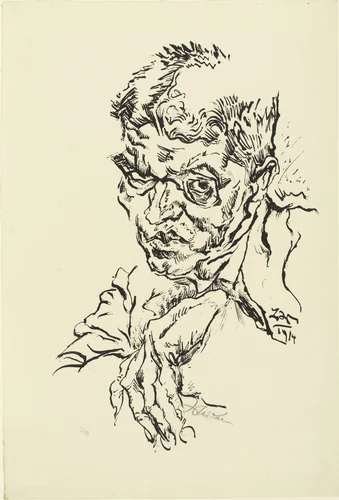
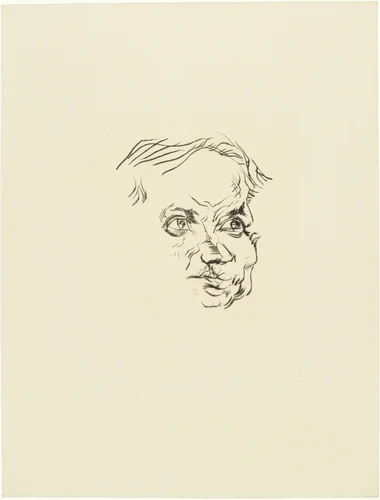
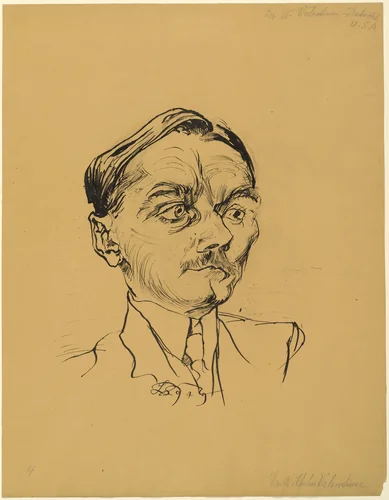
The intensity of his visionary landscapes carried directly into his portraiture. Meidner utilized jagged lines and compressed space to record the inner lives of his subjects, providing an uncompromising window into the intellectual figures of his era. His subjects frequently included notable writers and cultural critics, such as the charged Portrait of Raoul Hausmann and the striking Portrait-Sketch: Portrait of Franz Pfemfert. This dedication to documenting the Weimar cultural sphere resulted in a remarkable collection of psychologically charged works. It is notable that Meidner frequently used the platform of leading periodicals, such as Das Kunstblatt, for disseminating his graphic work, ensuring his striking, high-quality prints reached a broad readership.
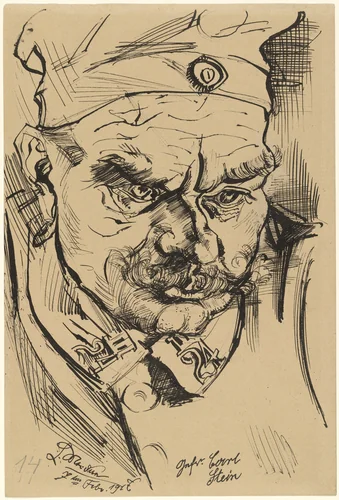
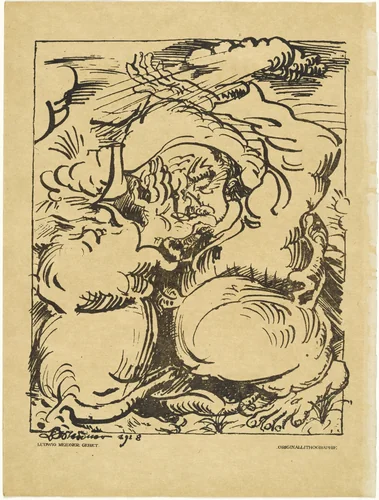
Meidner’s active period in graphic arts, particularly between 1912 and 1923, showcased his mastery across etching and lithography, producing works like O Moon Above So Clear! and Soldier Karl Stein. These compelling Ludwig Meidner prints and drawings are today held in major collections, including the Museum of Modern Art. Their cultural importance guarantees ongoing preservation, ensuring that many of his key works remain accessible for public domain use.
Source: Wikipedia · CC BY-SA 4.0
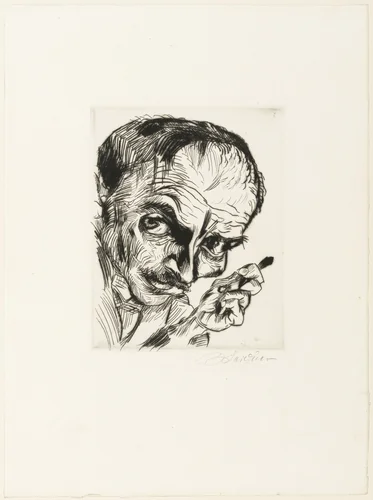
![Portrait of Paul Westheim (I) (Bildnis Paul Westheim [I]) (plate, preceding p. 161) from the periodical Das Kunstblatt, vol. 1, no. 6 (Jun 1917) by Ludwig Meidner, print, 1917](https://img.artbee.org/0c225c5a-06da-487d-a7a9-9f13d745c3f0/small.webp)
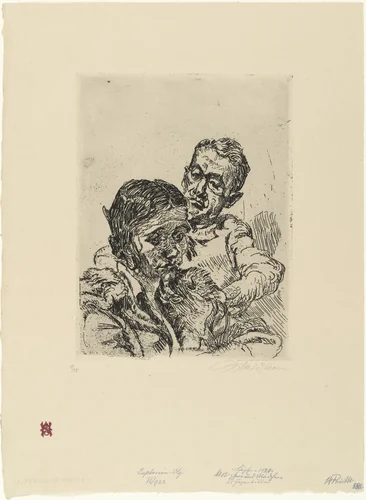
![Portrait of Dr. Victor Heinrich Klinkhardt (III) (Bildnis Dr. Victor Heinrich Klinkhardt [III]) (plate 29) from the illustrated book Deutsche Graphiker der Gegenwart (German Printmakers of Our Time) by Ludwig Meidner, illustrated book, 1920](https://img.artbee.org/8ea2b679-07aa-4e8e-9677-754013eacc98/small.webp)
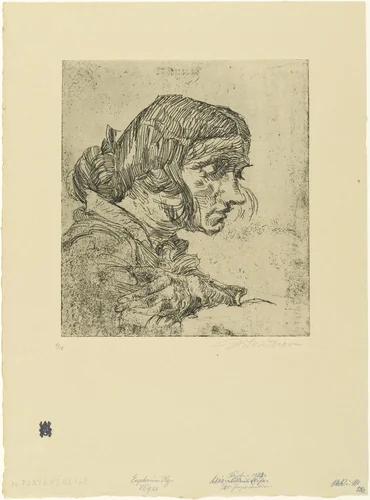
![Portrait of Pianist Walter Kaempfer (I) (Bildnis Pianist Walter Kloepfer [I]) by Ludwig Meidner, print, 1921](https://img.artbee.org/6e688f19-27ca-46fb-9fdb-f65d0b5bce8d/small.webp)