Ludwig Hirschfeld-Mack
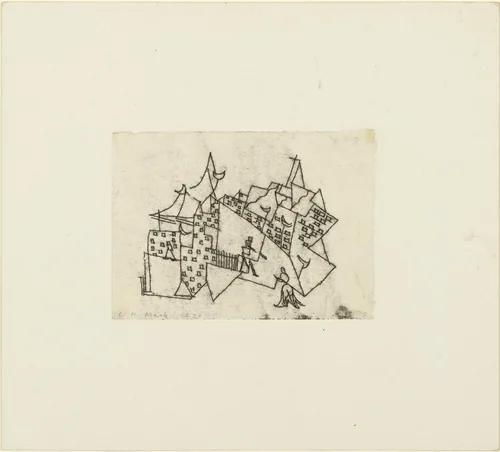
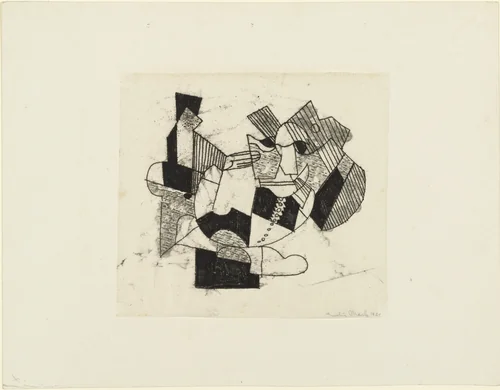
Ludwig Hirschfeld-Mack (1893-1965) remains a significant figure in the history of early German modernism, primarily remembered for his critical activities during the formative years of the Weimar Bauhaus. A German-born artist who later became an Australian citizen, his foundational work explored the rigorous intersection of color, light, and geometry in the early 1920s. His output from this intensely concentrated period, including graphic designs and prints now held in major international collections like the Museum of Modern Art, reflects the school's vital shift from expressionistic inclinations toward geometric functionalism.
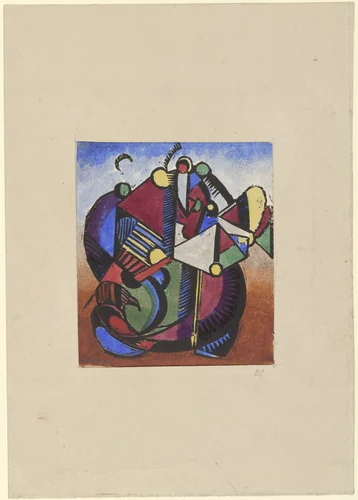
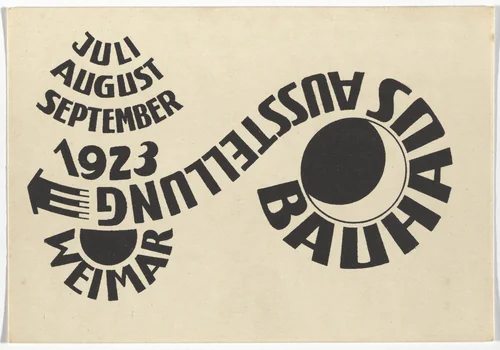
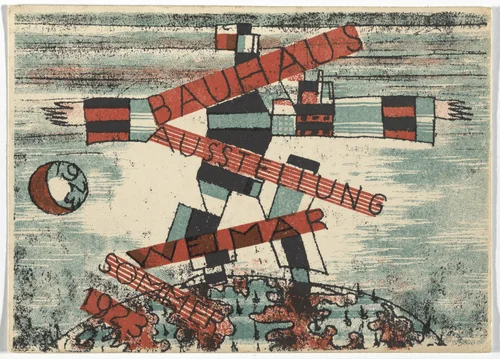
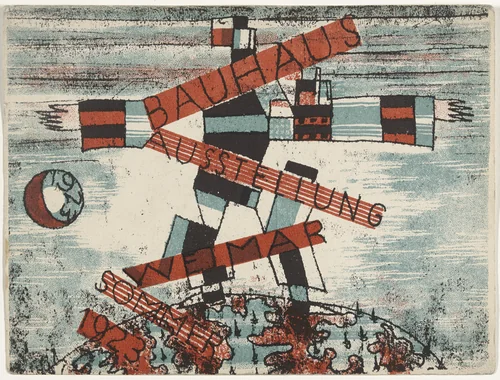
The core of Hirschfeld-Mack's artistic contribution from 1921 to 1923 centered on pure abstraction and graphic communication. Works such as the lithograph Abstract Composition (Abstrakte Komposition) illustrate a mastery of planar dynamics and reduced color palettes characteristic of the new graphic identity emerging from masters like László Moholy-Nagy. Notably, Hirschfeld-Mack designed two key informational pieces for the institution's crucial 1923 public presentation, the Bauhaus Exhibition: Bauhaus Ausstellung Weimar Juli - August - September 1923 and Bauhaus Ausstellung Weimar Sommer 1923. These designs are essential historical documents, capturing the moment the Bauhaus formalized its commitment to unifying art and technology under the banner of functional utility. The structural clarity and geometric precision inherent in these poster designs, often sought after as high-quality prints, demonstrate his facility with typography and spatial composition.
While his graphic work is foundational, Hirschfeld-Mack’s innovative spirit extended beyond the static image. He is perhaps equally significant for his pioneering efforts in kinetic light art, specifically the development of his color-light plays, which attempted to integrate the fourth dimension of time into visual performance. This side of his creative practice reveals a playful, almost pedagogical curiosity that underpinned much of the early Bauhaus ethos. Though his documented print catalog from this period is modest in scope, the enduring historical weight and museum-quality of these designs ensure that digital copies of his works are frequently found in the public domain, offering valuable access and free art prints for study and appreciation worldwide. His contribution, though concentrated in a few fertile years, offers a vital snapshot of graphic innovation at the dawn of modern design.
Source: Wikipedia · CC BY-SA 4.0