Lucas van Uden
Lucas van Uden (active 1605) established himself as a preeminent Flemish master of the landscape genre during the seventeenth century. Based entirely in Antwerp, he was a prolific practitioner across multiple mediums, working concurrently as a painter, accomplished draughtsman, and engraver. His contribution was crucial in developing the independent landscape tradition in the Southern Netherlands, moving the genre away from mere background scenery toward primary subject matter.
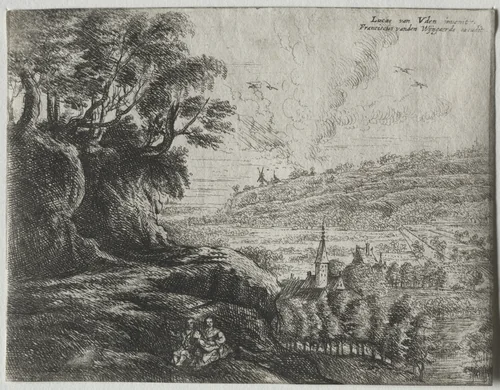
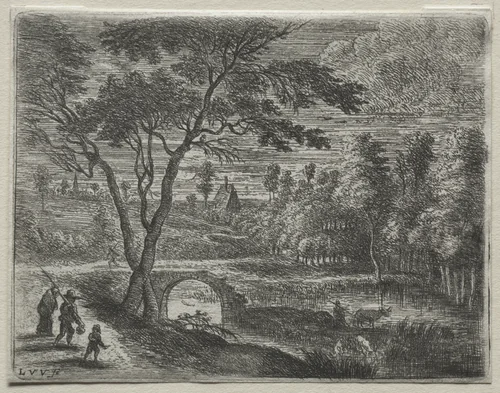
Van Uden was widely recognized among contemporaries for his expansive, detailed compositions. He often worked in close collaboration with specialist figure painters in Antwerp. While Van Uden provided the complex, atmospheric settings seen in works like Dorp gelegen aan een rivier, other artists would populate the scene with specific narrative elements and figures. This collaborative structure was highly characteristic of the Antwerp school and allowed Van Uden to focus wholly on the dramatic quality of light and the topographical complexity of the Low Countries.
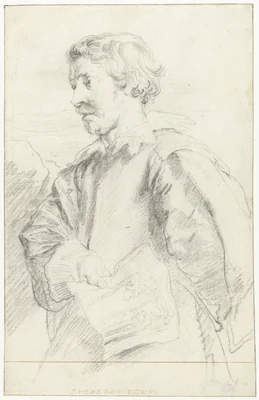
His true artistic distinction, however, resides in his work on paper. His surviving drawings, totaling at least three recorded examples, are considered his most original contribution; they display a spontaneity and direct engagement with nature that often appears tempered in the more formalized Lucas van Uden paintings. It is an interesting irony that the preparatory studies often exhibit more expressive freedom and immediacy than the final commissioned works.
Though his oil paintings established his reputation, it is through his twelve recorded prints, such as Heuvelachtig landschap met kudde schapen en koe and the various views documented as Gezicht op een dorp met een huifkar, that his approach to composition and light is most widely accessible today. These works are represented in significant institutional collections, including the Rijksmuseum. Given the age and historical significance of the artist’s oeuvre, much of his visual legacy is now available in the public domain, allowing researchers and collectors access to high-quality prints and downloadable artwork for detailed study and appreciation.
Source: Wikipedia · CC BY-SA 4.0