Lucas Emil Vorsterman
Lucas Vorsterman (1595-1675) was a leading practitioner of the Baroque engraving tradition, renowned for translating the monumental style of Peter Paul Rubens and the elegant portraiture of Anthony van Dyck into reproducible graphic works. Active roughly between 1595 and 1630, Vorsterman occupied a critical position in Antwerp’s competitive art world, serving as the primary graphic interpreter for the era’s most powerful painters. His skill lay in adapting the fluid brushwork and grand scale of oil painting into the precise, intricate medium of the line engraving, thereby disseminating the visual culture of the seventeenth century across Europe.
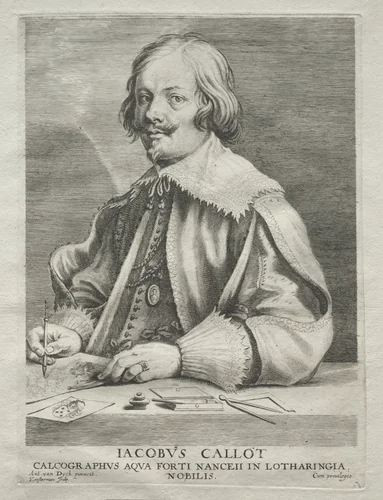
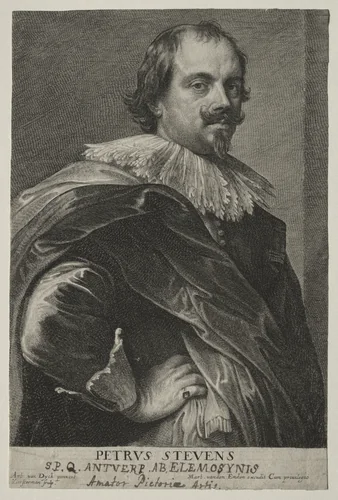
His early career was inextricably linked to Rubens's workshop, where he specialized in interpreting the master's complex compositions for commercial reproduction. The creation of these engravings, such as the masterful rendering of Hieronymus de Bran, required not just technical fidelity but a deep understanding of how to capture the psychological weight and texture of the sitter using only the line of the burin. Vorsterman’s technical virtuosity was foundational to Rubens’s ambition to establish a copyright over his designs. It is perhaps one of history’s more curious professional relationships; while artistically highly fruitful, sources suggest the partnership was intensely difficult, a testament to the high-stakes, high-demand environment of the Baroque atelier.
Following the initial period with Rubens, Vorsterman moved to England, successfully transitioning from workshop collaborator to an independent artist serving elite patronage, including the discerning collector Thomas Howard, 21st Earl of Arundel, and King Charles I of England. His portrait work from this period remains vital historical documentation. Examples such as Charles I and the detailed view of the royal chaplain Richard Kingston, Political Pamphleteer, Chaplain to Charles I, reveal Vorsterman’s refined approach to royal and political sitters, balancing grand presentation with detailed likeness.
Today, Vorsterman's output, comprising nearly 15 museum-quality prints documented in institutional collections, remains highly valued by scholars and collectors. Major holdings at the National Gallery of Art, the Art Institute of Chicago, and the Cleveland Museum of Art ensure the longevity of his legacy. These works are frequently made available as high-quality prints through various public domain initiatives, guaranteeing that Lucas Emil Vorsterman prints continue to serve as essential resources for the study of seventeenth-century graphic arts.
Source: Wikipedia · CC BY-SA 4.0