Louis Sullivan
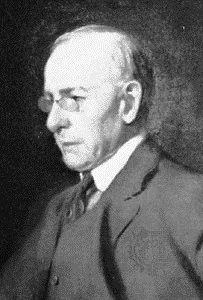
Louis Henry Sullivan (1856–1924) holds a foundational position in the history of American design, recognized universally as a "father of modernism" and a crucial innovator in the structural evolution of the tall commercial building. His work was pivotal in guiding architecture out of Victorian eclecticism and toward a uniquely American functional aesthetic.
Sullivan was a leading proponent of the Chicago School, a movement defined by its rigorous approach to engineering challenges presented by rapid urban expansion in the late nineteenth century. His technical breakthroughs fundamentally addressed the issue of height, elevating both structure and design. These innovations made him a leading theorist of the emerging skyscraper typology. The famed architectural dictum, “form follows function,” is indelibly attributed to Sullivan; it successfully encapsulated earlier theories of architectural utility and applied them to the unprecedented scale and engineering demands of the modern urban structure.
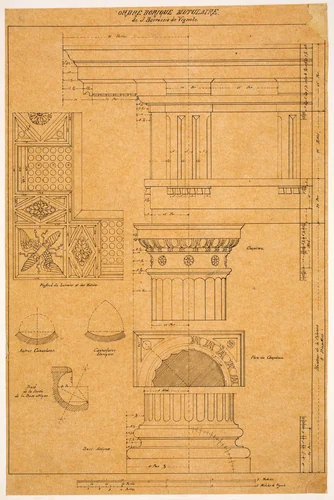
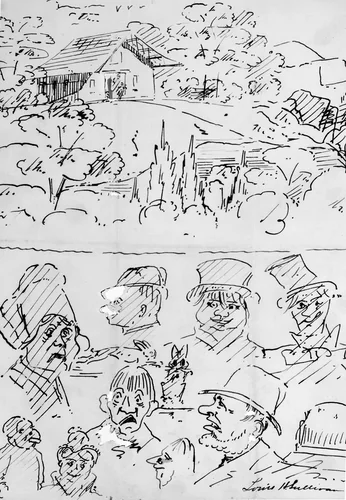
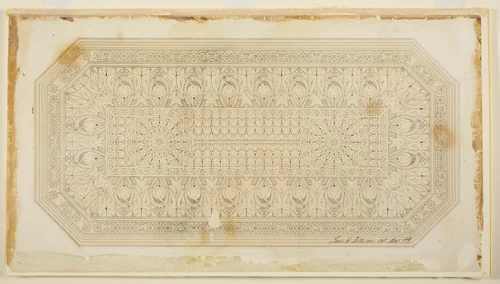
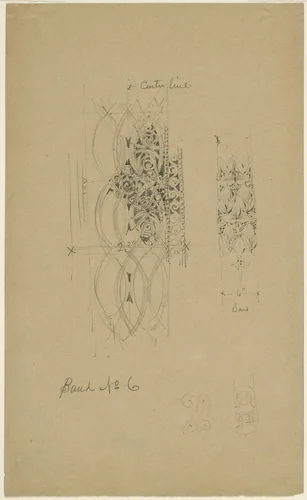
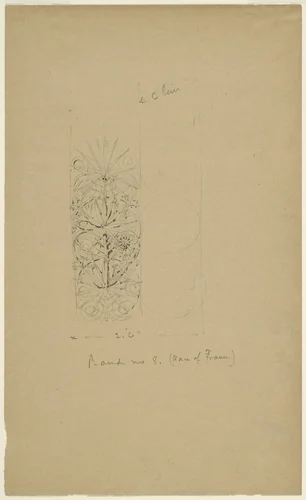
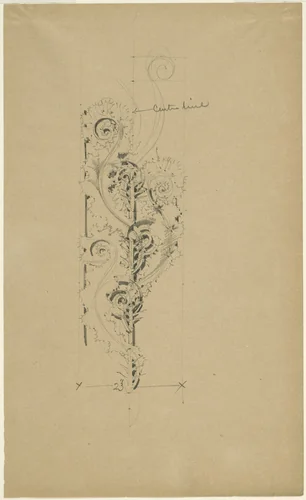
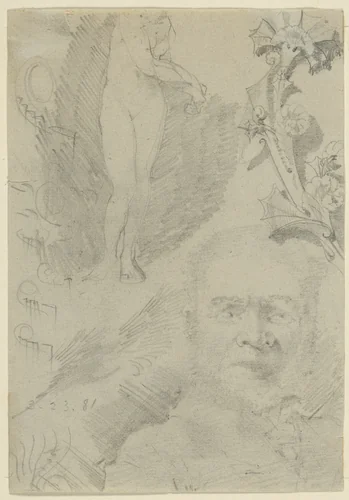
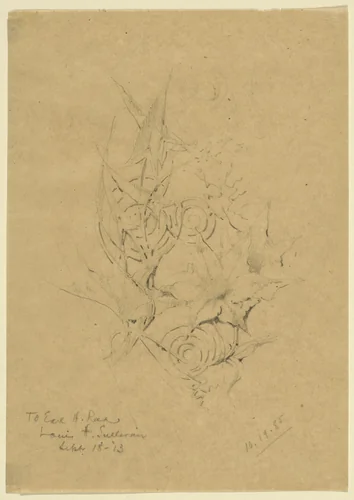
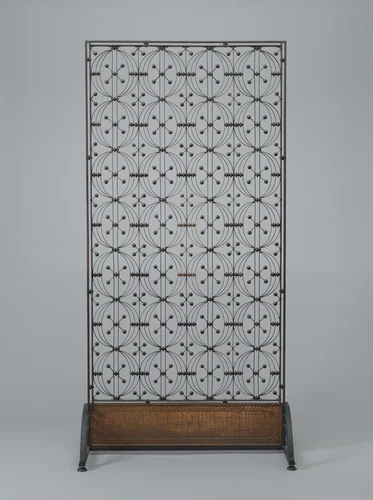
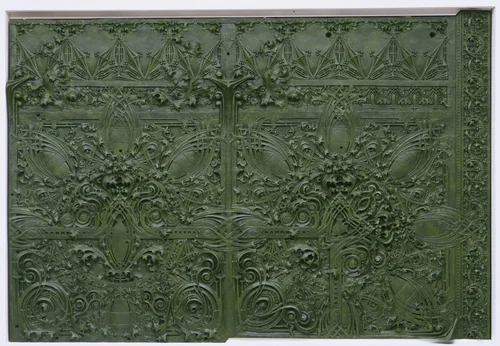
While Sullivan’s legacy rests upon his monumental structures, the full extent of his artistry is illuminated by his surviving two-dimensional works. These six drawings and two architectural studies, including the detailed analysis of Doric Order Details and the preparatory plans for the McVickers Theater, Chicago, Illinois, Sketch, reveal an architect deeply invested in both classical tradition and the creation of new decorative language. It is a subtle irony that the primary proponent of a streamlined, functional structure was also responsible for some of the most intricate and distinctive ornamentation of the era, visible in pieces like his richly complex Ceiling Design with Peacock Motif.
Sullivan's influence established a continuous lineage of American architectural thought. He served as a crucial mentor to Frank Lloyd Wright, and his philosophy provided the critical inspiration for the cohort of designers known as the Prairie School. Alongside Wright and Henry Hobson Richardson, Sullivan is rightly counted as part of the recognized trinity of foundational American architecture. Though the ultimate appreciation of his genius arrived later, his historical significance was formally recognized when he became the second architect to posthumously receive the AIA Gold Medal in 1944. Today, his detailed drawings and Louis Sullivan prints, illustrating the complex intersection of engineering and ornamentation, are frequently sought after by collectors and are often available as high-quality prints through major museum collections, including the Museum of Modern Art and the Art Institute of Chicago.
Source: Wikipedia · CC BY-SA 4.0