Louis Lafon
Louis Lafon was a seminal figure in the development of industrial photography, working across France between the 1870s and 1890s. Active during the high period of the Second Industrial Revolution, Lafon eschewed the picturesque conventions common to his era, choosing instead to focus his lens on the raw, often smoky spaces where modern life was being forged. His nine known photographs constitute a tight, focused exploration of technological intrusion into the landscape, a subject that would define key aesthetic concerns of the twentieth century.
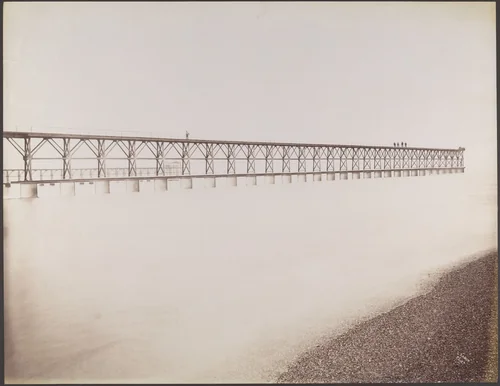
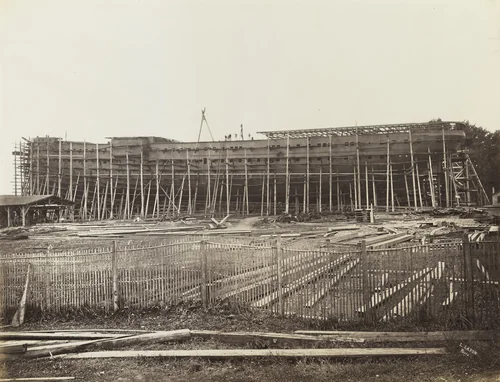
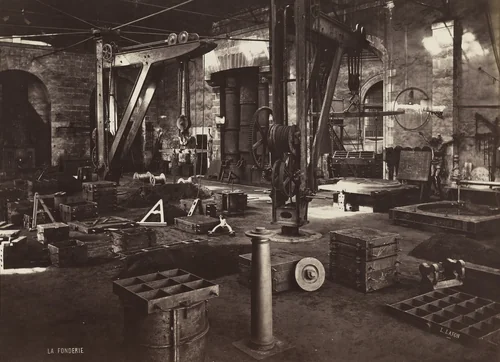
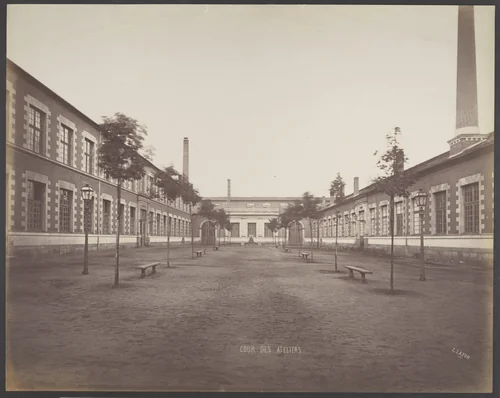
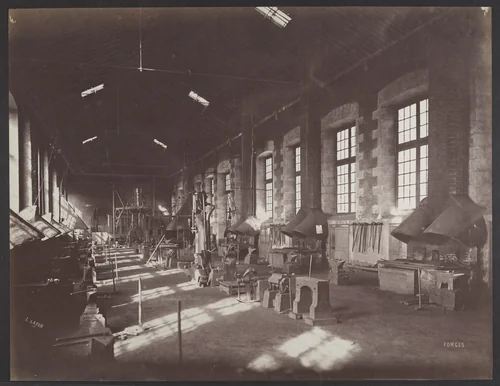
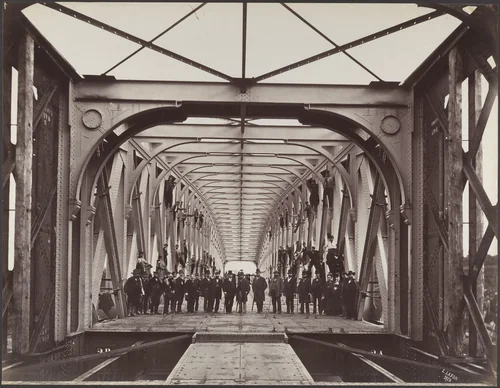
Lafon’s photographic record is characterized by a precise, unflinching objectivity. Unlike his contemporaries who often romanticized the landscape, Lafon was drawn to the scale and structural efficiency of industry. Works such as The Foundry, Cour des Ateliers, and the stark study Forges elevate pure machinery and architecture into high documentary art. His technical approach was methodical, capturing the complex interplay of light and shadow on massive metallic structures. He was particularly effective at documenting infrastructure, as seen in his images of large-scale construction projects like the Lessart Viaduct on the Rance River.
The artist demonstrated that the iron skeleton of a factory or the grim, light-starved interior of a workshop ([Factory Interior]) possessed a monumental dignity previously reserved for classical architecture. This aesthetic preference for the utilitarian placed him historically at the vanguard of modern documentary photography. Scholars and enthusiasts can today access these key works, often finding them available as downloadable artwork through major institutional archives, testament to their historical and artistic value.
Despite the narrow scope of his career, Lafon’s historical relevance is secured by his representation in pre-eminent institutions, including the Museum of Modern Art and the Metropolitan Museum of Art. His consistent focus on the man-made environment positions him near the top tier of early practitioners who recorded the rapid reshaping of the European continent. A quiet, yet profound observer, Lafon dedicated himself entirely to documenting structures that were actively being built, a subtle rebellion against the era's widespread obsession with painting idyllic ruins. As many of his images are now in the public domain, high-quality Louis Lafon prints are frequently available for study and collection, ensuring his authoritative vision of the industrial age remains widely accessible.
Source: Wikipedia · CC BY-SA 4.0
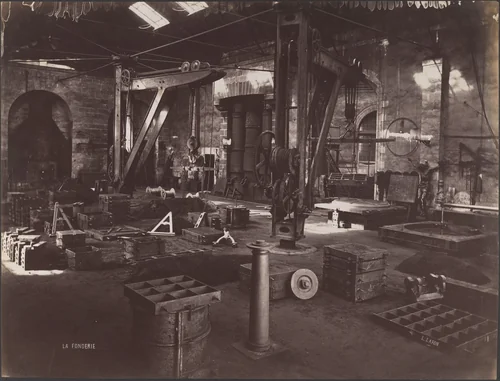
![[Factory Interior] by Louis Lafon, photograph, 1875-1885](https://img.artbee.org/7842026e-6ea8-47e8-972a-a5cd5017f10d/small.webp)
![[Construction Site] by Louis Lafon, photograph, 1880-1889](https://img.artbee.org/f0e76511-641d-44e7-b4ec-f6f04a1cbe85/small.webp)