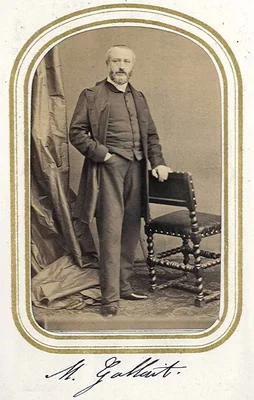
Louis Gallait
Louis Gallait (1810-1887) was a central figure in 19th-century Belgian painting, credited with initiating a fundamental revival of history painting in the region. Working during a period when narrative painting faced increasing competition from emerging avant-garde movements, Gallait asserted the genre’s continued relevance by fusing academic grandeur with a powerful commitment to modern realism.
His definitive breakthrough came with the large-scale canvas Charles V's Abdication (1841). This work was immediately esteemed across Europe, not only for its dramatic staging but particularly for its rigorous historical fidelity, the faithfulness of the displayed costumes, and a sophisticated command of color composition. Gallait demonstrated that the emotional weight of history could be communicated through detailed, verisimilar presentation, setting a demanding new standard for Louis Gallait paintings and the genre itself.
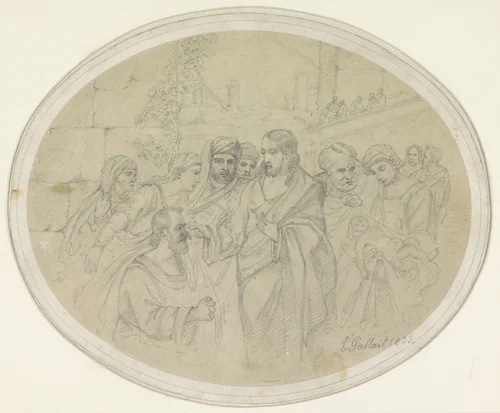
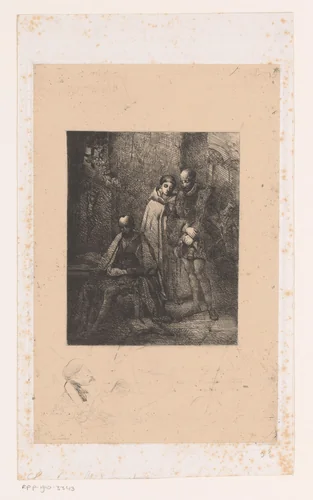
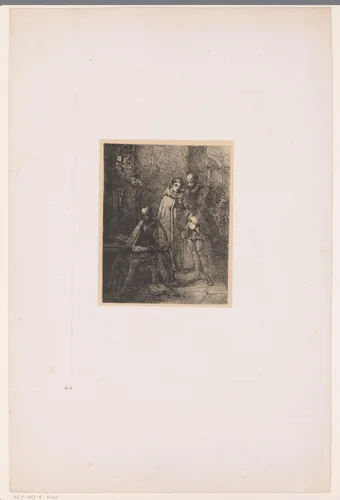
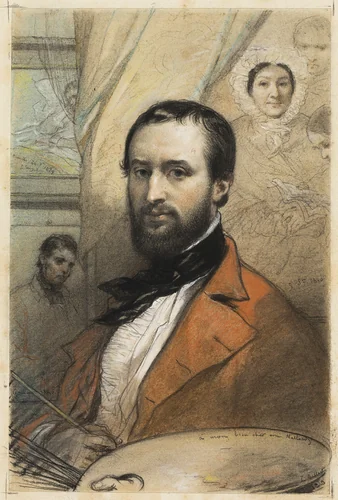
Gallait’s technical prowess was rooted in meticulous observation, evident even in his preparatory studies and smaller works, such as the drawing Christus geneest een blinde. His artistic strength lay in his ability to capture psychology alongside detail, ensuring his narrative scenes, like Michel Eyquem de Montaigne bezoekt Torquato Tasso, transcended simple illustration. This dedication to craft secured his position as a prolific and highly distinguished portrait painter. His ability to render character with precision ensured a steady stream of commissions from European nobility and led to insightful works like his own Self-Portrait.
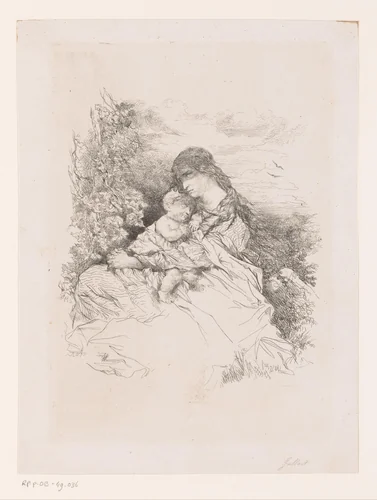
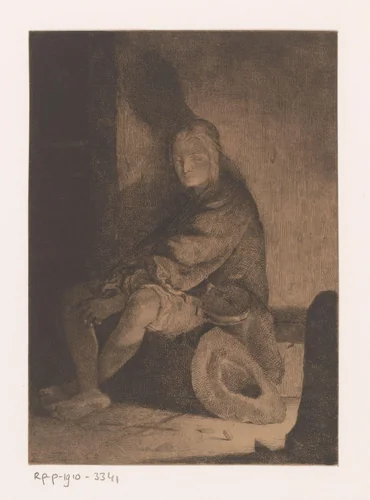
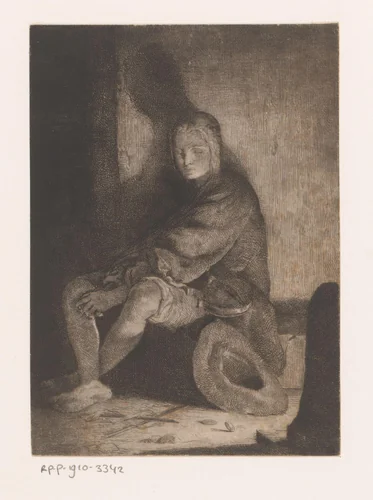
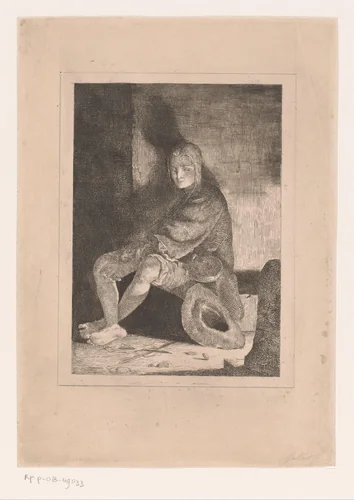
While many artists of his generation sought fame through radical shifts, Gallait cultivated his influence through reliable, museum-quality craftsmanship and unwavering popularity. His historical and genre works, along with reproductions of his portraiture, were widely distributed as high-quality prints. Today, his lasting impact is reflected in international collections including the Rijksmuseum and the Art Institute of Chicago. A significant portion of his output is entering the public domain, ensuring that these influential works, available now as downloadable artwork, continue to inform studies of 19th-century academic realism.
Source: Wikipedia · CC BY-SA 4.0