Louis-Emile Durandelle
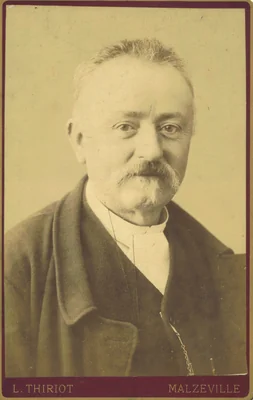
Louis-Emile Durandelle established himself as the premier French architectural documentarian during the transformative Second Empire. Operating during the zenith of Baron Haussmann’s reconstruction of Paris, the photographer provided an invaluable record of France’s civic ambition. Unlike many contemporaries who documented romantic ruins or the existing cityscape, Durandelle dedicated his lens to the ambitious act of creation, elevating the temporary construction site into a subject worthy of sustained artistic and technical attention.
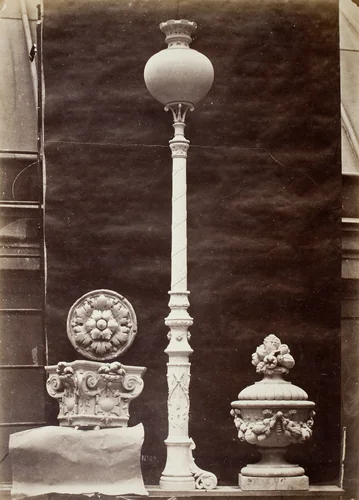
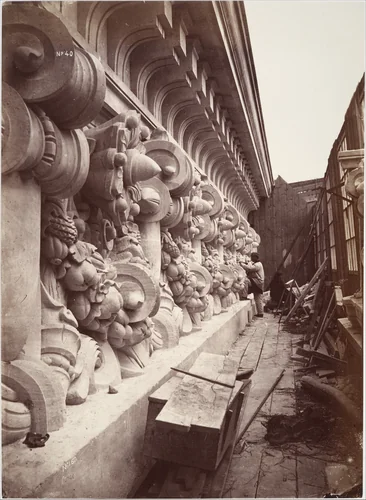
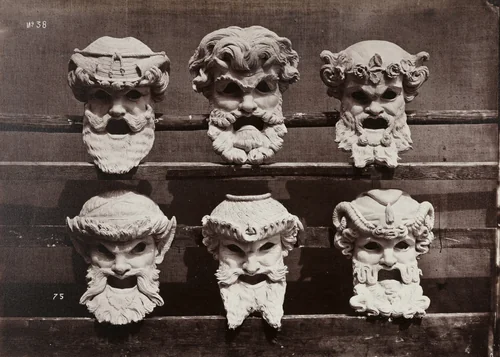
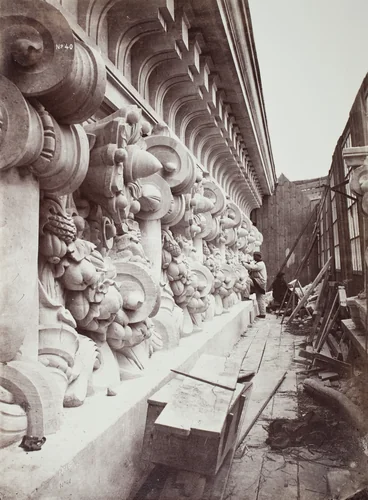
Durandelle is primarily recognized for his comprehensive photographic campaigns surrounding major civic projects, most notably the colossal Palais Garnier, known universally as the Paris Opera, and the later Eiffel Tower. Works commissioned during this critical period, such as Le Nouvel Opéra de Paris (Sculpture Ornementale), move beyond mere factual record; they are demanding studies in material texture and neoclassical symmetry. His exacting compositions captured intricate surface decorations, focusing on finite details like the Masks from the Control Room (Masques du vestibule de contrôle) and the majestic Stage Frieze and Cornice, elevating architectural elements often overlooked in finished building portraits.
Active for a concentrated, crucial period beginning around 1865, Durandelle possessed a remarkable ability to frame massive, complex structures in a legible, monumental scale. His technical approach favored high contrast and sharp precision, utilizing the latest photographic processes to render accurate depictions of building volume. These images defined the professional documentation of architecture for the era. The surviving image, [Charles Garnier in the Drafting Room While Designing the New Paris Opera], offers a rare, intimate perspective, suggesting the level of access and trust the photographer enjoyed with the master architect at the very center of the Parisian rebuilding project.
Durandelle’s documentary focus makes his surviving images essential primary source material for art historians and preservationists today. These compelling 19th-century architectural prints are housed in major repositories globally, including the Metropolitan Museum of Art and the Art Institute of Chicago. As many of these formative works enter the public domain, the opportunity to study these high-quality prints and downloadable artwork that define the Second Empire aesthetic becomes readily available.
Source: Wikipedia · CC BY-SA 4.0
![[Charles Garnier in the Drafting Room While Designing the New Paris Opera] by Louis-Emile Durandelle, photograph, 1868-1872](https://img.artbee.org/a6fcad28-20eb-4e1b-aed9-b4a7d068d540/small.webp)