Lorenz Frølich
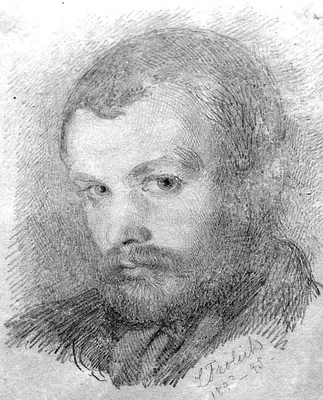
Lorenz Frølich (1820-1908) was a central figure in 19th-century Danish artistic life, maintaining a remarkably long and successful career that spanned over six decades, roughly 1835 to 1900. Distinguished as a versatile practitioner, he excelled as a painter, etcher, graphic artist, and prolific illustrator. His contribution extended far beyond the formal academic setting and gallery wall, positioning him at the intersection of fine art and popular visual culture across Europe.
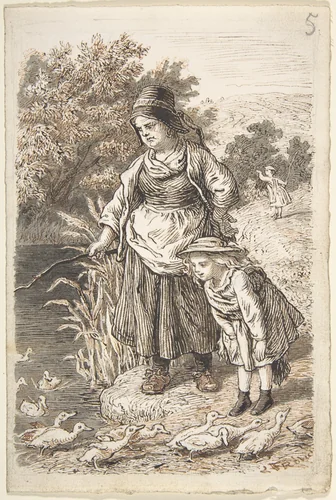
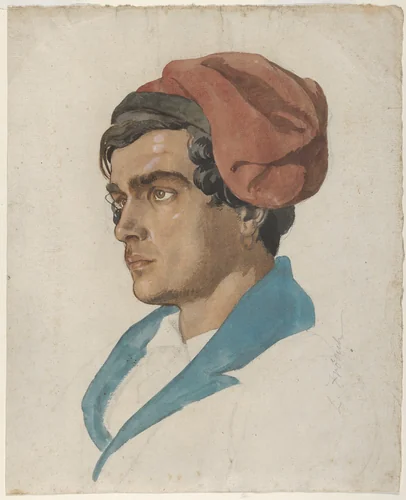
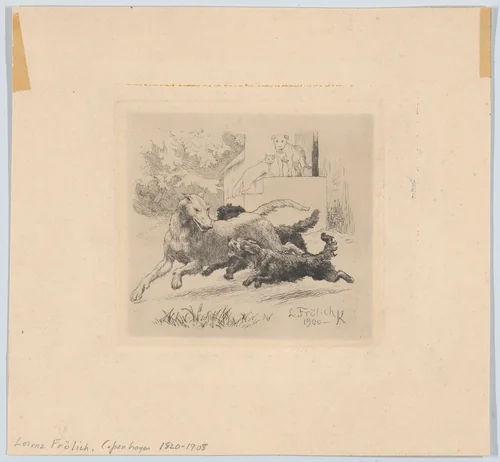
A master of reproductive media, Frølich's technical proficiency across drawing and etching allowed him to transition seamlessly between formal painting commissions and the burgeoning market for illustrated publications. While formally trained, his enduring impact lies in his compassionate and keenly observed representations of domestic life. His drawings and Lorenz Frølich prints, often held in collections such as the Metropolitan Museum of Art, are crucial records of contemporary genre scenes.
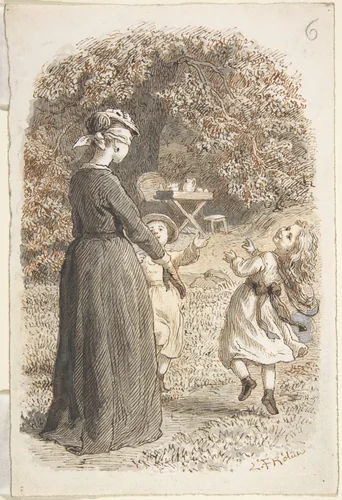
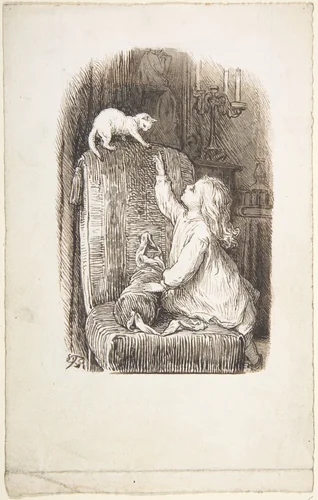
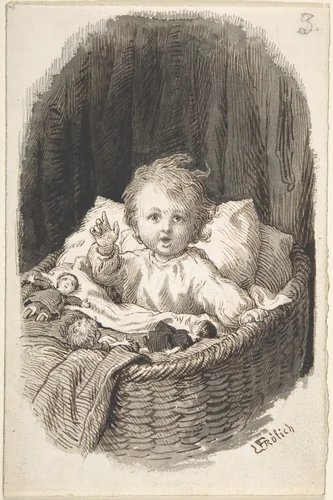
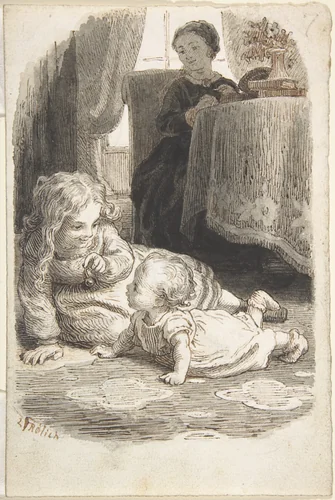
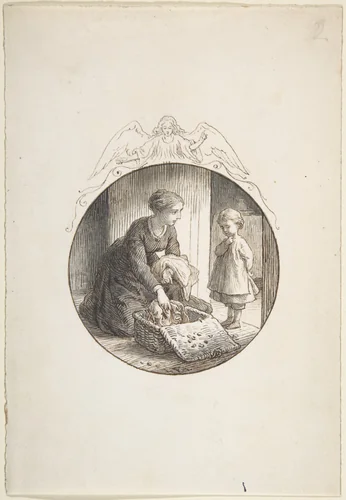
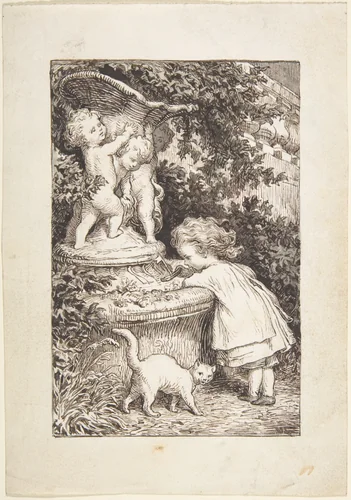
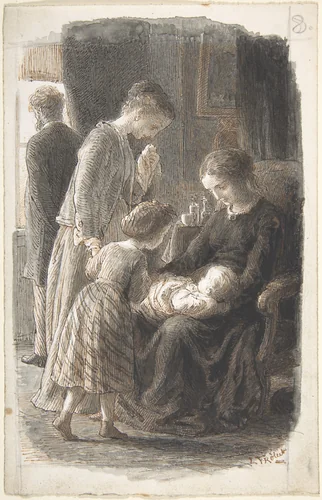
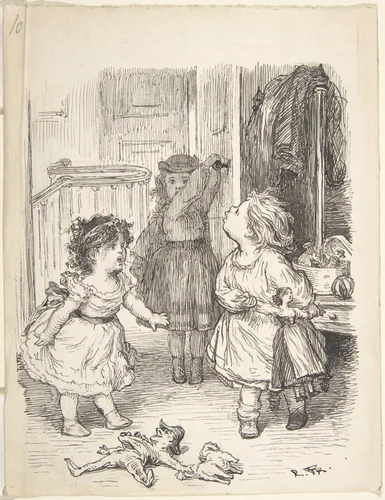
Works such as Child Climbing a Chair to Reach for a Kitten or the tender study A Mother and Two Children Playing Blind Man's Bluff reveal a deep observational commitment to family dynamics. He perfected the art of subtle visual narration, avoiding the pitfalls of sentimentality while granting his subjects a genuine, understated humanity. This focus is apparent even in complex pieces like Mother Watching Over Two Young Children Playing (recto); Baby in a Bassinet (verso), which captures the often-fleeting moments of childhood exploration and maternal attention.
It is through his graphic output that Frølich achieved his widest renown, frequently illustrating Nordic sagas, historical works, and, most notably, beloved children's stories. Despite his renown as an illustrator of fantastic narratives and history, Frølich’s sharpest observational skill was consistently reserved for documenting the quiet chaos of the Victorian and Edwardian nursery. This specialization positioned him at the forefront of the illustrated book movement during the latter half of the century, ensuring the wide dissemination of his imagery.
Because much of his prolific output now resides in the public domain, those interested in 19th-century Danish graphics can access museum-quality drawings for study or collection. Frølich's artistic legacy is thus multifaceted: a skilled academic painter who became a master visual documentarian of the Danish home and a defining graphic artist whose imagery helped shape the visual imagination of several generations.
Source: Wikipedia · CC BY-SA 4.0