Lodewijk de Vadder
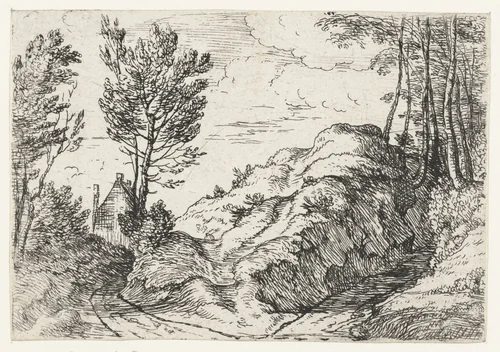
Lodewijk de Vadder (active 1600-1625) stands as a pivotal figure in the evolution of Flemish Baroque landscape painting. Working proficiently as a draughtsman, engraver, and tapestry designer, his primary significance lies in substantially shifting the visual language of the genre. His approach signaled a decisive move away from the established decorative formulas of late Mannerism toward a more direct and naturalistic rendering of the environment.
De Vadder’s innovative technique emphasized atmospheric effects and employed notably looser, more expressive brushwork—a painterly freedom that aligns him with the immediate influence of contemporary masters like Rubens and Adriaen Brouwer. Yet, while embracing this robust handling, De Vadder maintained a carefully controlled and often restrained palette, suggesting a deep awareness of the emerging realist trends developing concurrently in the neighboring Dutch Republic. This sophisticated combination of Flemish dynamism and Dutch restraint resulted in a signature style that lent dignity and focus to specific regional motifs.
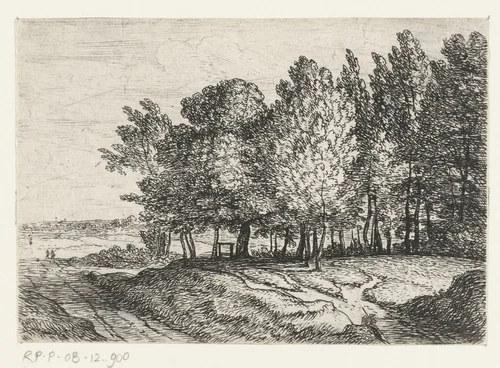
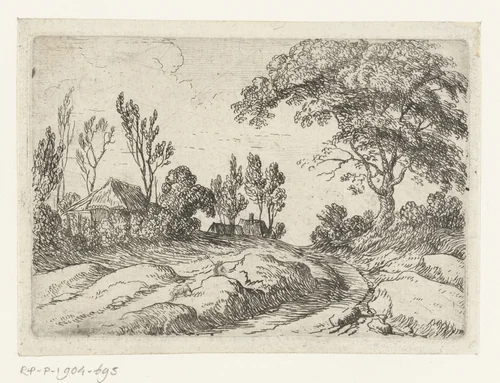
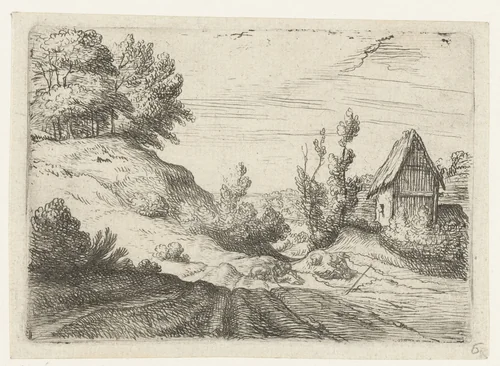
Crucially, Lodewijk de Vadder holds the distinction of having pioneered the dune landscape as an independent subject. He was the first Flemish painter to feature these windswept, sandy terrains as the primary compositional focus, moving them decisively from mere background filler to central motif. It is perhaps surprising that in the richly forested landscape of Flanders, it was this more challenging, barren coastal terrain that captured his imagination.
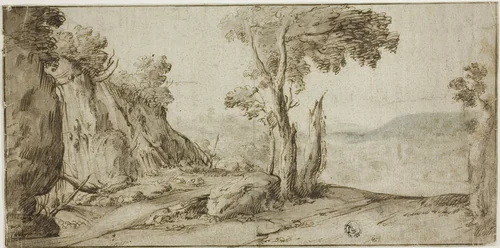
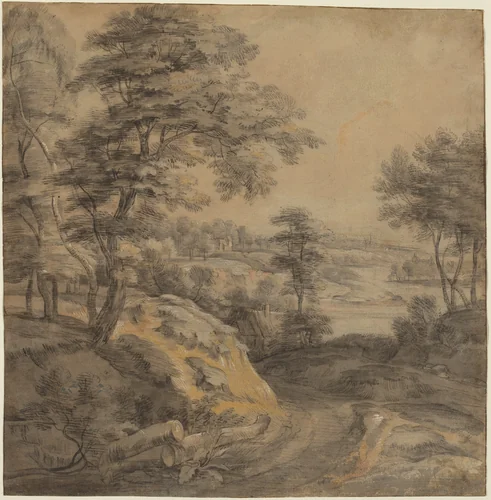
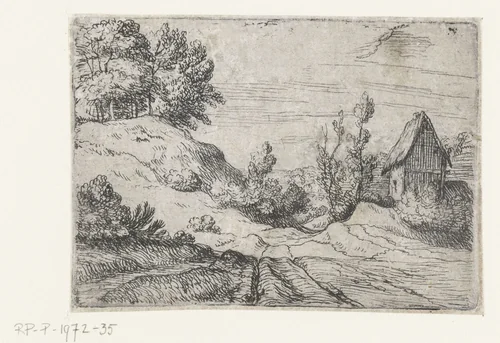
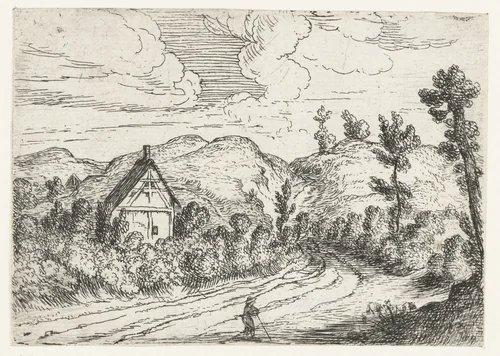
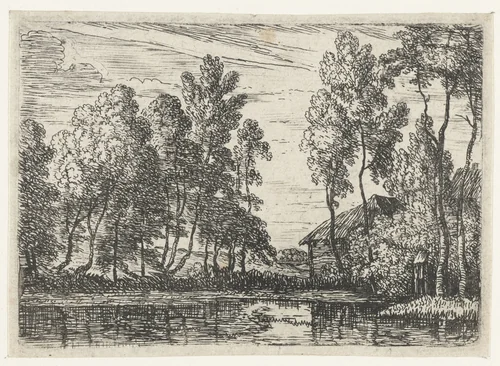
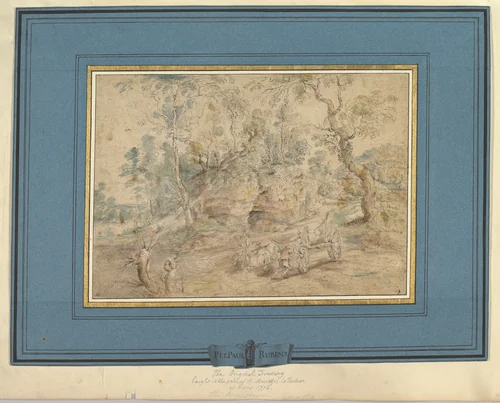
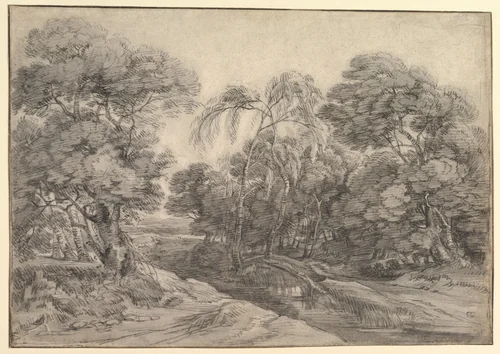
His extant body of work, comprised of seven known prints and four drawings, consistently illustrates this dedication to environmental specificity, evidenced in titles such as Wooded Landscape with a Road and Rocks and Trees on Edge of Hill. These compositions secured his reputation and placed his influential Lodewijk de Vadder prints and drawings in major global institutions, including the Rijksmuseum, the Art Institute of Chicago, and the National Gallery of Art. The accessibility of his works, many of which are now in the public domain, ensures that high-quality prints of his landscape studies continue to inform the study of 17th-century Northern European realism.
Source: Wikipedia · CC BY-SA 4.0