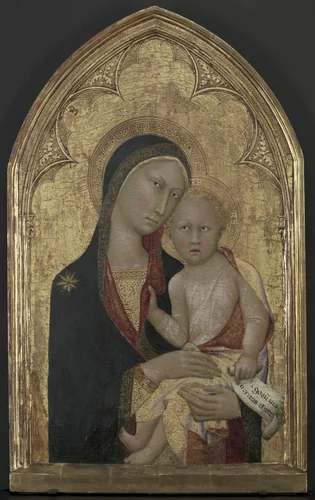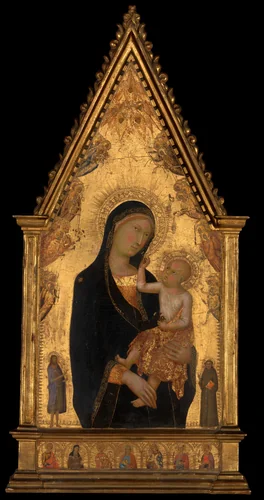
Lippo Memmi
Lippo Memmi (active c. 1325-1345) stands as one of the most significant contributors to the Sienese school in the early Trecento. Originating in Siena, a city renowned for its highly sophisticated Gothic aesthetic, Memmi’s career was defined by his close professional and familial relationship with the era’s dominant master, Simone Martini. Memmi is historically recognized as Martini's foremost and most adept follower, a relationship cemented by marriage; he was Martini's brother-in-law.
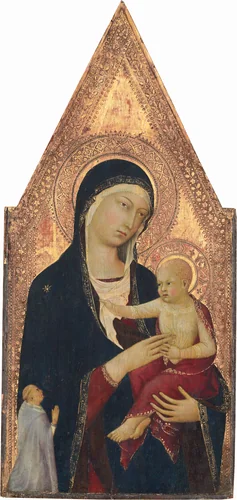
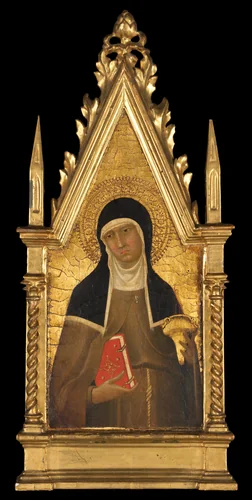
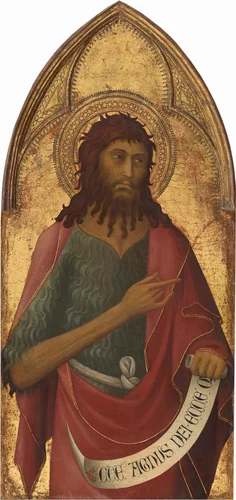
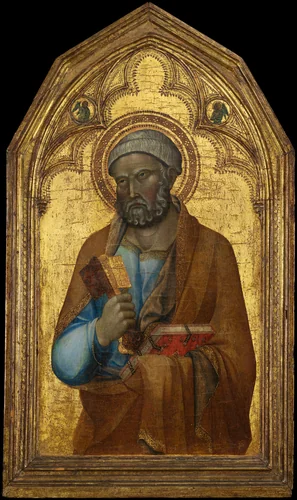
Memmi’s output is characterized by a refined grace, delicate modeling, and the precise use of punch-work and rich color, stylistic hallmarks inherited directly from Martini. While often working in close collaboration with his mentor—as suggested by surviving fragments of altarpieces—Memmi developed an independent, though subtly distinct, idiom. His figures, such as the contemplative Saint Clare and the austere Saint Paul, reveal a deep engagement with the International Gothic style's lyrical elegance, emphasizing expressive contours and detailed surface ornamentation. His proximity to such an influential figure was a historical challenge as much as a benefit; critics often spend significant time trying to isolate his hand from Martini’s rather than studying his individual innovations.
The extant corpus of Lippo Memmi paintings, though relatively small, demonstrates his mastery of the single-panel devotional format. These works showcase the intricate handling of gold leaf and the precise rendering typical of the Sienese tradition. Major pieces, including the intricate Madonna and Child with Donor, are held in premier institutions such as the Metropolitan Museum of Art and the National Gallery of Art, making his influence globally accessible. His consistent application of the Martini aesthetic ensured the longevity of his predecessor’s innovations well into the 14th century.
For modern audiences and scholars, the availability of these masterpieces—many of which are now in the public domain—offers unparalleled access to 14th-century Italian artistry. Scholars continue to study Lippo Memmi paintings for their pivotal role in transitioning from the formality of the Byzantine era to the Gothic fluidity. High-quality prints derived from these core works remain important documents of Trecento courtly style.
Source: Wikipedia · CC BY-SA 4.0