Leonardo Alenza
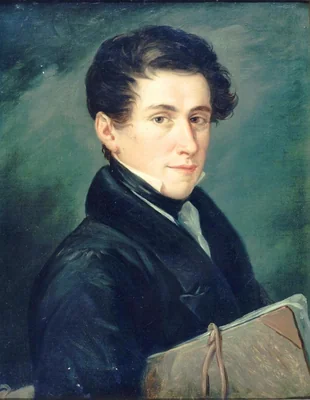
Leonardo Alenza y Nieto (1807-1845) stands as one of the essential figures documenting the transition of Spanish art in the early nineteenth century. Operating primarily as a painter and engraver, Alenza’s work bridged the high drama of the preceding century with a burgeoning contemporary focus on realism. He is classified within the wider Romantic movement, yet his enduring significance lies in his association with Costumbrismo, the movement centered on capturing the customs, manners, and daily life of Madrid society.
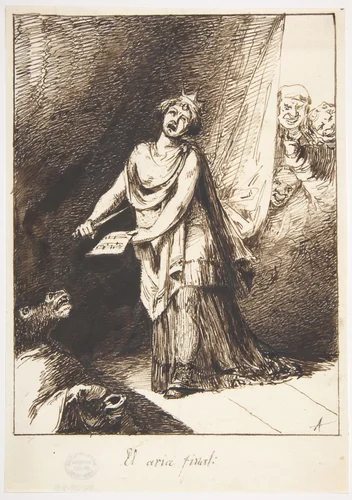
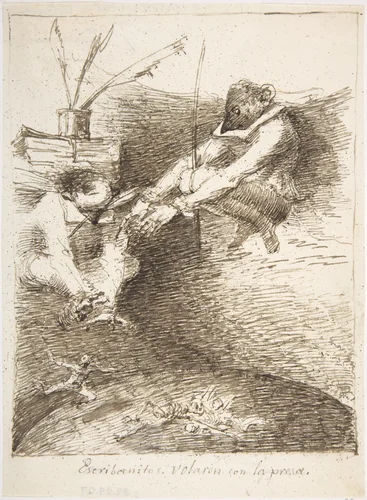
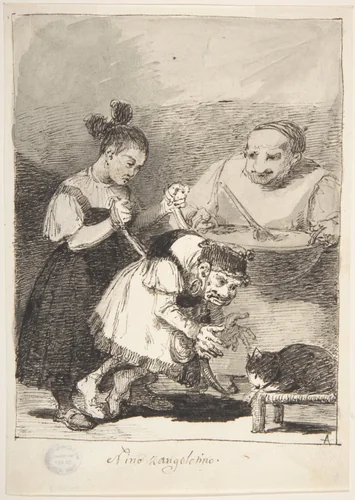
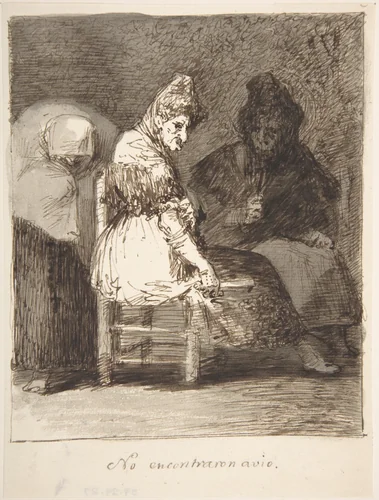
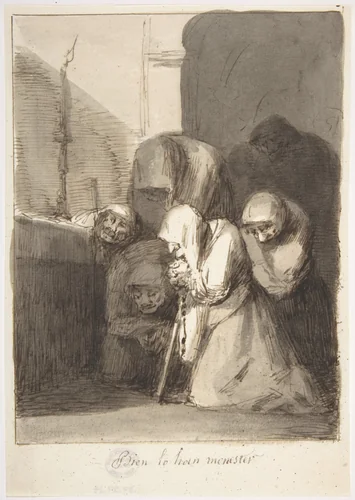
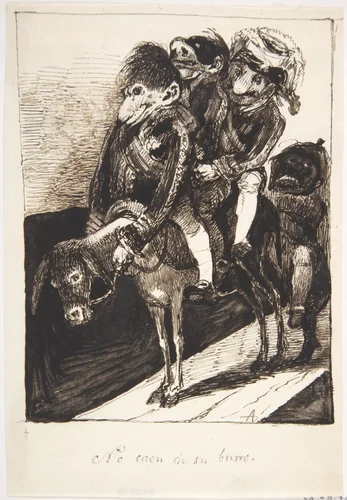
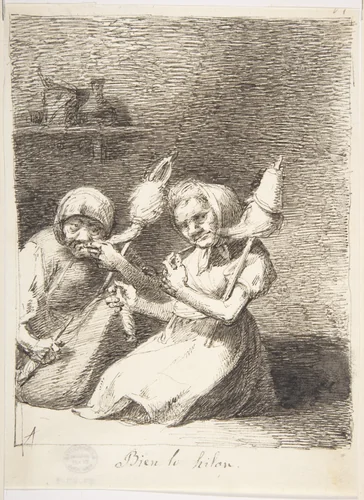
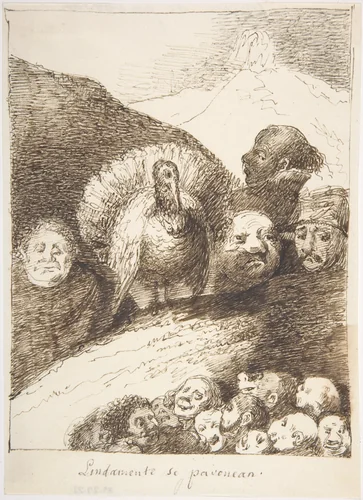
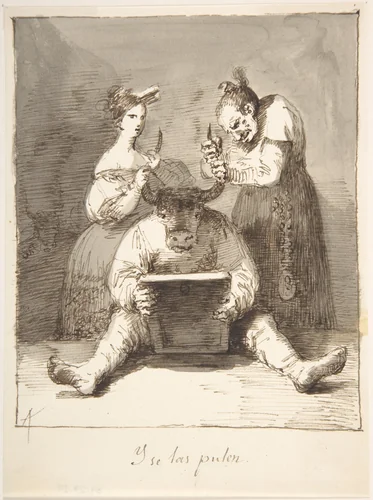
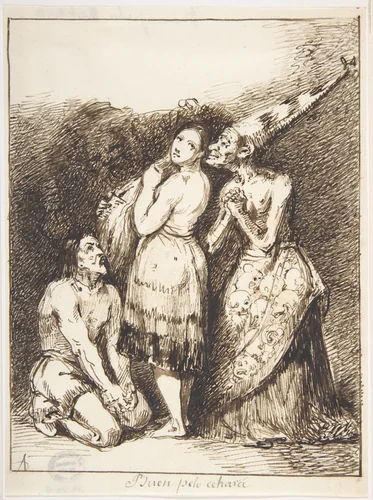
Alenza specialized in scenes of intimate observation, often rendered in sharp, detailed prints that allowed his commentary to be widely circulated. Unlike grand historical canvases, his subjects were the quotidian struggles and ironic societal rituals of his time. This observational rigor is evident in his seminal series of prints which demonstrate a deft command of visual satire and narrative economy. Works such as the grimly titled A Funeral with Honors (Valientes exequias) and the pointed social observation of Birds of a Feather (Entre los suyos) offer an unflinching yet often humorous record of post-war Spain.
His genius was particularly apparent in his ability to encapsulate complex social dynamics through simple, evocative titles. Consider the contrasting tones found in his output: the profound melancholy of Dust to Dust (Et in pulverem reverteris) exists alongside the stark, slightly impatient finality of Already They Are Going (Ya se van). Alenza’s artistic output—though relatively brief due to his early death—provides a critical visual history of the urban experience, inheriting the biting social commentary pioneered by Goya while translating it into the more immediate, relatable aesthetic of the burgeoning middle class.
Though many of his Leonardo Alenza paintings remain held in private collections, his influential drawings and prints demonstrate a high degree of technical mastery. Major institutions, including the Metropolitan Museum of Art, preserve these works, recognizing their historical and artistic value. Today, thanks to efforts to preserve cultural heritage, many of these museum-quality observations are available as downloadable artwork in the public domain, ensuring Alenza’s unique perspective on nineteenth-century Spanish life continues to be accessible worldwide.
Source: Wikipedia · CC BY-SA 4.0