Leonard Bramer
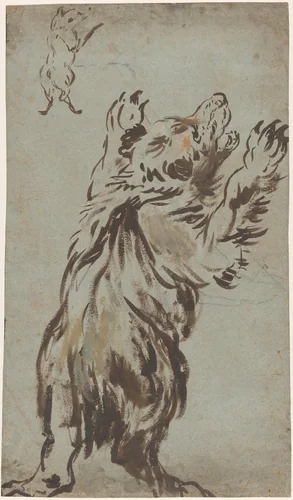
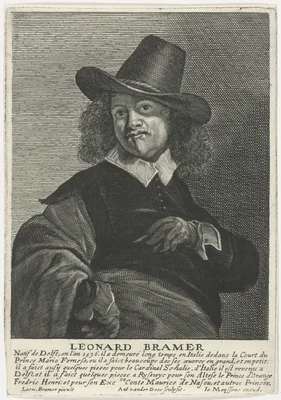
Leonard Bramer (1596-1660) stands as one of the most prolific and technically ambitious figures in 17th-century Dutch art. Active across six decades, his substantial output primarily encompasses history, genre, and religious paintings, but his enduring significance lies in his distinctive approach to light and narrative complexity. Bramer was a master draftsman, utilizing detailed studies, such as Studies of a Bear, as crucial preparatory work for his large-scale canvases and prints.
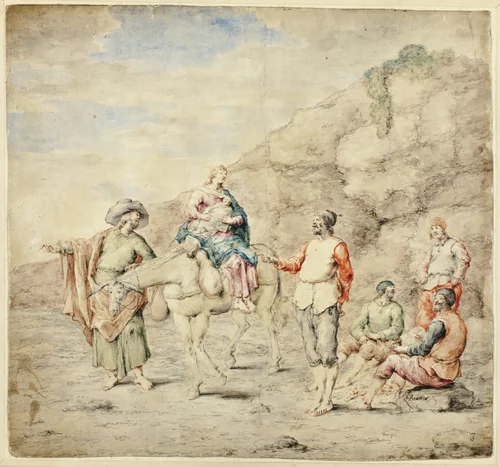
He is critically noted for his command of nocturnal scenes. These dramatic compositions rely heavily on sophisticated chiaroscuro, employing stark contrast between focused, often concealed, light sources and deep shadow to heighten emotional and theological tension. Bramer coupled this dramatic lighting with a noticeable penchant for the exotic, carefully detailing the costumes and foreign architectural settings of his subjects, distinguishing his style from many of his Dutch contemporaries. These innovative qualities make certain Leonard Bramer paintings, such as the concentrated drama found in the Holy Family Passing Four Men, instantly recognizable within the Golden Age canon.
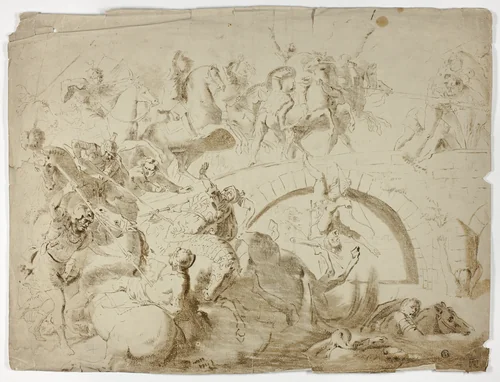
Bramer’s technical versatility extended beyond typical oil and panel work. He was one of the few artists working north of the Alps to attempt true fresco painting, a significant innovation for the period, although these large-scale murals have unfortunately not survived. His surviving oeuvre includes grand historical narratives executed on canvas, like the dynamic rendering of the Battle of Ponte Molle, confirming his capability for monumental public commissions. Given his extensive travel, technical breadth, and wide-ranging subject matter, Bramer remains one of the more intriguing personalities in the history of seventeenth-century Dutch painting.
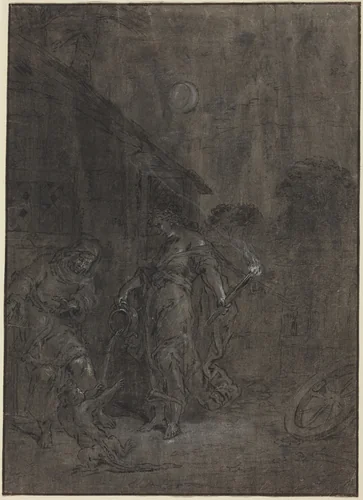
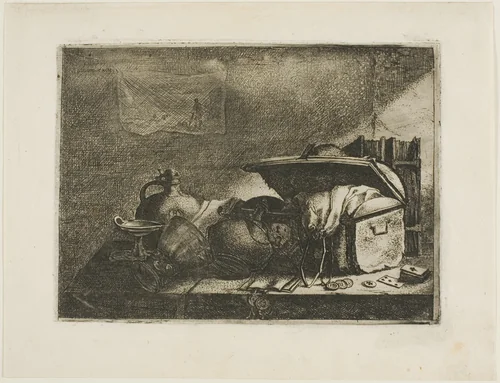
Today, his works are held in major international institutions, including the National Gallery of Art and the Art Institute of Chicago. The availability of his drawings and prints, such as the etching Stellio Changed into a Lizard by Ceres, ensures that viewers have access to the full scope of his output. These records are often available as high-quality prints, enabling academic study and appreciation of his museum-quality execution, even in preparatory sketches and less formal subjects like Still Life with Travelling Trunk.
Source: Wikipedia · CC BY-SA 4.0