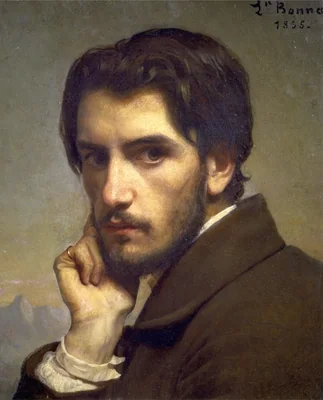
Léon Bonnat
Léon Joseph Florentin Bonnat (1833-1896) was a towering figure in late nineteenth-century French academic art, renowned equally for his forceful technique and his substantial influence as an educator and institution builder. Elevated to the rank of Grand Officer of the Légion d'honneur, Bonnat occupied a unique position at the heart of the Parisian art establishment, securing his legacy not just through his brushwork but through the scores of artists he mentored while serving as a professor at the prestigious École des Beaux Arts. His works are held in major institutions globally, including the Metropolitan Museum of Art, the National Gallery of Art, and the Art Institute of Chicago.
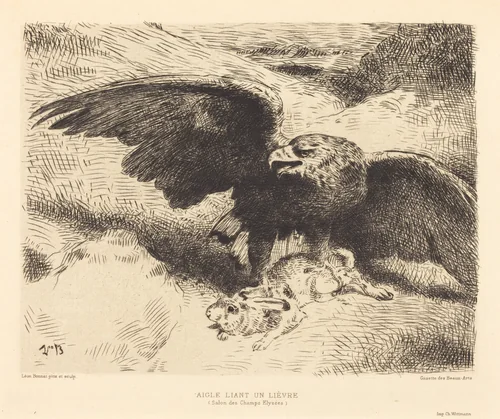
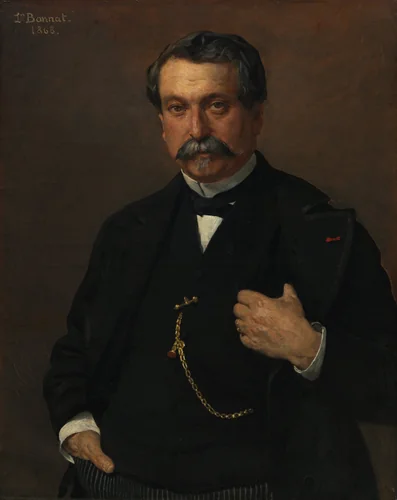
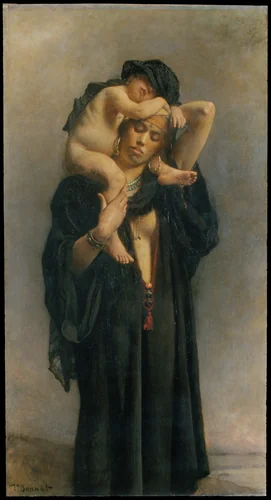
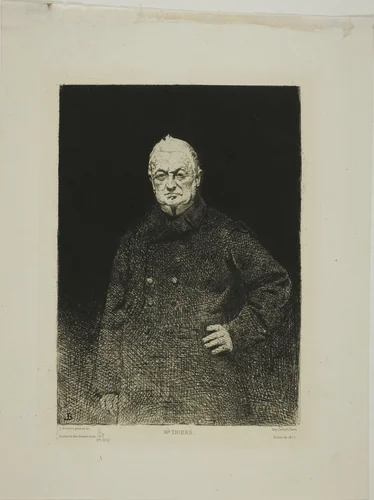
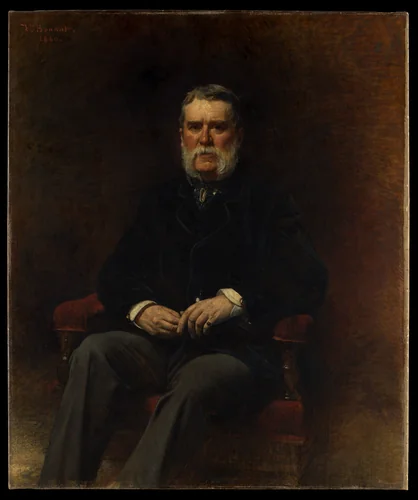
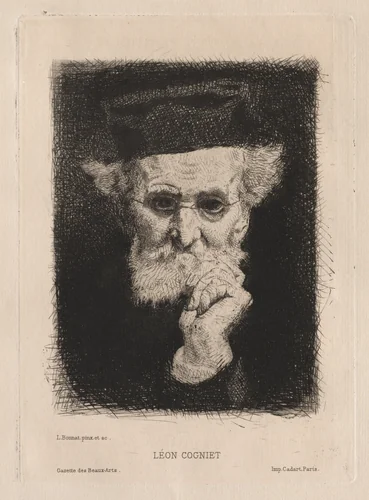
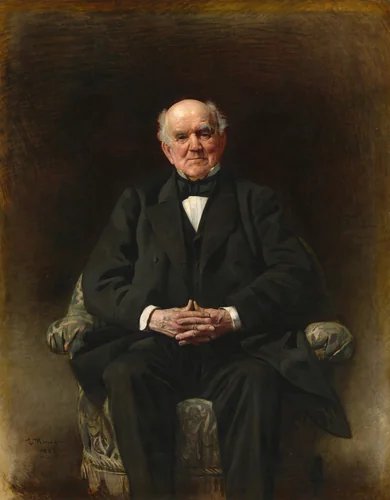
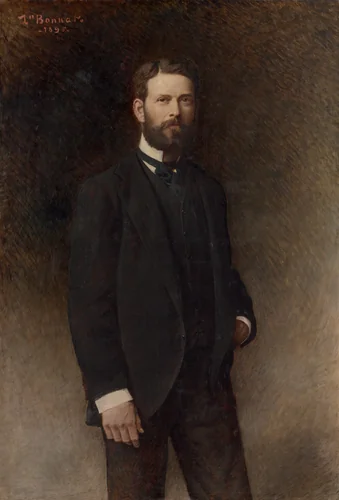
Trained rigorously in the academic tradition, Bonnat initially explored various genres, demonstrating a keen capacity for dramatic realism in scenes like Aigle Liant un Lièvre (An Eagle Pouncing on a Hare) and an early interest in Orientalist subjects, evidenced by An Egyptian Peasant Woman and Her Child. While his strict adherence to established academic standards distinguished his compositional structure, Bonnat allowed for a striking, sometimes surprising, psychological intensity in his portraits. His primary fame rests on his society portraiture, where he captured the elite of France with a bold, almost photographic immediacy—a feature exemplified by works such as Portrait of Jean Léglise, Merchant, Mayor of Saint-Martin-de-Seignanx. Unlike many of his contemporaries who favored the diffused light of the emerging Impressionism, Bonnat preferred defined planes and dramatic contrasts, lending his subjects an imposing gravity.
As an art collector and connoisseur, Bonnat maintained a highly disciplined artistic vision, an approach that translated directly into his teaching. He cultivated a reputation as a demanding, but fair, master whose commitment to drawing was absolute. This insistence on foundational skill ensured that even as the French art world fractured around new movements, Bonnat maintained relevance and command. His enduring influence stemmed less from stylistic innovation than from his tireless efforts to preserve and transmit the techniques of the Old Masters, effectively making him the guardian of classical draftsmanship for a new generation. This dedication to craft is why many Léon Bonnat paintings, despite being over a century old, retain their impressive, museum-quality finish.
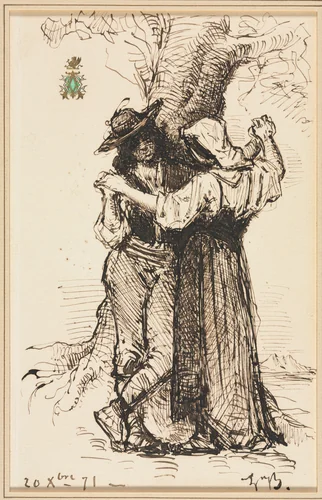
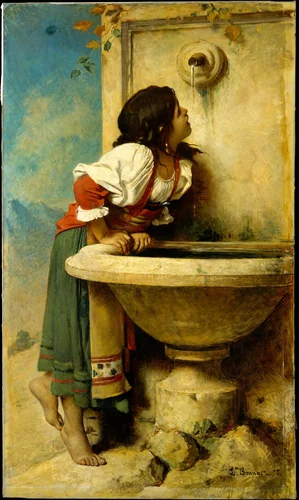
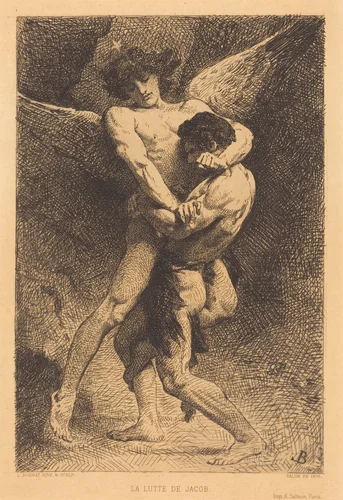
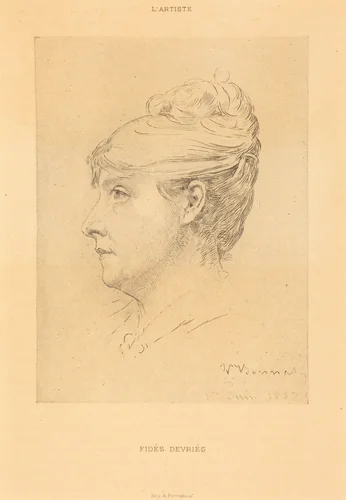
Today, Bonnat’s historical significance ensures that his work continues to reach new audiences. The quality of his draftsmanship is evident across his full oeuvre, including the few known Léon Bonnat prints and drawings, such as Roman Girl at a Fountain. With numerous pieces now entering the public domain, these important works are increasingly available as downloadable artwork, furthering the study of this essential figure in late nineteenth-century realism.
Source: Wikipedia · CC BY-SA 4.0