Léon Augustin Lhermitte
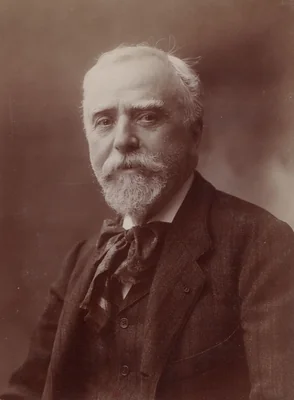
Léon Augustin Lhermitte stands as a critical figure in the French Naturalist movement of the late 19th century, renowned for his masterful depictions of rural life. Active professionally between 1865 and 1888, Lhermitte positioned himself as a diligent chronicler of the working peasant class, achieving widespread recognition for his ability to translate the strenuous dignity of labor onto canvas and paper. Unlike earlier genre painters who sometimes romanticized the subject, Lhermitte provided highly observed, accurate representations of daily agricultural routines, capturing both the specific environments and the essential humanity of his subjects.
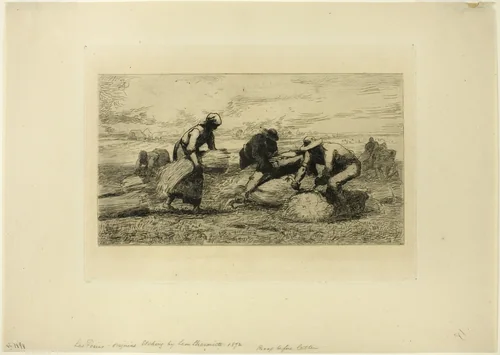
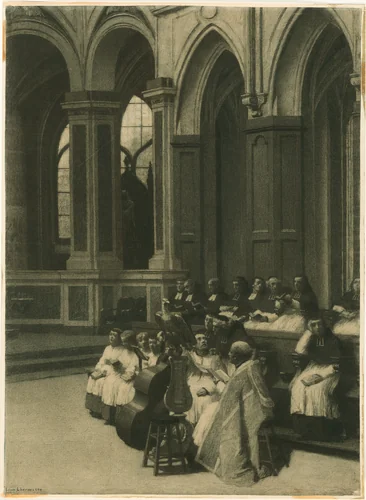
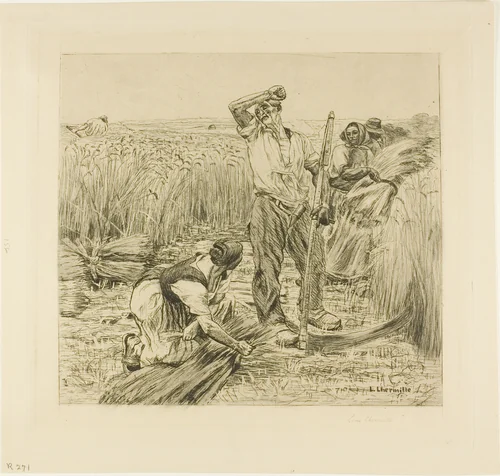
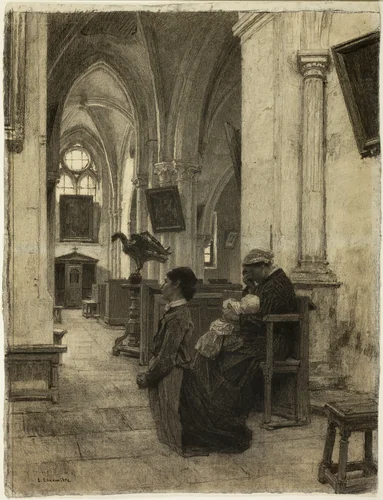
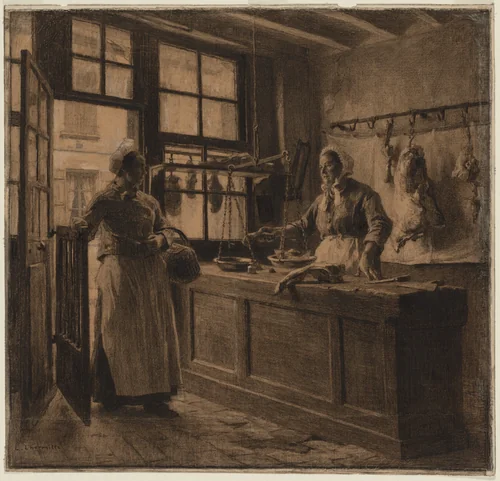
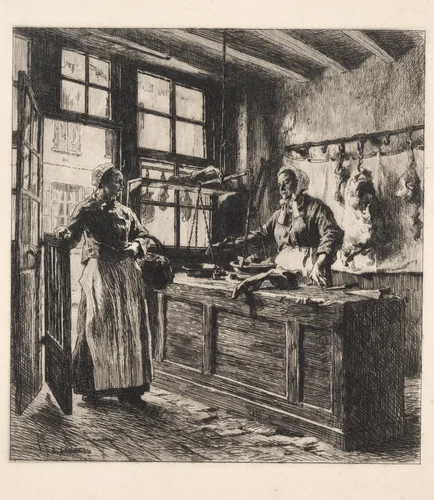
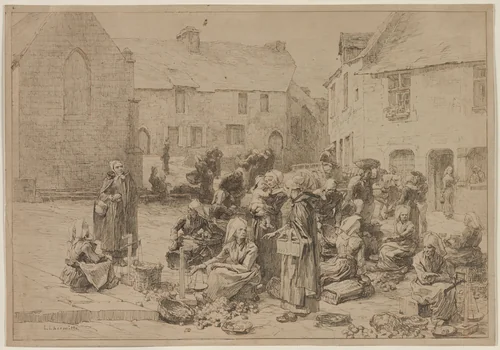
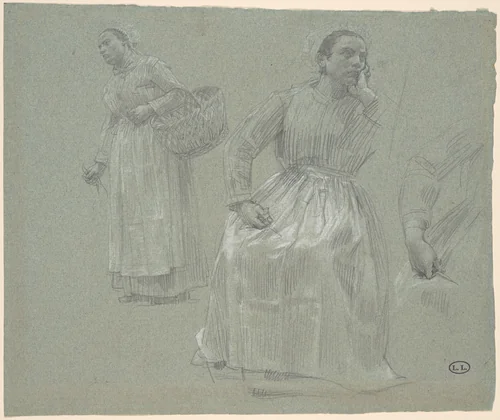
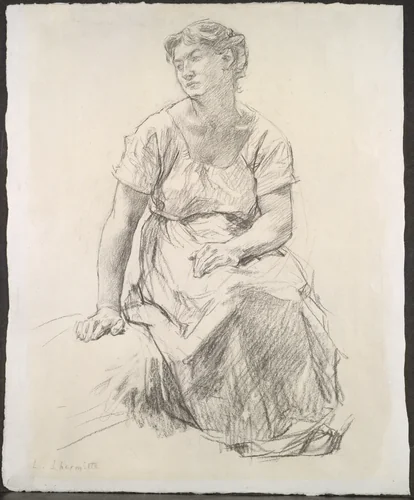
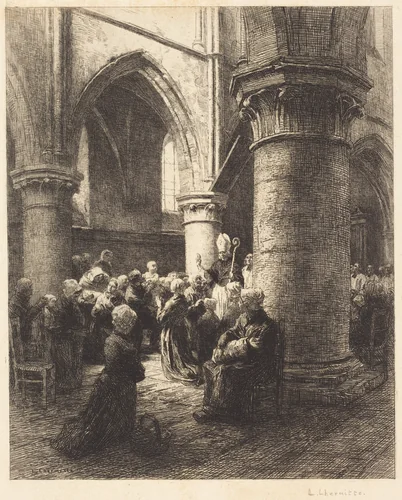
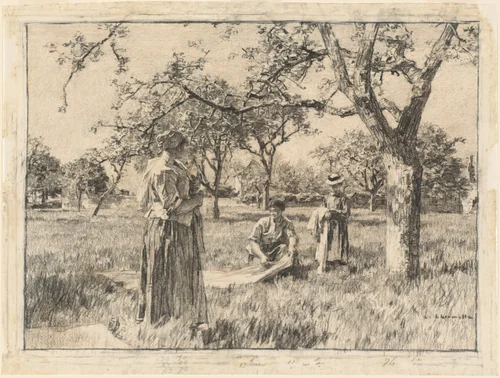
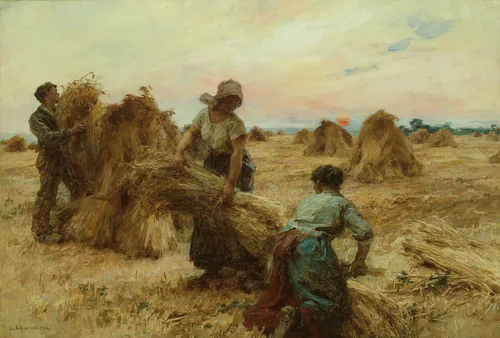
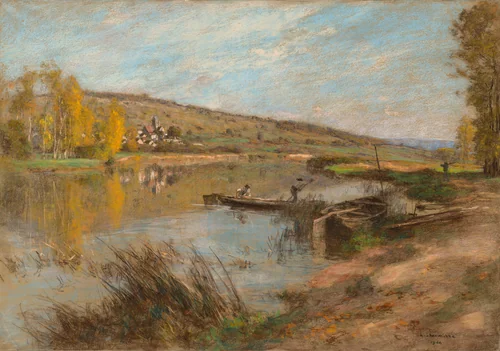
Lhermitte's practice was comprehensive, encompassing major paintings, drawings, and an authoritative body of etched work. While his large canvases, such as Harvest, demonstrate a monumental scale and sophisticated use of light akin to Jules Bastien-Lepage, his graphic output reveals a more intimate observational strength. His etchings and drawings, nine of which are cataloged alongside five prints and one painting, often focused on specific tasks or devotional moments. Works like The Reapers exemplify his dedication to rendering physical effort, while Women Praying in Church and the architectural study The Lectern showcase his nuanced handling of interior light and shadow.
His reputation was cemented by major acquisitions by prestigious American institutions. Significant holdings of Léon Augustin Lhermitte paintings and graphic studies are maintained in the collections of the Art Institute of Chicago, the National Gallery of Art, and the Cleveland Museum of Art, reflecting the enduring museum-quality of his draftsmanship.
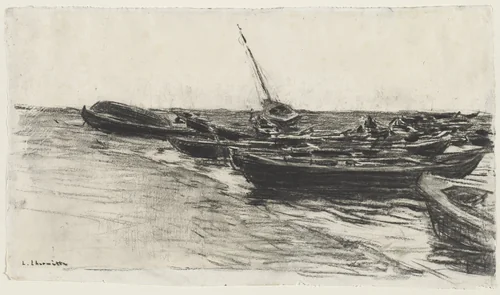
A particularly charming aspect of Lhermitte’s oeuvre is his responsiveness to various locations. His coastal scenes, such as Fishing Boats on the Beach at Étretat, reveal that the artist was equally adept at capturing the textures of salt air and maritime industry as he was the dusty fields of the French countryside. Today, Lhermitte’s technical precision ensures his ongoing influence. Many of his original sketches and plates have entered the public domain, allowing for the widespread dissemination of his studies, including high-quality prints and downloadable artwork used by contemporary scholars studying the evolving landscape of 19th-century French labor.
Source: Wikipedia · CC BY-SA 4.0