Leandro Bassano
Leandro Bassano (1557-1592) successfully navigated the competitive world of late Renaissance Venetian patronage, establishing himself as a master of both sacred subject matter and secular portraiture. Born Leandro dal Ponte in Bassano del Grappa, he was a pivotal member of the illustrious Bassano dynasty of painters, operating one of the most influential family workshops of the 16th century.
Leandro’s training was rigorous and comprehensive, conducted under the direct supervision of his father, Jacopo Bassano, who had adopted the family surname from their town. Working alongside his older brother, Francesco Bassano the Younger, Leandro absorbed the characteristic stylistic elements of the workshop: a robust commitment to naturalism, dramatic chiaroscuro lighting, and an early adoption of detailed genre scenes that captured everyday life. This foundation allowed the family to thrive by mixing high-level court commissions with highly marketable, repeatable compositions.
The artist’s exceptional talent and professional standing were formally recognized by the state. He was honored with a knighthood bestowed by the Doge of Venice, a rare distinction that marked his elevation within the Venetian artistic hierarchy and allowed him to operate successfully at the highest levels of official society.
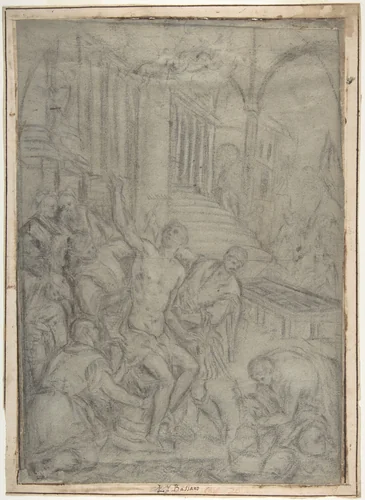
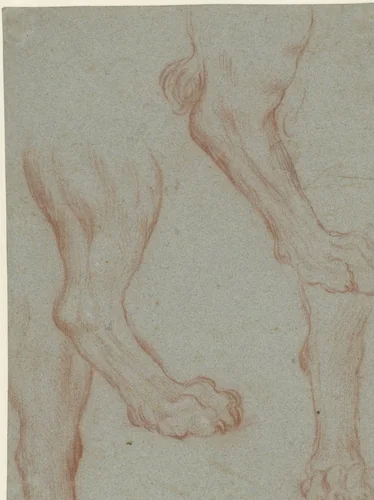
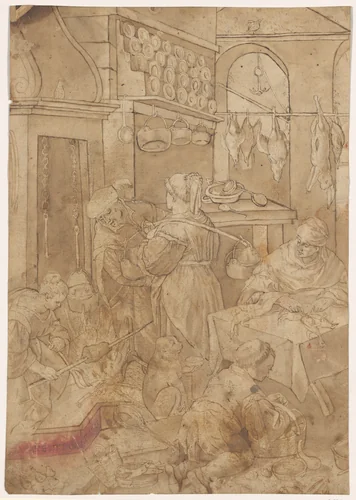
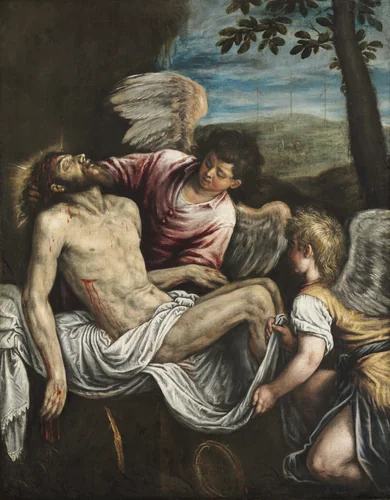
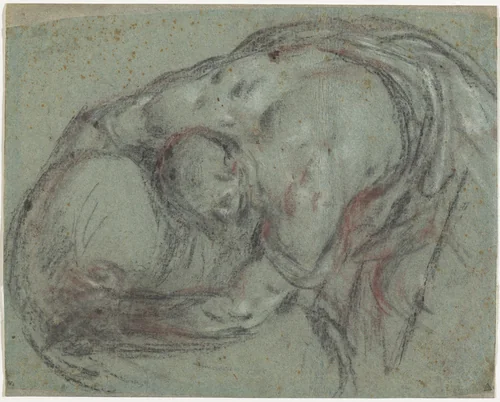
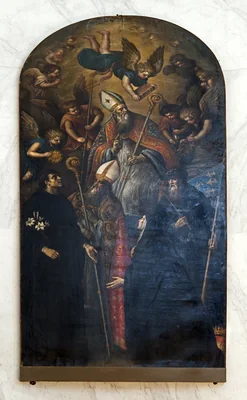
Leandro Bassano paintings demonstrate his stylistic versatility, moving confidently between monumental religious narratives, such as The Martyrdom of Saint Lawrence, and intimate domestic observations, perfectly exemplified by the genre painting Kitchen Scene. His work also included profound devotional pieces like The Dead Christ with Angels, alongside meticulous preparatory studies, such as the Studieblad met twee leeuwenpoten, which offer invaluable insight into the workshop’s technical processes. While maintaining his father’s luminosity, Leandro often employed a slightly more defined and crisp execution, a necessary professional signature within the crowded output of the Bassano studio.
His enduring importance is reflected in the substantial public collections that house his works, including the Metropolitan Museum of Art and the Rijksmuseum. For institutions and private collectors seeking access to his legacy, high-quality prints derived from his major compositions are widely sought after, frequently becoming available through public domain initiatives that ensure the accessibility of downloadable artwork for study and appreciation.
Source: Wikipedia · CC BY-SA 4.0