Laton Alton Huffman
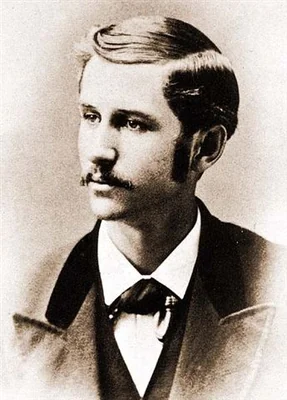
Laton Alton Huffman (1854-1931) is recognized as a pivotal American photographer, offering one of the most comprehensive visual records of Frontier and Native American life during the late nineteenth century. Active primarily between 1875 and 1901, Huffman established his base in Montana, dedicating his practice to documenting the complex social and environmental dynamics of the Northern Plains. His extensive photographic archive, carefully maintained on fragile glass plate negatives, provides an unparalleled historical reference for a rapidly evolving region.
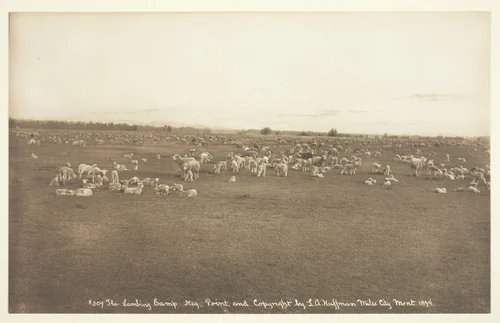
Born in Winneshiek County, Iowa, Huffman transitioned from his initial work at Fort Keogh to developing a successful commercial photographic enterprise. Recognizing the immediate historical value of his own documentation, he methodically produced and sold high-quality prints directly from his negatives. This early commitment to archiving and distribution ensured the survival and widespread recognition of his imagery, establishing a precedent for documenting the American West. Unlike artists who sought merely to romanticize the landscape, Huffman focused his lens on the challenging realities of ranching, daily life in the settlements, and specific portraits of Plains tribes.
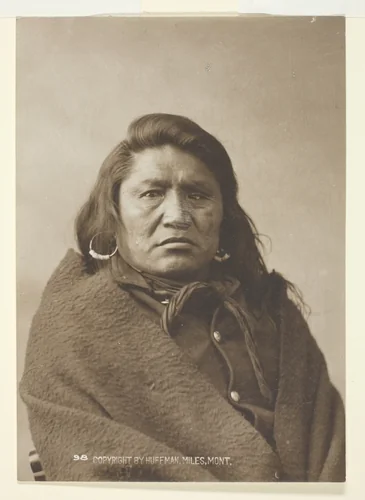
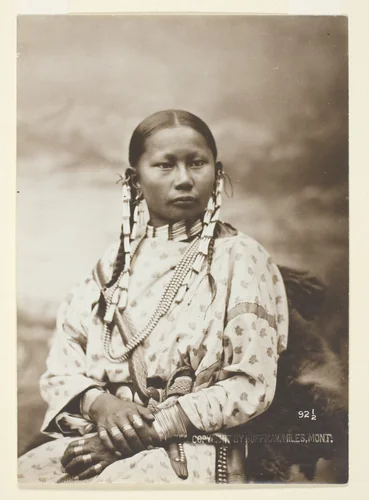
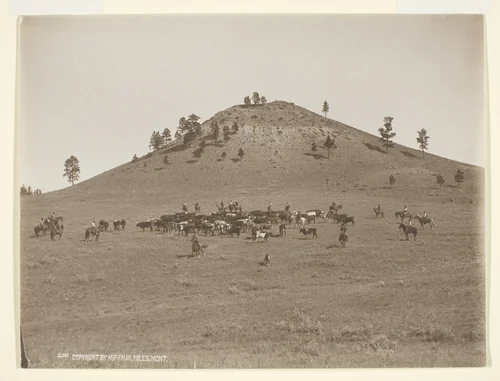
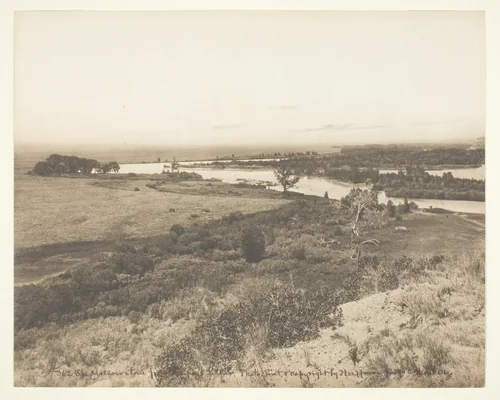
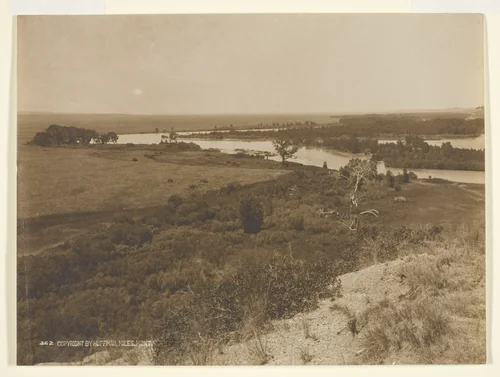
Huffman’s work resonates through its unvarnished realism, a characteristic evident in pieces now held in major collections such as the Art Institute of Chicago. Specific notable examples include the intimate portrait Spotted Fawn, Cheyenne bride, the compelling wildlife study Deaf Bull, and the dynamic scene Working a little bunch in the hills. His geographical documentation extended to landmarks such as The Yellowstone from Pompey's Pillar, capturing the scale of the territory.
While his legacy is built on the fidelity of his original photographic documentation, an interesting element of his early practice involved the manual touching up or colorizing of certain prints—a quaint, early attempt at what would later become sophisticated post-production. The enduring historical and artistic value of Huffman’s catalog ensures its contemporary relevance; today, much of his work is widely accessible as royalty-free downloadable artwork for researchers and enthusiasts alike. In recognition of his definitive contribution to Western history and visual culture, Huffman was inducted into the Hall of Great Westerners of the National Cowboy & Western Heritage Museum in 1976.
Source: Wikipedia · CC BY-SA 4.0