Lancelot Blondeel
Lancelot Blondeel (c. 1498-1561) stands as a quintessential figure of the Flemish Renaissance, embodying the period’s ideal of the polymathic visual artist. Operating primarily out of Bruges during the first half of the sixteenth century, Blondeel seamlessly navigated disciplines ranging from traditional painting to the demands of civic infrastructure. He was not merely a studio artist; his professional practice extended robustly into architecture, cartography, surveying, and crucial city planning roles. This unparalleled versatility made him one of Bruges’s most critical designers, influencing the visual structure and functional aesthetics of the city itself.
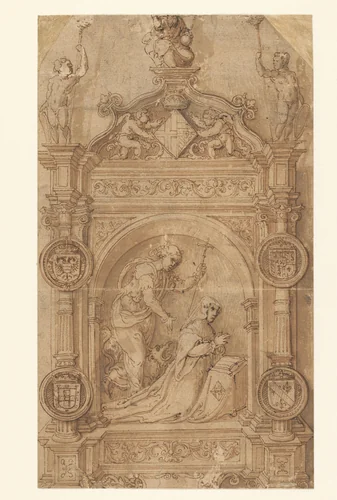
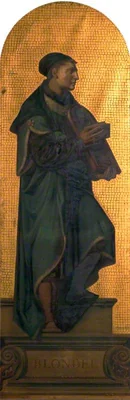
While Blondeel is known to have produced substantial Lancelot Blondeel paintings, including the complex religious scene Redding van de heilige Donatianus, a significant portion of his extant work survives as preparatory drawings and meticulous designs. These documents reveal his comprehensive approach to both high and decorative arts. His output included detailed proposals for funerary monuments, such as the Ontwerp voor een grafmonument voor Margaretha van Oostenrijk, alongside essential sketches for sculptural figures, tapestries, and intricate jewelry designs. This focus on functional aesthetics demonstrates a sophisticated understanding of how design operates across multiple scales and mediums, allowing his influence to permeate nearly every aspect of visual culture in his era.
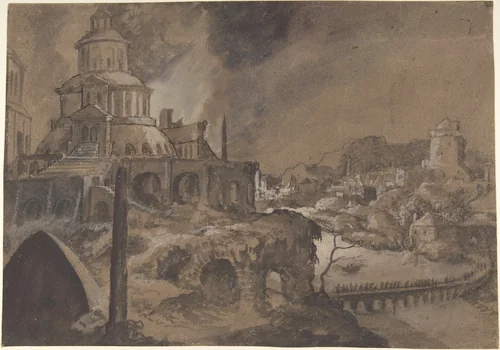
Blondeel’s surviving drawings, housed in major collections including the Metropolitan Museum of Art and the Rijksmuseum, often exhibit a vibrant engagement with the era’s burgeoning interest in complex, naturalistic landscape compositions. Works like the Fantastic Landscape with Figures Crossing a Bridge demonstrate his keen draftsmanship and ability to craft engaging, illusionistic depth. The fact that a single artist was simultaneously commissioned to design the city's vital infrastructure and its finest jewelry offers a compelling glimpse into the extraordinary expectations placed upon the successful Renaissance master. His technical sketches and inventive concepts offer museum-quality material for contemporary study, much of which is now available as downloadable artwork through public domain repositories, ensuring wide access to these foundational designs.
Source: Wikipedia · CC BY-SA 4.0