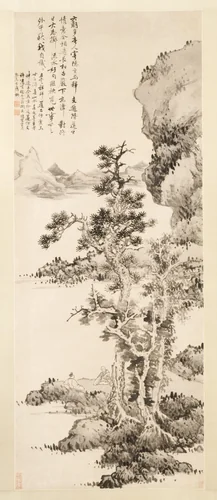
Lan Ying
Lan Ying (1585-1664) stands as a monumental figure in late Ming dynasty painting, celebrated for a technical virtuosity that spanned the full spectrum of traditional Chinese subject matter: landscapes, human figures, delicate flowers, and vibrant birds. Active primarily from the early 1600s through 1643, Lan Ying presided over the highly productive Hangzhou region, maintaining a prolific output that ensured his reputation as the last major exponent of the regional Zhejiang School tradition.
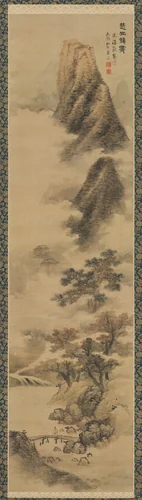
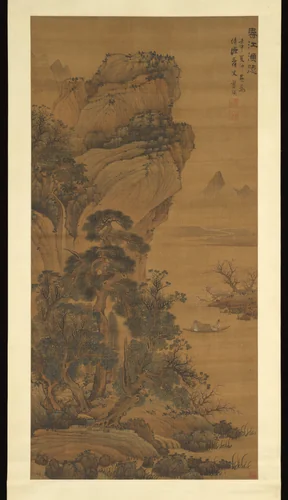
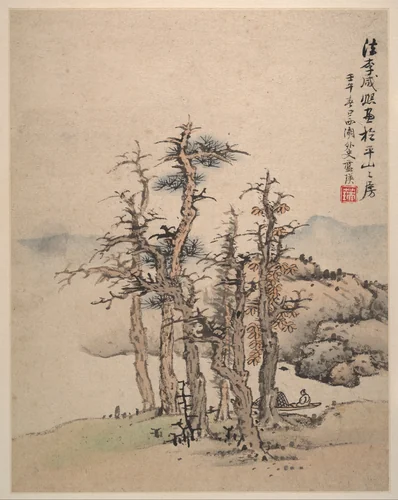
What distinguishes Lan Ying is not radical innovation, but a sophisticated, syncretic approach to the classical canon. He was a master of homage, systematically engaging with the styles of the preceding Song and Yuan masters. This dedicated research is demonstrated explicitly in works like Landscapes after Song and Yuan masters, where he meticulously absorbed and reinterpreted earlier forms. Yet, this traditional foundation was paired with a dynamic use of brushwork and color that marked his own distinctive evolution, often rendering monumental vistas with a striking sense of textural depth. This synthesis is visible in the atmospheric subtlety of his work, whether capturing the quietude of Clearing Autumn Mists in the Chu Mountains or the intimate genre scene depicted in Zhi and Xu's Pure Conversation.
His command of contrasting moods and techniques allowed him to move seamlessly between genres. He could execute the meticulous detail required for figure painting, while simultaneously mastering the bold, sweeping washes necessary for profound mountain landscapes. It is a subtle observation, but one worth noting: Lan Ying’s technical fluency was so absolute that later critics sometimes struggled to locate a singular “Lan Ying style” distinct from his masterful borrowings, illustrating his complete absorption of past traditions.
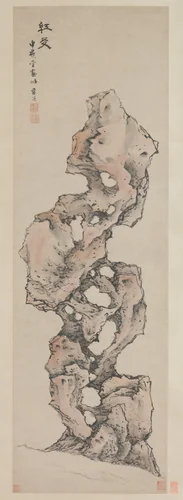
The widespread appreciation of Lan Ying’s achievement is reflected in the global dispersal of his finest works. Significant Lan Ying paintings, including Red Friend and Hermit-Fisherman on a Spring River, are held in permanent collections at institutions such as the Metropolitan Museum of Art and the Cleveland Museum of Art, affirming their enduring museum-quality status. Today, much of this historically significant output is available in the public domain, allowing scholars and enthusiasts to study these high-quality prints, ensuring that Lan Ying’s influence on the subsequent Qing dynasty painters remains palpable and accessible.
Source: Wikipedia · CC BY-SA 4.0