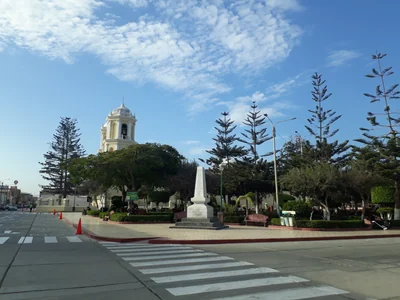
Lambayeque
The artistic and cultural designation Lambayeque refers to a dynamic pre-Columbian society active in northern coastal Peru, flourishing around 1000 CE. Its name derives from "Llampayec," the central ancestral idol and mythological figure worshipped in the region. Thus, the term is geographically complex, identifying not only a highly sophisticated civilization, often synonymous with the Sican culture, but also the modern city, province, and district where its influence was centered. This civilization distinguished itself through exceptional skill in hydraulic engineering and the visual arts, creating a legacy that remains foundational to the history of the Central Andes.
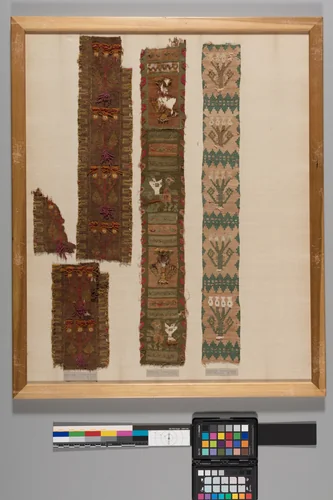
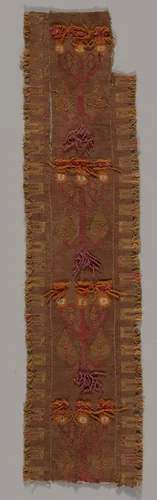
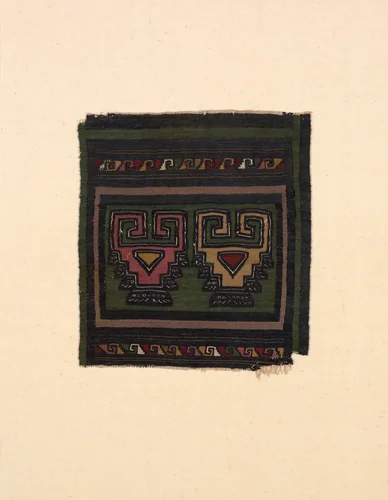
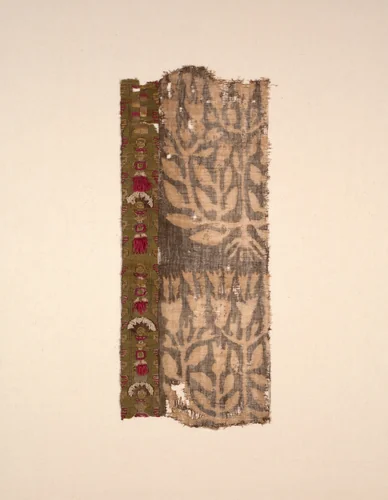
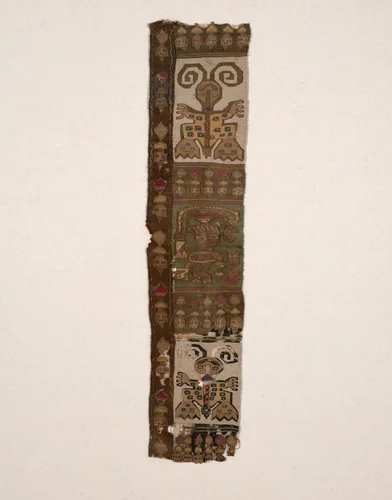
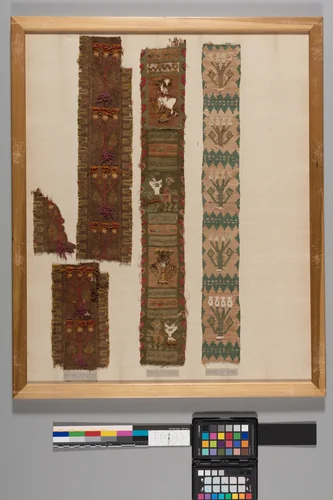
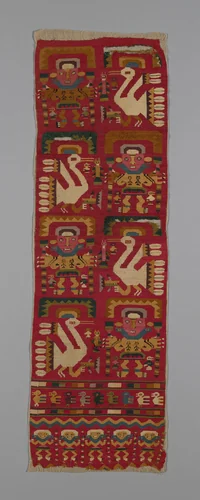
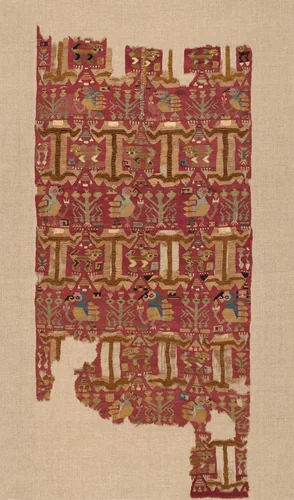
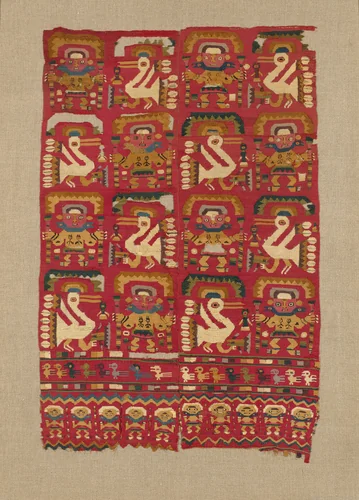
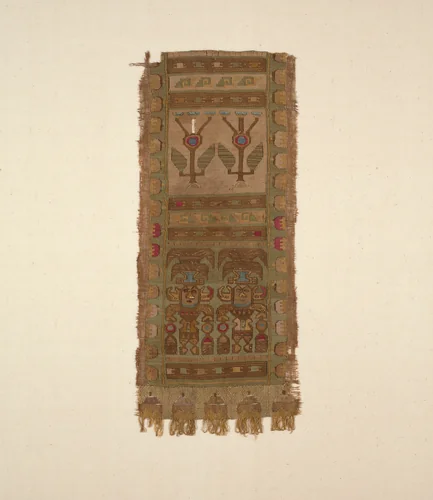
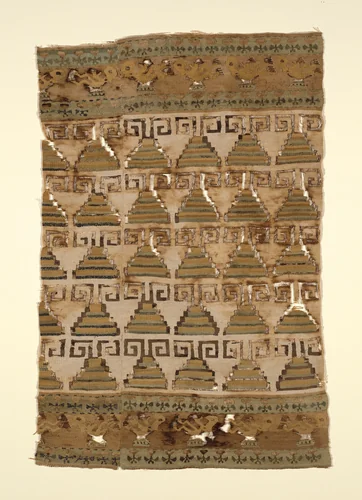
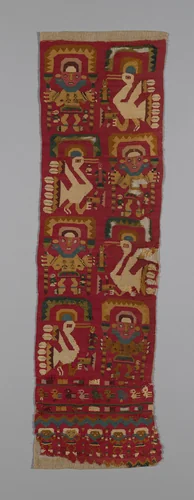
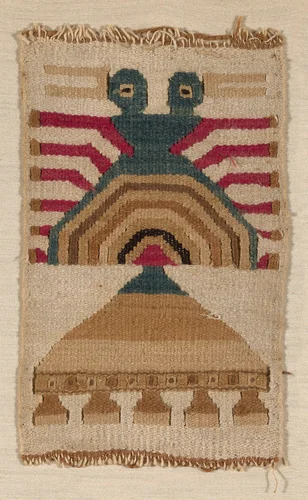
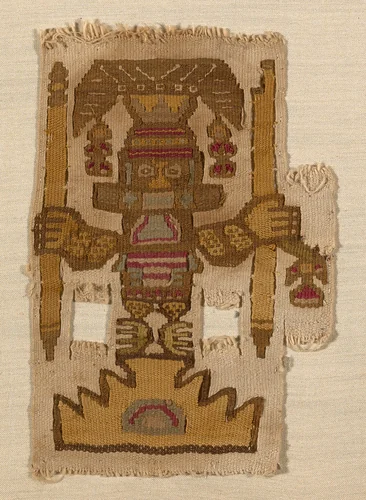
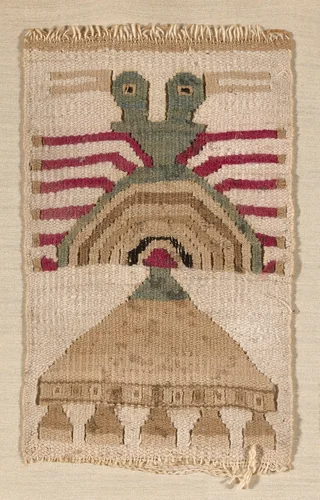
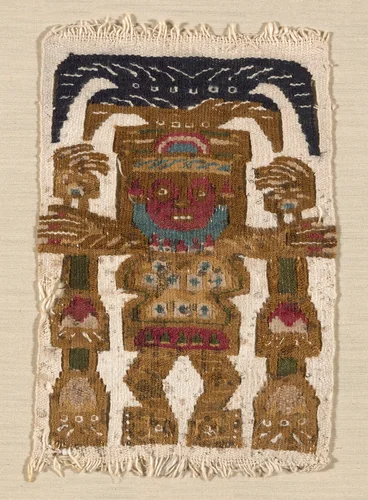
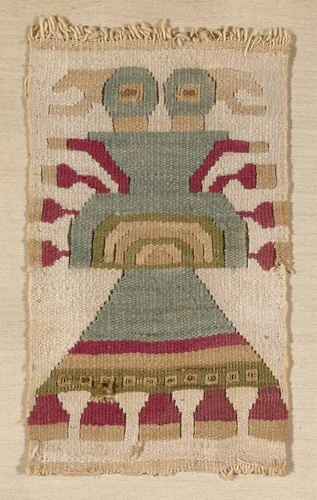
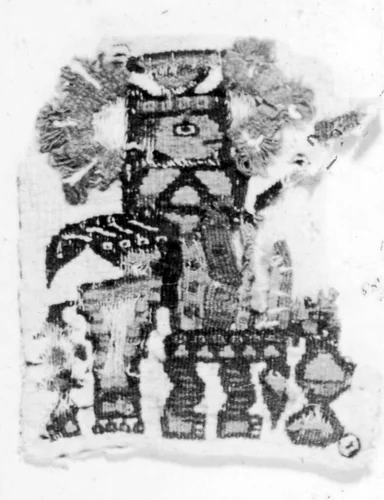
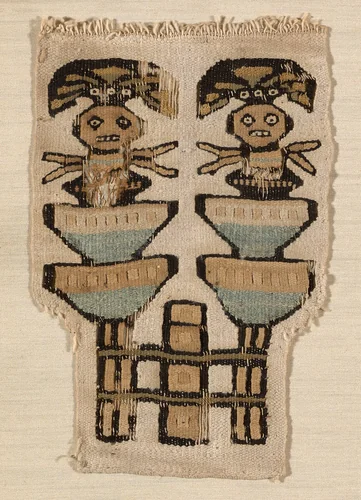
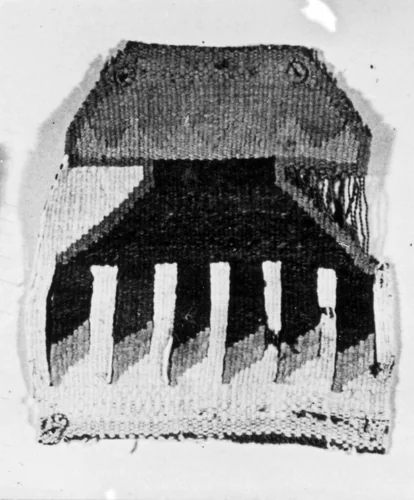
Although the Sican culture is often celebrated for its unparalleled mastery of metallurgy—producing elaborate gold masks and ritual objects—the surviving corpus of textiles offers equally vital insight into its cosmology and technical prowess. The fifteen known textile items, such as the Band and various Fragment pieces held in prestigious collections like the Art Institute of Chicago, represent the technical zenith of Andean weaving traditions. These examples showcase a comprehensive knowledge of complex structures like complementary weft and warp, techniques that demand meticulous precision and vast labor investment. The resulting museum-quality craftsmanship speaks to the elevated ceremonial function these articles once served, likely as components of funerary wrappings or elite regalia.
The very abstract titles assigned to these delicate remnants—Band Fragments or Fragment—underscore the challenge of reconstructing cultural context from archaeological findings. Yet, these pieces speak volumes through their silent complexity, confirming the political and artistic maturity of the Lambayeque state as it flourished between the Wari decline and the rise of the Chimú empire.
While highly valued and protected today, much of the scholarship surrounding these works is globally accessible, often utilizing institutional records that provide downloadable artwork for academic comparison and study. The continued interest in these textile traditions, and the availability of high-quality Lambayeque prints based on surviving artifacts, confirms the enduring relevance of a culture whose namesake simultaneously denotes an ancient idol, an innovative civilization, and a modern Peruvian region.
Source: Wikipedia · CC BY-SA 4.0