Konoe Nobutada
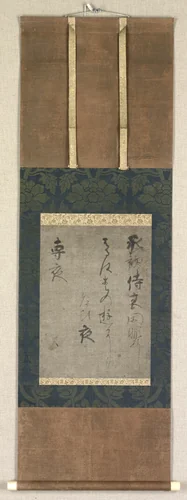
Konoe Nobutada (1565-1614) was a preeminent Momoyama period Japanese courtier whose influence defined the aesthetics of the imperial milieu. Recognized not only for his aristocratic status but also as a formidable polymath, Nobutada established himself as a master poet, diarist, and painter, and most critically, one of the era’s most revered calligraphers. His artistic production spanned the crucial period between 1573 and 1610, during which he moved through various names, including Nobumoto and Nobusuke, before adopting the title Sanmyakuin in his later years, by which he is perhaps most frequently identified in scholarly texts.
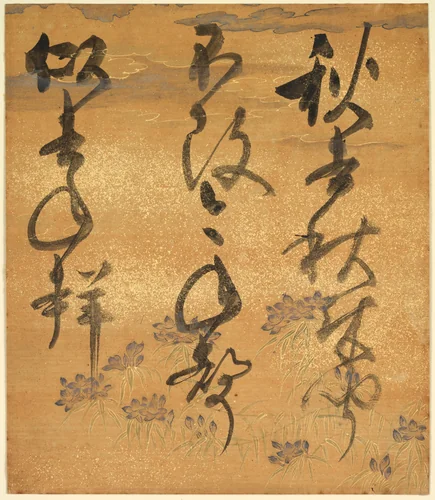
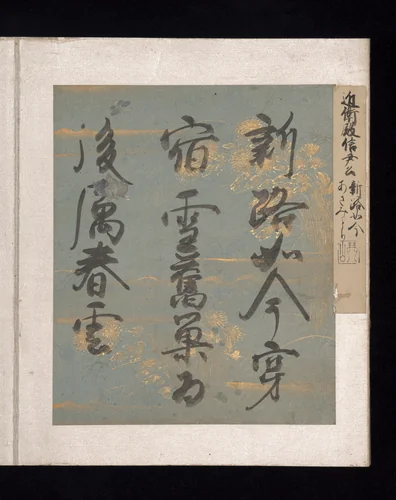
Nobutada’s significance rests largely on his ability to integrate classical literature with expressive visual execution. His mastery of the written hand, essential for the sophisticated aesthetic standards of the period, is evidenced in complex textual and visual collaborations, such as Portion of a Poetry Anthology: Cicada, from "Shinsen Roeishu" and the meticulously compiled Album of Japanese and Chinese Poems to Sing.
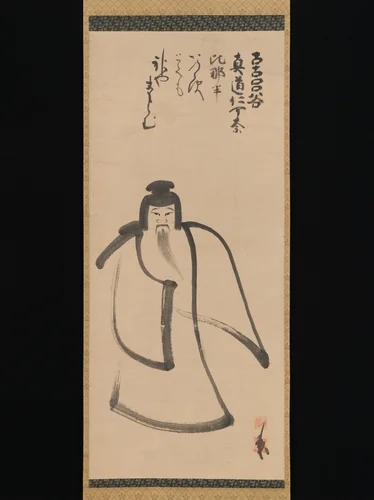
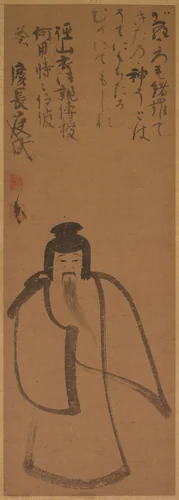
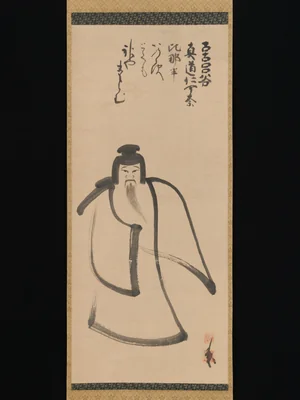
While often lauded first for the fluidity and vigor of his calligraphy, Nobutada’s contributions to painting are equally vital, ensuring his place within major international holdings. His output, which includes several Konoe Nobutada paintings, frequently focused on narrative or religious iconography. The subject matter reflects profound literary and spiritual traditions, evidenced by the rendering of A Song of Unending Sorrow (Chōgonka), a classic tale of imperial romance, and the repeated motif of the revered scholar Sugawara no Michizane in Tenjin Traveling to China. These pieces are preserved in North American institutions, including the Metropolitan Museum of Art and the Cleveland Museum of Art, ensuring their status as museum-quality examples of Momoyama court culture.
One might observe that the Momoyama period demanded such versatility; a person of Nobutada’s stature needed to be able to dictate policy and compose a flawless tanka within the same morning. Lacking a legitimate son, he eventually adopted his nephew Nobuhiro as his heir, highlighting the court’s enduring emphasis on aesthetic lineage as much as bloodline. Today, Nobutada’s wide-ranging genius, including studies of Konoe Nobutada prints and texts, remains highly accessible, with many of his works now preserved in the public domain.
Source: Wikipedia · CC BY-SA 4.0