Koloman Moser
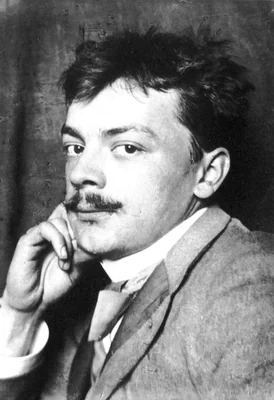
Koloman Moser (1868-1918) was a pivotal Austrian artist whose rigorous approach to design exerted considerable influence on twentieth-century graphic and applied arts. He stands among the foremost designers associated with fin-de-siècle Vienna, notably as a foundational figure within the Vienna Secession movement.
Moser’s active period, dating from the early 1890s, was characterized by a relentless drive to unify artistic practice across all media, extending the concept of Gesamtkunstwerk (total work of art) into everyday life. This commitment culminated in 1903 with the co-founding of the Wiener Werkstätte (Vienna Workshops). The Workshop aimed to elevate design standards, moving away from mass-produced historicism toward a functional, aesthetically pure style that valued geometry, rhythm, and simplified color palettes.
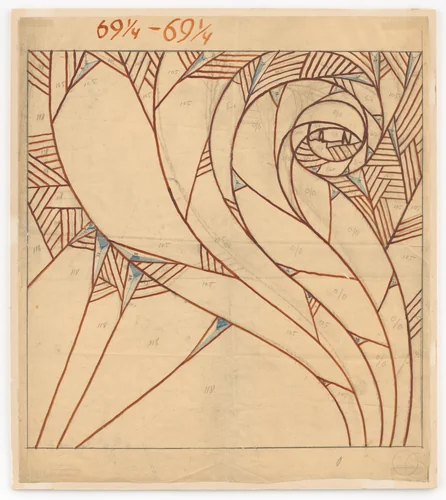
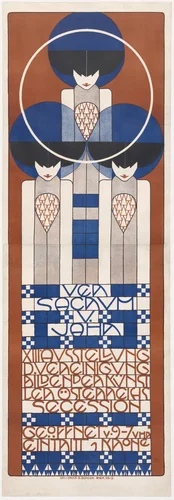
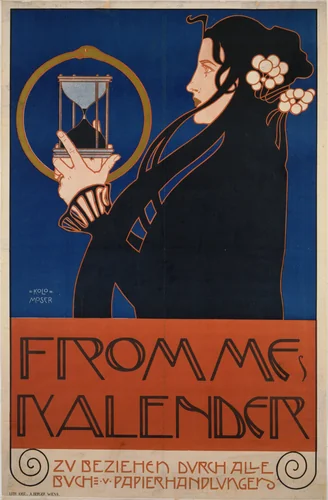
His prolific output during this era ranged from complex furniture and stained glass to simple printed ephemera. Moser's designs, whether for functional textiles like Panel (Upholstery Fabric) or illustrative works such as Allegory of Summer, demonstrated his mastery of clean, structural lines. The subtle sophistication of his graphic work, often seen in the postcards and illustrations he produced for the Secession’s magazine, Ver Sacrum, reveals an artist capable of profound elegance using minimal means.
Moser’s systematic aesthetic proved critical in bridging the ornamental lyricism of Art Nouveau with the emerging simplicity of Modernism. His graphic design principles, particularly evident in series like the Wiener Künstler-Postkarte, helped lay the groundwork for later Art Deco clarity.
While original Koloman Moser paintings remain highly sought after by collectors, the breadth and volume of his graphic and applied works ensure his continued influence. His designs are preserved in major international repositories, including the Museum of Modern Art, the Art Institute of Chicago, and the National Gallery of Art. Many of these historically significant works are now in the public domain, ensuring that this foundational canon of Modern design remains accessible. The availability of high-quality prints and downloadable artwork ensures that Moser’s elegant, systematic approach continues to be studied and appreciated globally.
Source: Wikipedia · CC BY-SA 4.0