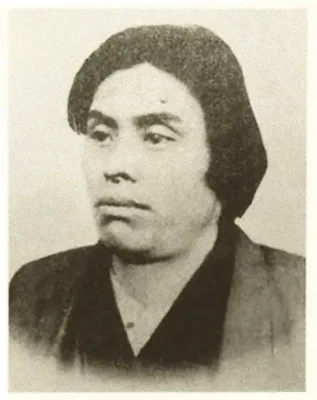
Kobayashi Kiyochika
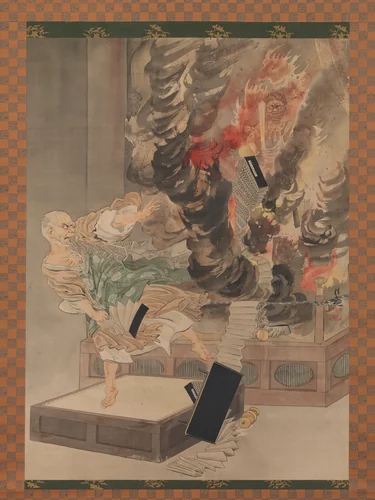
Kobayashi Kiyochika (active 1800-1890) stands as one of the most historically significant figures in late Japanese ukiyo-e, a printmaker whose active career coincided precisely with the dramatic, rapid Westernization of the Meiji period (1868-1912). While fundamentally rooted in the color woodblock tradition, Kiyochika redefined the medium, transforming it from a popular art form into a sophisticated tool for documenting Japan’s systemic modernization. His extensive output, which includes many known prints and a rare collection of extant Kobayashi Kiyochika paintings, acts as an unparalleled visual record of this tumultuous era.
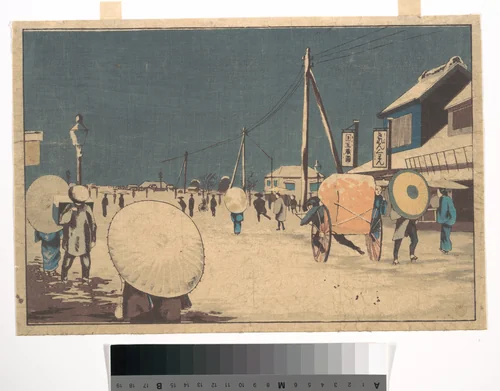
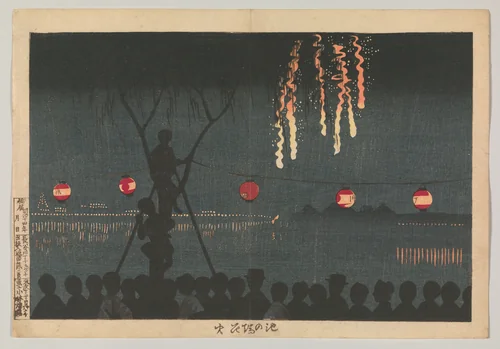
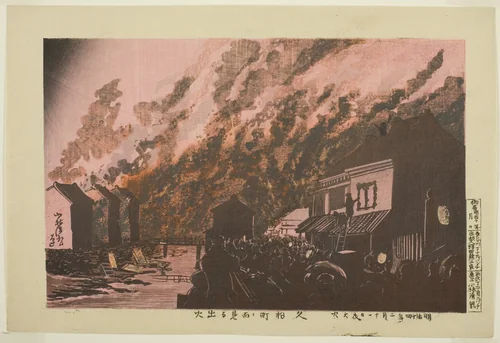
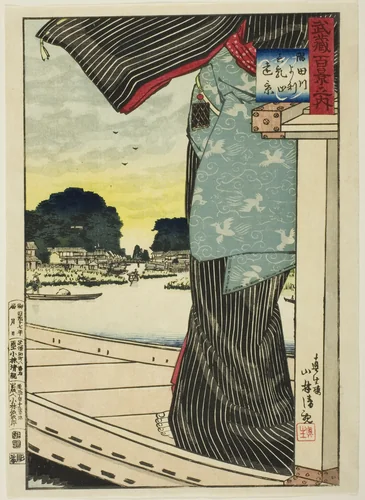
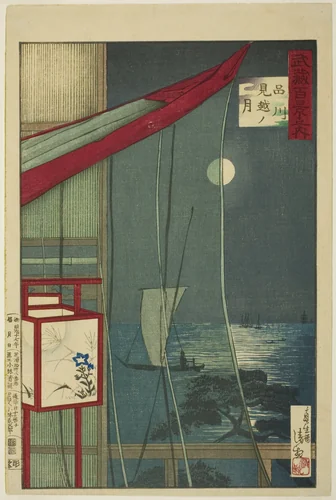
Kiyochika is particularly celebrated for his technical innovations, specifically his adoption of kōsen-ga, a technique of employing dramatic light and shadow. Heavily inspired by Western artistic principles and photography, kōsen-ga allowed him to imbue his scenes with atmospheric depth and vivid contrasts, moving beyond the traditionally flat color fields of classical ukiyo-e. His earliest works, which found immediate popularity in the 1870s, focused on the newly constructed urban infrastructure, such as European-style red-brick buildings and the introduction of steam trains. Prints like Street Scene in the Outskirts of Edo on an Evening in Winter vividly capture the jarring juxtaposition of old ways meeting new technology.
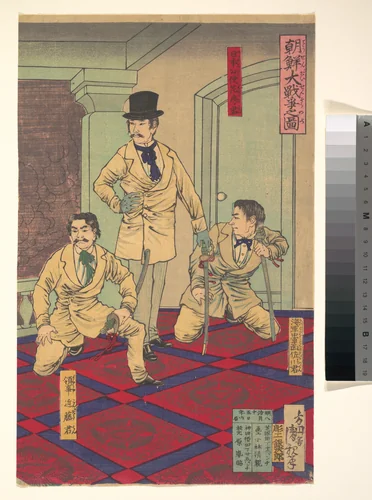
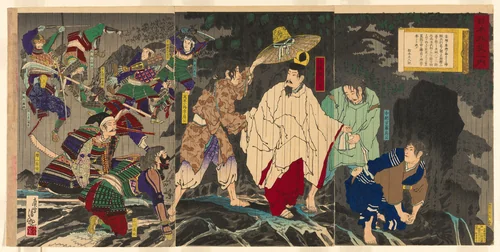
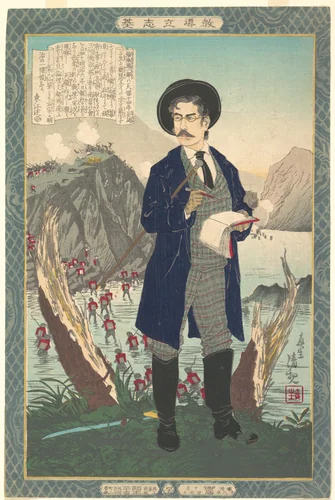
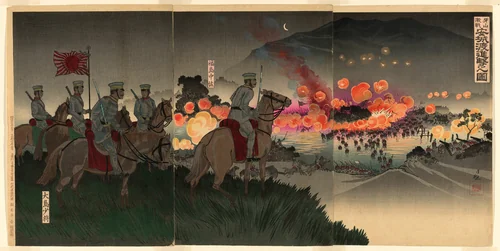
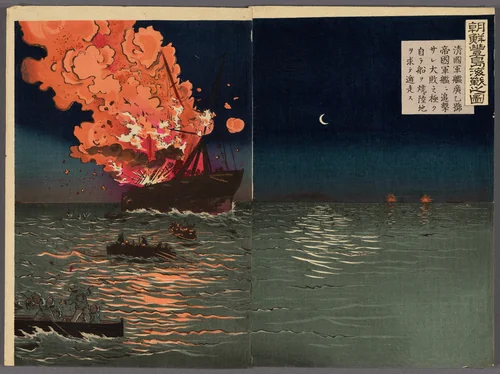
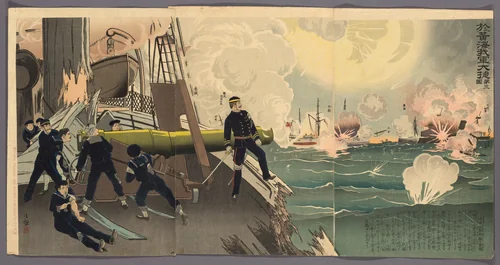
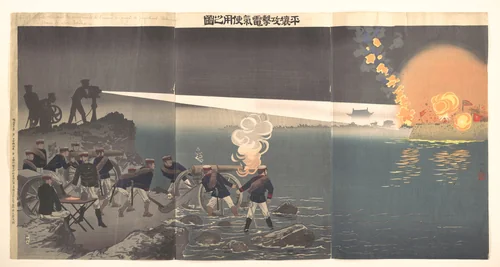
Although his urban studies were popular, Kiyochika’s fame solidified with his prints documenting the First Sino-Japanese War (1894-95), offering immediate and often powerful visual reportage of the conflict. Yet, the irony of his career is unmistakable: he dedicated a lifetime to the color woodblock just as the medium was being eclipsed by photography and modern printing techniques. Consequently, many discerning collectors consider Kiyochika’s prolific, high-quality prints the final significant flourish of ukiyo-e as a major artistic and commercial force.
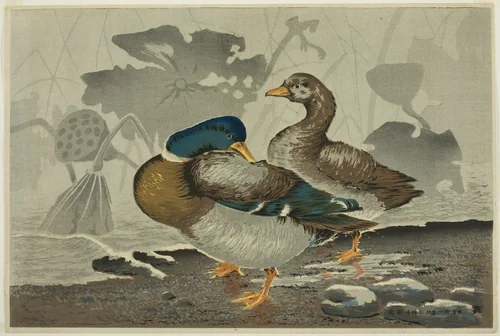
His technical mastery, visible in both genre scenes like A pair of ducks by a lotus pond and poetic landscapes, ensured that the form received a spectacular final treatment before fading from dominance. Today, his works are preserved in major global institutions, including the Metropolitan Museum of Art and the Art Institute of Chicago, with many images now residing in the public domain, offering historians and enthusiasts easy access to downloadable artwork for continued study.
Source: Wikipedia · CC BY-SA 4.0
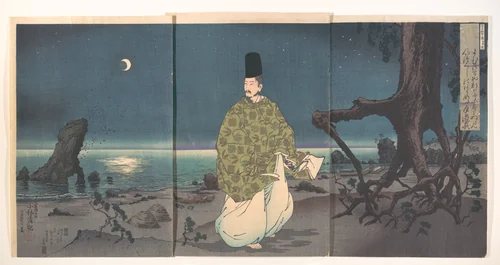
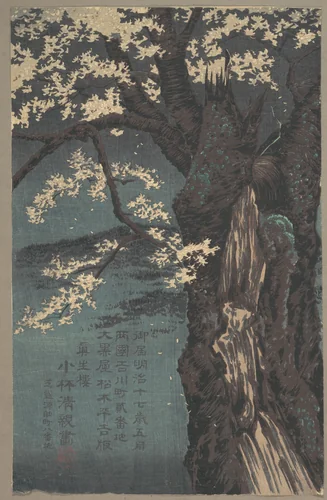
![Illustration of the Empress Visiting a Field Hospital [in Hiroshima] (Yasen byōin gyōkō no zu) by Kobayashi Kiyochika, print, 1895](https://img.artbee.org/8dc42b6f-42de-4221-8dc8-9a41a24bf023/small.webp)