Kiyohara Yukinobu
Kiyohara Yukinobu (active 1665-1670) holds a singular place in the history of Japanese painting as one of the most prominent female artists affiliated with the esteemed Kanō school. Working primarily from Kyoto during the early Edo period, her successful career offers essential documentation of the professional opportunities and high-level patronage available to talented women artists of the era.
Yukinobu’s artistic lineage provided a rare foundation for success. She was the daughter of the established painter Kusumi Morikage, under whom she is believed to have trained. Further strengthening her ties to the artistic elite, her mother, Kuniko, was the niece of the hugely influential master and family patron, Kanō Tan’yū. This internal network afforded her access to training and commissions typically reserved for male practitioners.
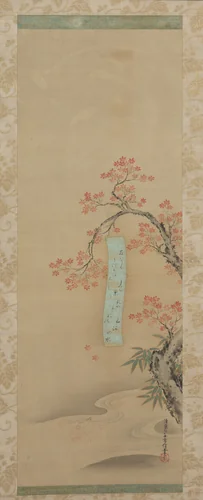
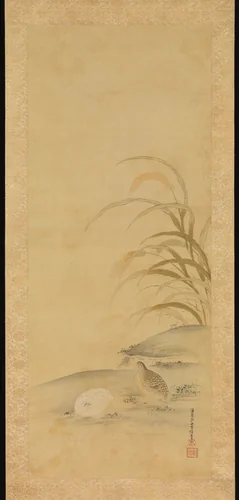
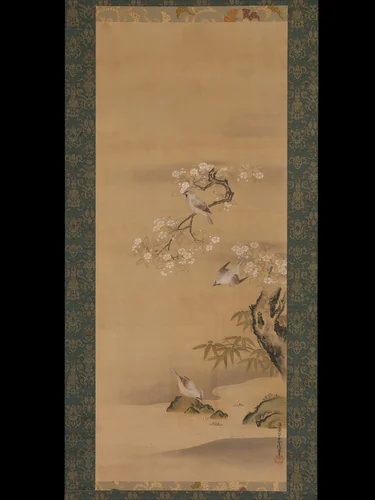
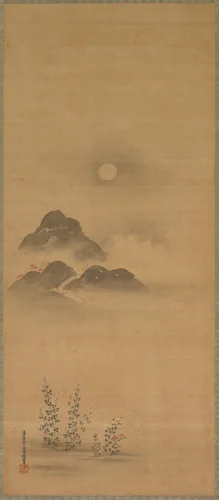
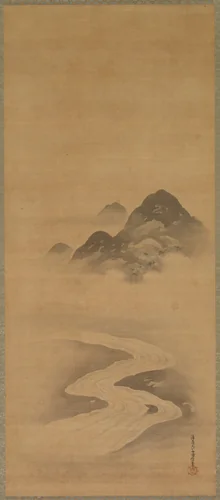
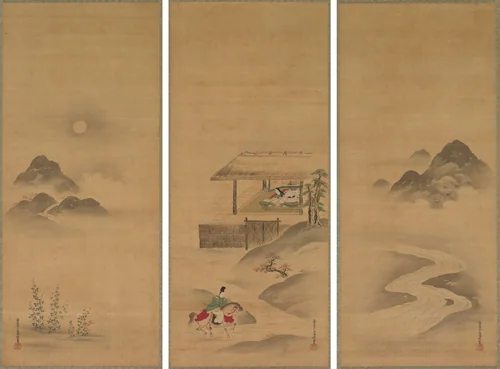
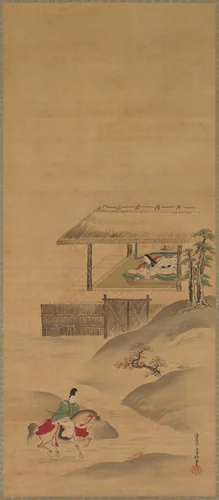
Her artistic output demonstrates exceptional versatility, spanning formats from small, intimate hanging scrolls to imposing large screens. Her catalog of works, including Quail and Millet and Waxwings, Cherry Blossoms, and Bamboo, confirms her command of diverse subjects and scales. Thematically, Yukinobu excelled in the native Japanese Yamato-e tradition, employing established stylistic conventions to depict courtly and literary subjects. She was particularly notable for her skill in rendering female figures, frequently illustrating legendary women, such as the court author Murasaki Shikibu, a choice that suggests a focus on sophisticated literary taste.
The enduring practice of signing and sealing Kiyohara Yukinobu paintings indicates a professional artist who attained significant individual recognition. This signature, seen on works held in the Metropolitan Museum of Art and the Cleveland Museum of Art, confirms her ability to secure commissions from various sources, including samurai and middle-class townspeople, an impressive feat within the highly structured Kanō school. The confidence required to successfully interpret traditional Japanese subjects within the idiom of a traditionally male-dominated school suggests an unusual level of self-possession and market savvy. Today, the achievements of this pioneering Edo painter are accessible globally, with high-quality prints of her work frequently available through public domain initiatives.
Source: Wikipedia · CC BY-SA 4.0