Kitagawa Kikumaro
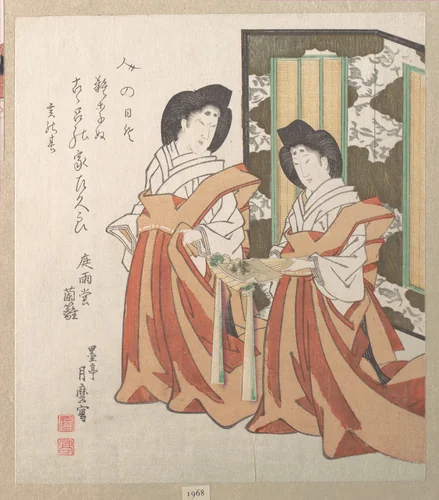
Kitagawa Kikumaro was a Japanese printmaker active during the late Edo period, with a documented working span extending from 1789 to 1815. Known primarily for figurative subjects, the artist specialized in woodblock prints depicting women, courtly life, and genre scenes of the time.
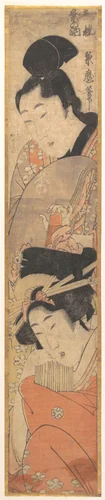
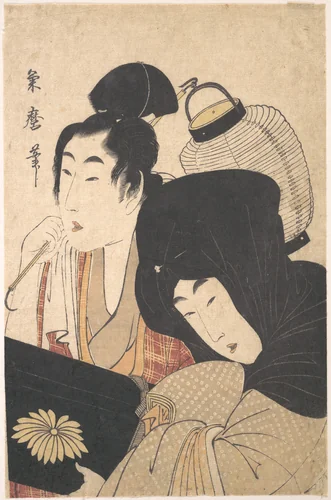
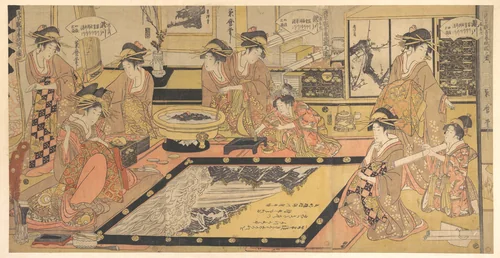
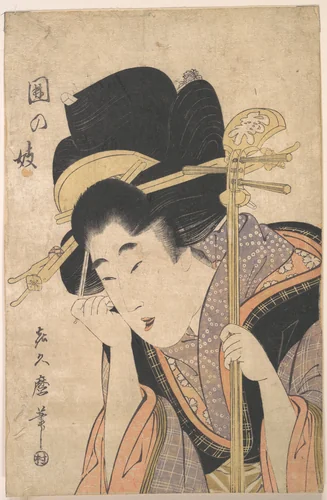
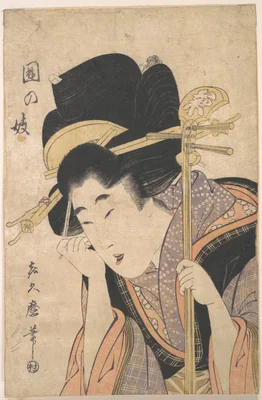
Five of the artist’s prints are currently represented in museum collections, establishing the known scope of Kikumaro’s output. The subject matter ranges from intimate pairings, such as Man and Girl, to depictions of daily life involving entertainment figures, seen in A Geisha with a Shamisen and Young Woman at Night accompanied by a Servant Carrying a Lantern and a Shamisen Box. More complex compositions are also known, notably A Votive Picture to Be Donated to the Kannon of Asakusa (Asakusa Kannon hō kakegaku no zu).
The Metropolitan Museum of Art is a primary repository for the artist’s preserved works. These historical artifacts, often available in the public domain through institutional initiatives, offer important examples of period printmaking. The preservation efforts ensure that museum-quality examples of Kitagawa Kikumaro prints remain accessible for research and study, providing viewers with high-quality prints reflecting the late 18th century.
Source: Wikipedia · CC BY-SA 4.0