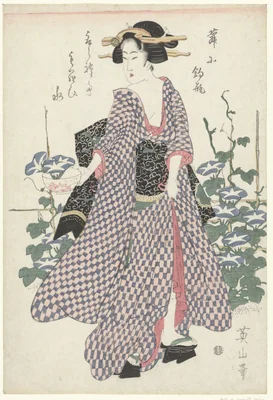
Kikukawa Eizan
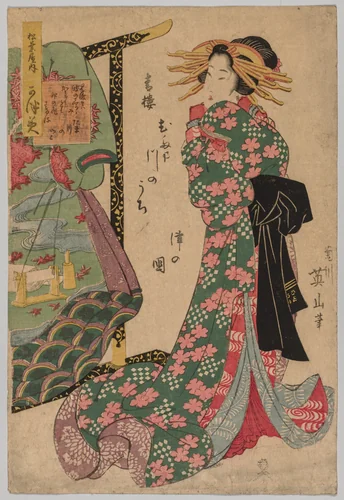
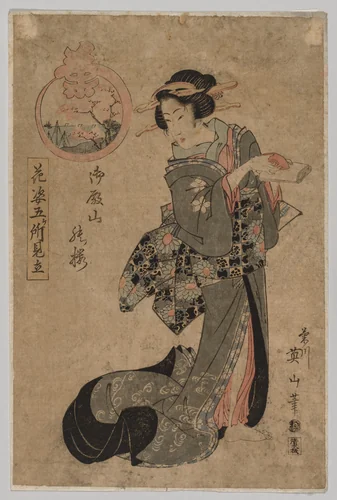
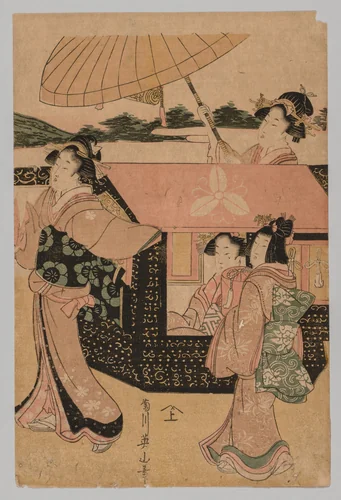
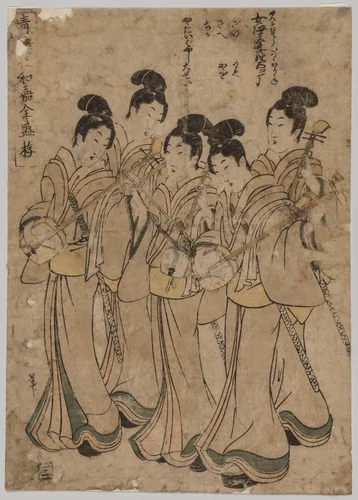
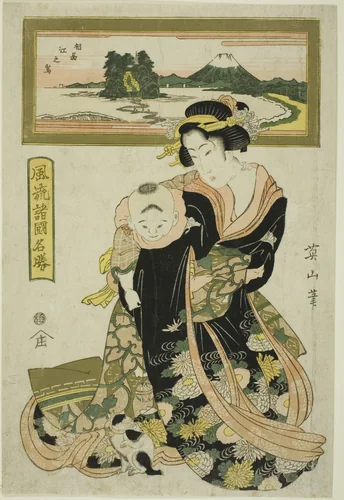
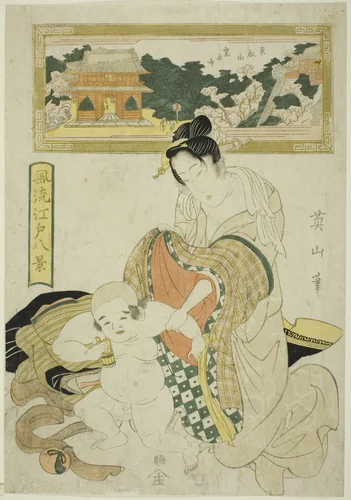
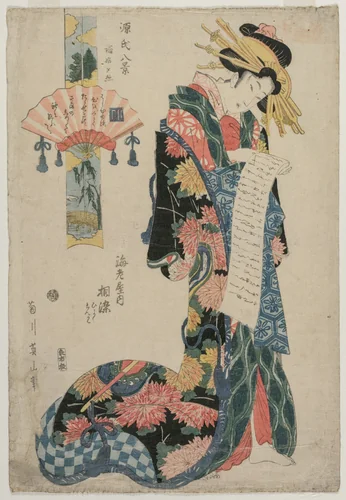
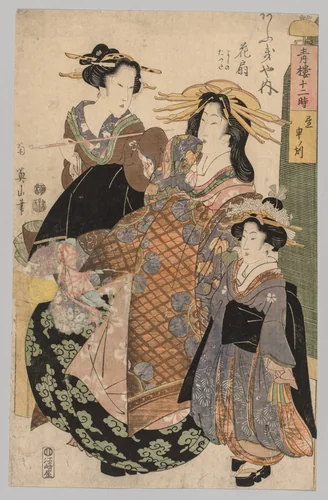
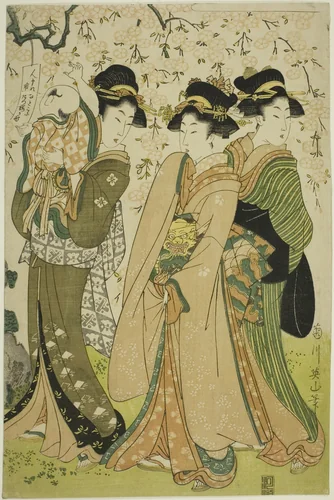
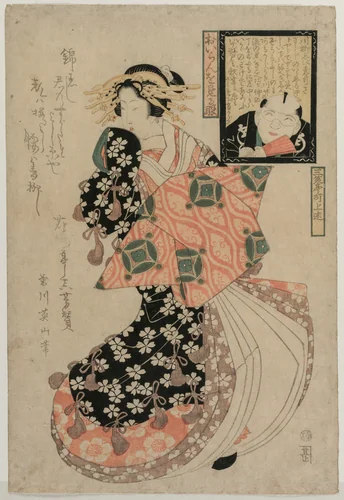
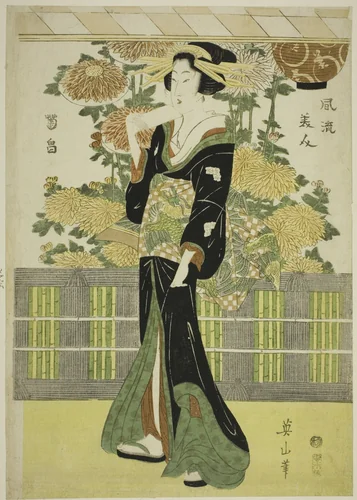
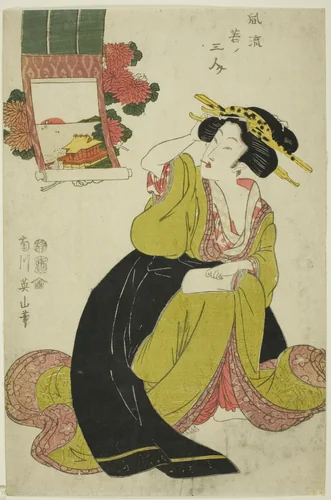
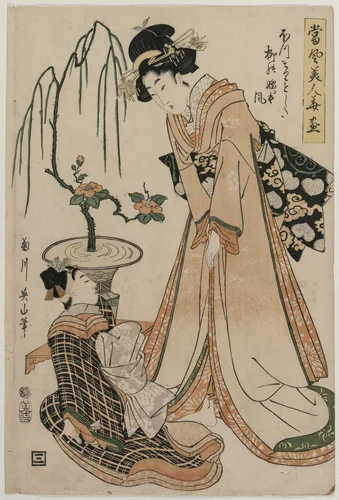
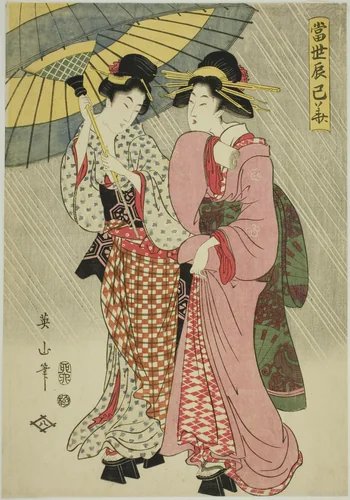
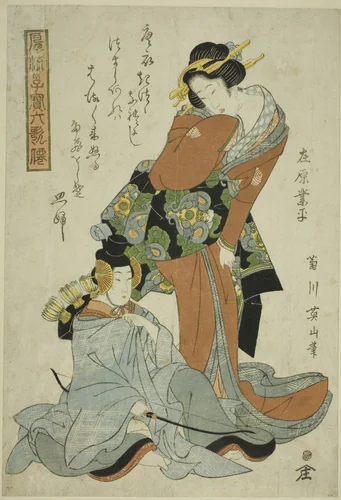
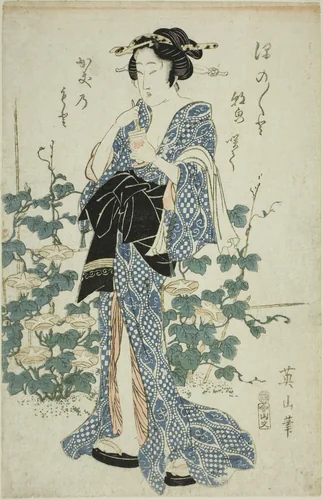
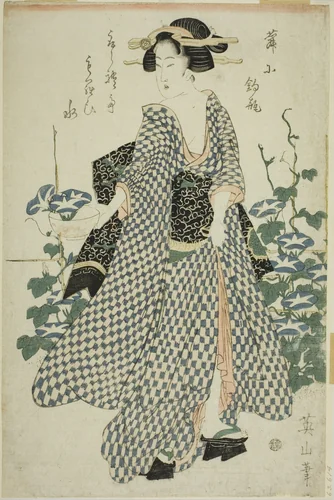
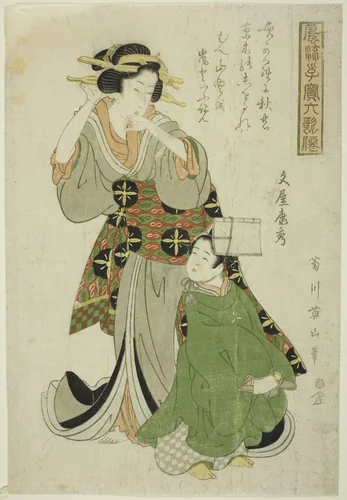
Kikukawa Eizan was a highly successful designer of ukiyo-e woodblock prints active during the late eighteenth and early nineteenth centuries. His primary focus was bijin-ga, or images of beautiful women, a genre in which he became a leading specialist during the Bunka and Bunsei eras (1804-1830). Eizan’s style, characterized by its emphasis on contemporary fashion and elegant, elongated figures, established a key link between the work of masters like Utamaro and the later romantic style of Kunisada. His technical mastery in depicting complex textile patterns and highly detailed hairdressing is particularly evident in pieces such as Courtesan Beside Kimono Rack.
Eizan’s artistic training was unusually extensive and eclectic for a designer specializing in popular prints. He first studied the rigorous methods of the Kanō school under his father, Eiji, a minor painter. Subsequently, he broadened his skills under Suzuki Nanrei (1775-1844) of the naturalistic Shijō school, absorbing techniques for representing depth and softness. This sophisticated foundation of formal Japanese painting traditions was augmented by practical knowledge gleaned from working with the influential ukiyo-e artist Totoya Hokkei (1790-1850). This diverse background equipped Eizan with both the precision of classical painting and the dynamism required for successful commercial print design.
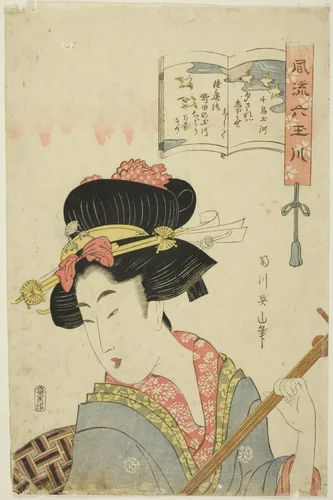
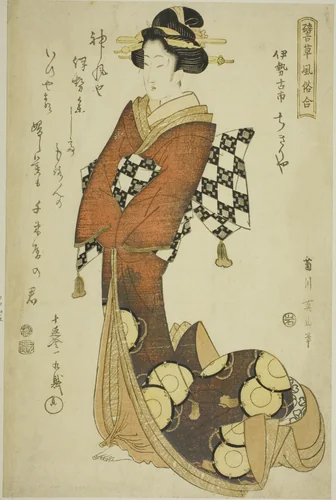
He was extraordinarily prolific, particularly throughout the 1810s and 1820s, producing countless designs for popular series. These include the elegant compositions found in Furyu Mu Tamagawa (Fashionable Six Jewel Rivers), which features the celebrated image The Jewel River of Plovers (Chidori Tamagawa). Eizan’s enduring popularity stems from his ability to render the refined beauty of the Edo world, ensuring that many examples of Kikukawa Eizan prints are now widely available as high-quality prints through collections in the public domain. It is perhaps one of the great historical ironies of his career that, despite defining the aesthetic of early 19th-century printmaking, Eizan considered painting the superior medium, ultimately abandoning print design entirely around the 1830s to focus exclusively on Kikukawa Eizan paintings.
Eizan’s works are now considered cornerstone examples of the later golden age of ukiyo-e. His contribution cemented his position as a major artist whose stylistic choices influenced a generation. Today, his elegant prints are held in prestigious international institutions, including the Art Institute of Chicago and the Cleveland Museum of Art, confirming his legacy as a master of the beautiful woman picture.
Source: Wikipedia · CC BY-SA 4.0