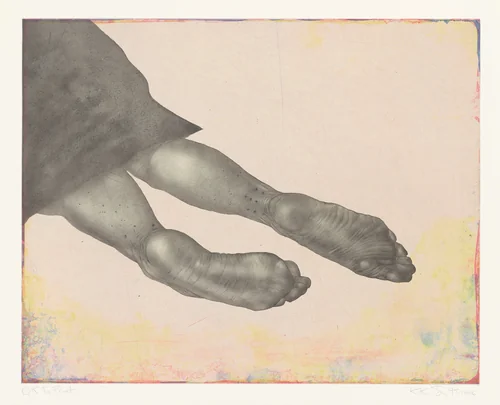
Kiki Smith
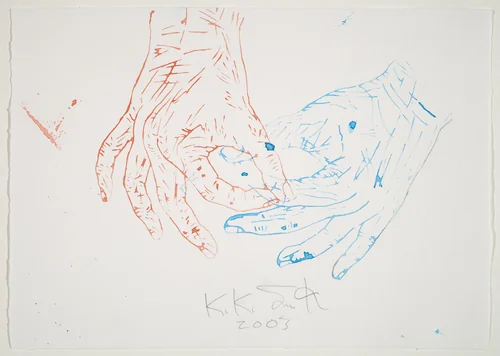
Kiki Smith (b. 1954, Nuremberg) is recognized as a pivotal figure in late 20th and early 21st-century American art, celebrated for a rigorous, often unflinching, examination of the human body and its relationship to socio-political structures. Her extensive practice, which encompasses sculpture, drawing, artist’s books, and a crucial body of printmaking, centers on fundamental biological themes: sex, birth, and the process of regeneration.
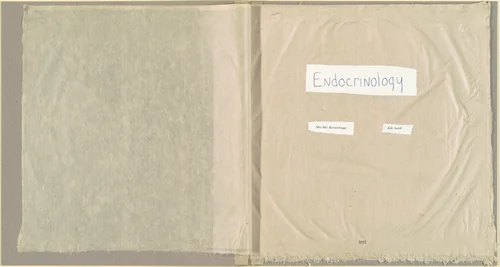
Active particularly across the 1990s and early 2000s, Smith’s figurative work served as a vital, visceral response to the era’s most pressing anxieties. Utilizing precise, detailed imagery, her pieces confronted difficult subjects such as the AIDS crisis, feminist critiques of representation, and complex dynamics of gender identity. This early period produced intense investigations into internal biological systems, exemplified by works such as the etching Endocrinology, which systematically cataloged the body’s hidden mechanics. Her commitment to illustrating corporeal reality, treating anatomy not merely as science but as a site of profound emotional and political contestation, ensures a museum-quality to her investigations.
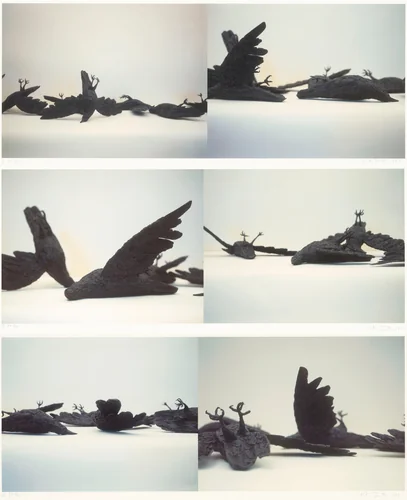
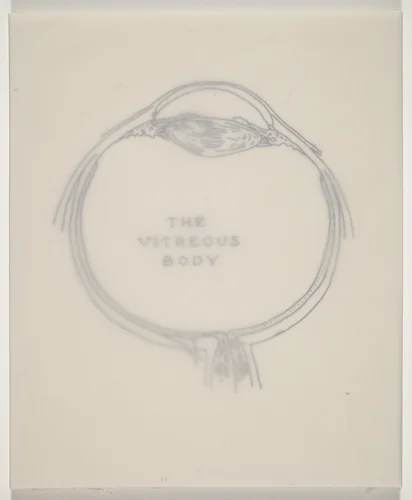
Smith’s technical versatility is paramount. Although well-known for her sculptures, her contributions to editioned work are foundational; Kiki Smith prints are lauded for translating vulnerability and interiority onto paper. Pieces like The Vitreous Body reveal a fascination with the microscopic, yet sustaining, structures that compose life. Her later work expanded this anatomical focus outward, depicting the human condition in direct relationship to nature, mythology, and the animal world, notably in pieces like Jersey Crows.
An interesting facet of Smith’s career is her ability to maintain a consistent output of intellectually challenging work while living and working concurrently in the densely urban environment of the Lower East Side of Manhattan and the relative solitude of the Hudson Valley. This physical duality arguably mirrors the thematic tension present in her oeuvre, effectively bridging the corporeal and the natural world. Smith’s legacy is secured through key international exhibitions and the acquisition of major pieces into institutional holdings, including the National Gallery of Art, guaranteeing that her powerful artistic achievements, whether through limited-edition prints or works entering the public domain, remain accessible for continued study.
Source: Wikipedia · CC BY-SA 4.0
![[untitled] by Kiki Smith, print, 1990](https://img.artbee.org/fd84c7c8-4364-4109-9f51-593eeaee078d/small.webp)
![Home [working proof 11] by Kiki Smith, print, 2006](https://img.artbee.org/52e54187-a2a1-4c8e-a560-30845005c3a3/small.webp)
![Home [working proof 1] by Kiki Smith, print, 2006](https://img.artbee.org/a08f9f51-124b-4239-a730-b66958a34be2/small.webp)
![Home [working proof 5] by Kiki Smith, print, 2006](https://img.artbee.org/fe9193f4-dd45-4d70-9cbd-d199e9846049/small.webp)