Kawanabe Kyosai
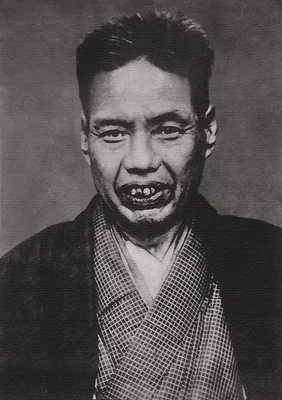
Kawanabe Kyosai (1831-1889) was a celebrated Japanese painter and printmaker whose prolific career spanned the twilight of the Edo period and the dramatic modernization of the Meiji era. His distinctive style fused the technical discipline of traditional schools with a fresh, often satirical, modernity. Art historian Timothy Clark characterized him as "an individualist and an independent, perhaps the last virtuoso in traditional Japanese painting," a fitting summation for an artist who mastered classical techniques while simultaneously embracing contemporary subject matter and biting humor.
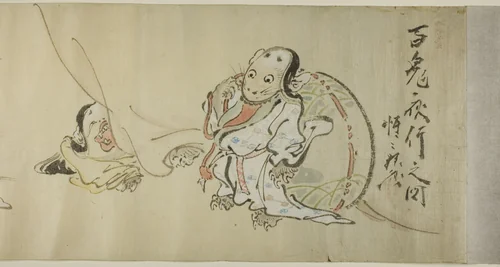
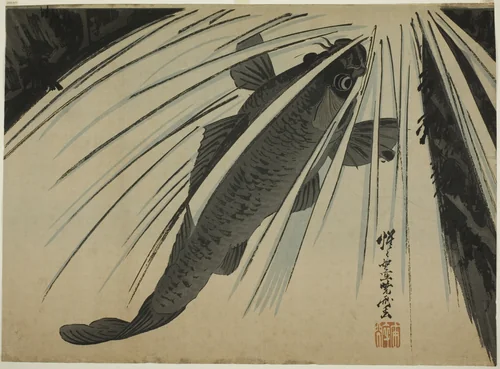
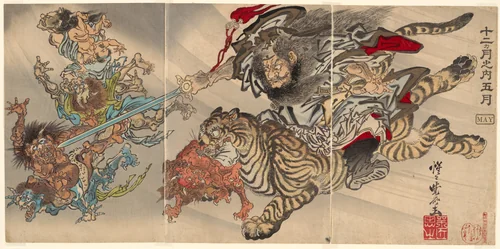
Kyosai’s extraordinary output ranged from formal nihonga painting to spontaneous, often humorous, sketches. Trained initially in the Utagawa school of ukiyo-e before moving into the esteemed Kano school lineage, Kyosai possessed a rare versatility. This technical grounding allowed him to render the serene detail required for subjects like Carp Ascending Falls and the chaotic, fantastical elements seen in his dynamic depictions of supernatural lore, such as the famous Night Procession of Goblins (Hyakki yagyo no zu). This fascination with the grotesque and the witty allowed him to subtly satirize the rapid social and political changes occurring during his lifetime, cementing his reputation as a master caricaturist and earning him occasional brushes with official censure. It is worth noting that he was notorious for his lightning-fast execution, sometimes completing significant compositions while heavily intoxicated.
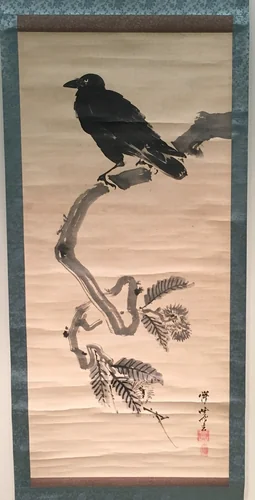
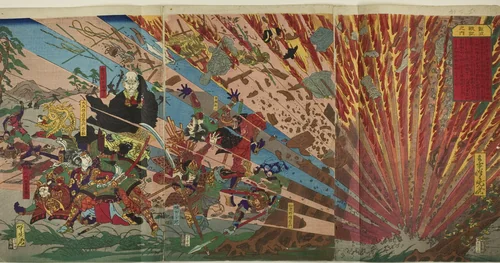
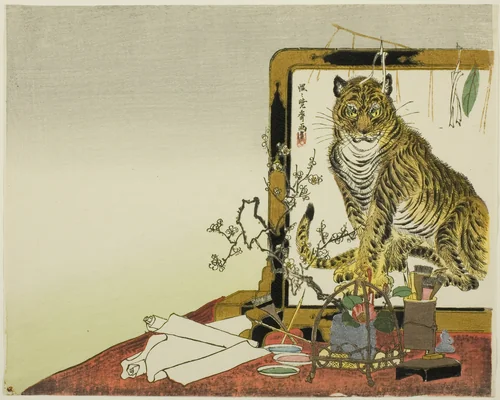
Although renowned for his high-quality prints depicting historical conflicts, such as Battle of Nanba (Nanba senki no uchi), Kyosai excelled across various media, including ink drawings, preparatory studies like Crow on pine branch, and decorative works such as the monumental Standing Screen (Tsuitate) of a Tiger. His technical mastery and engaging subject matter ensured his lasting international appeal throughout the 19th century and beyond. Today, Kyosai’s significant body of work is housed in major institutions globally, including the Art Institute of Chicago. Much of his output is now available in the public domain, allowing enthusiasts and scholars access to museum-quality reproductions and high-quality prints, ensuring Kawanabe Kyosai prints remain highly valued resources for the study of late Japanese traditional art.
Source: Wikipedia · CC BY-SA 4.0